
Sequoia sempervirens 'Filoli'
Also known as: Information to be completed
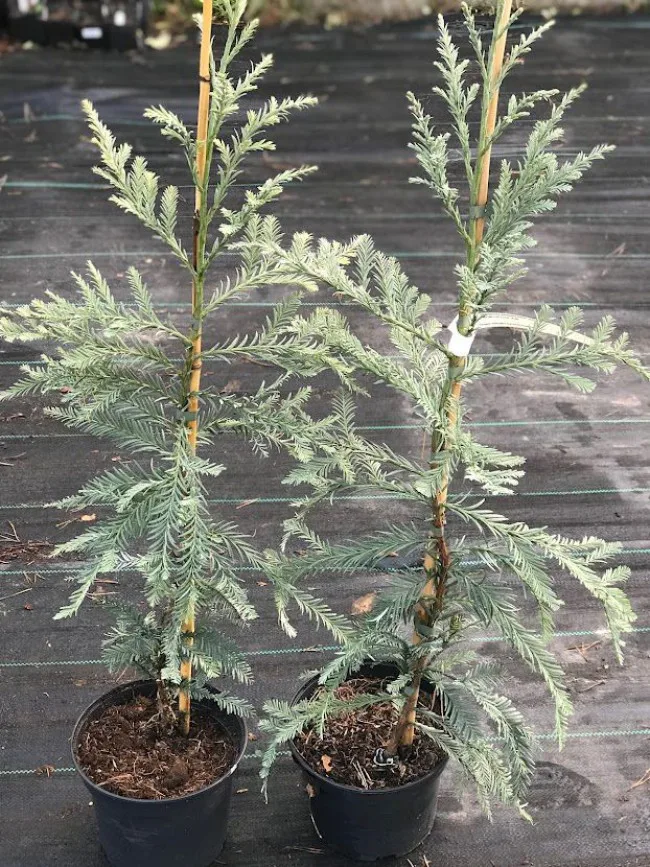
A fast growing, very large and long-lived evergreen tree with an open and loose growing habit. It has thick, fibrous, soft and spongey reddish-brown bark and bright blue-green linear leaves approximately 1-2cm long, spirally arranged. Small hanging brown cones are produced after inconspicuous flowers. Ideally grown as a specimen in a large park or garden.
Scientific classification
- Species
- Sequoia sempervirens 'Filoli' (Sequoia sempervirens 'Filoli')
- Genus
- Sequoia
- Family
- Cupressaceae
- Information to be completed
- Toxicity
- Conifers · Trees
- Plant type
- Higher than 12 metres
- Height
- 4-8 metres
- Spread
- Evergreen
- Foliage
- Bushy
- Habit
- Spring · Autumn · Summer · Winter
- Season of interest
- Full sun · Partial shade
- Sunlight
- Information to be completed
- Ideal temperature









Sequoia sempervirens 'Filoli' pictures
Distribution of Sequoia sempervirens 'Filoli'
Distribution map
Information to be completed
Information to be completed
Culture
Information to be completed
Toxicity
Information to be completed
Quick identification of Sequoia sempervirens 'Filoli'
Information to be completed
Sequoia sempervirens 'Filoli' care guide
- Moderate regular watering, avoid prolonged drought or waterlogging
- Watering
- Full sun · Partial shade
- Sunlight
- Information to be completed
- Ideal temperature

Watering
Moderate regular watering, avoid prolonged drought or waterlogging
Fertilizing
 Fertilizing
Balanced feed in spring and light repeat in growth season
Pruning
 Pruning
 is not necessary but it is one of the few conifers that will coppice, or make new shoots from the base if cut down
Propagation
 Propagation
Propagate by seed in containers in a cold frame in spring. Root softwood cuttings in summer or semi-ripe cuttings in late summer or autumn
Growing
 Growing
Grow in moderately fertile, moist but well-drained soil in full sun to light dappled shade
People also ask
Information to be completed
Common pests and diseases
Diseases
May be susceptible to honey fungus
Pests
Generally pest-free
Explore the plant health library →




