
Scots pine 'Trollguld'
Also known as: Information to be completed
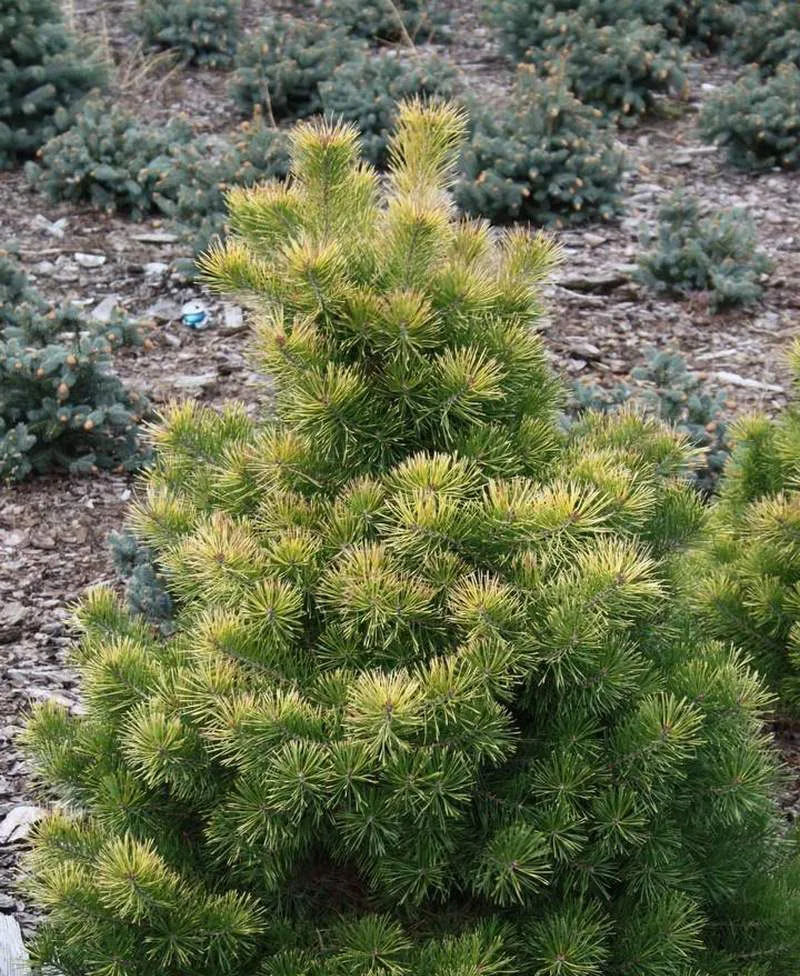
a slow-growing dwarf conifer, up to 1.5m high, with a rounded or pyramidal form, and leaves which emerge golden, become golden-green in summer, and may become more gold in winter
Scientific classification
- Species
- Scots pine 'Trollguld' (Pinus sylvestris 'Trollguld')
- Genus
- Pinus
- Family
- Pinaceae
- Order
- Pinales
- Class
- Pinopsida
- Phylum
- Pinophyta
- Information to be completed
- Toxicity
- Trees · Conifers
- Plant type
- 1-1.5 metres
- Height
- 0.5-1 metres
- Spread
- Evergreen
- Foliage
- Bushy
- Habit
- Spring · Summer · Autumn · Winter
- Season of interest
- Full sun
- Sunlight
- Information to be completed
- Ideal temperature









Scots pine 'Trollguld' pictures
Scots pine 'Trollguld' care guide
- Evenly moist free-draining soil, minimal water supply in freezing winter
- Watering
- Full sun
- Sunlight

Watering
Evenly moist free-draining soil, minimal water supply in freezing winter
Fertilizing
 Fertilizing
Diluted conifer slow-release feed once at spring new needle growth
Pruning
 Pruning
Little pruning is needed. Remove diseased, damaged, crowded or crossing shoots and unwanted growth. Timing depends on the plant: generally late winter or early spring; plants prone to bleeding and deciduous magnolias need different timing, and deciduous azaleas and lilacs are pruned after flowering.
Propagation
 Propagation
Propagate by grafting in late winter
Growing
 Growing
Grow in full sun, in well-drained soil: the golden colour will be more intense in brighter sun, but some afternoon shade may prevent sunscald; Scots pines will grow in all types of soil but will not grow so well in damp acidic soils or in shallow, dry chalk soils
Common pests and diseases
Diseases
May be susceptible to honey fungus and needle cast diseases
Pests
May be susceptible to adelgids, conifer aphid, sawfly larvae, and pine shoot moth
Explore the plant health library →




