
oleaster 'Salcombe Seedling'
Also known as: Information to be completed
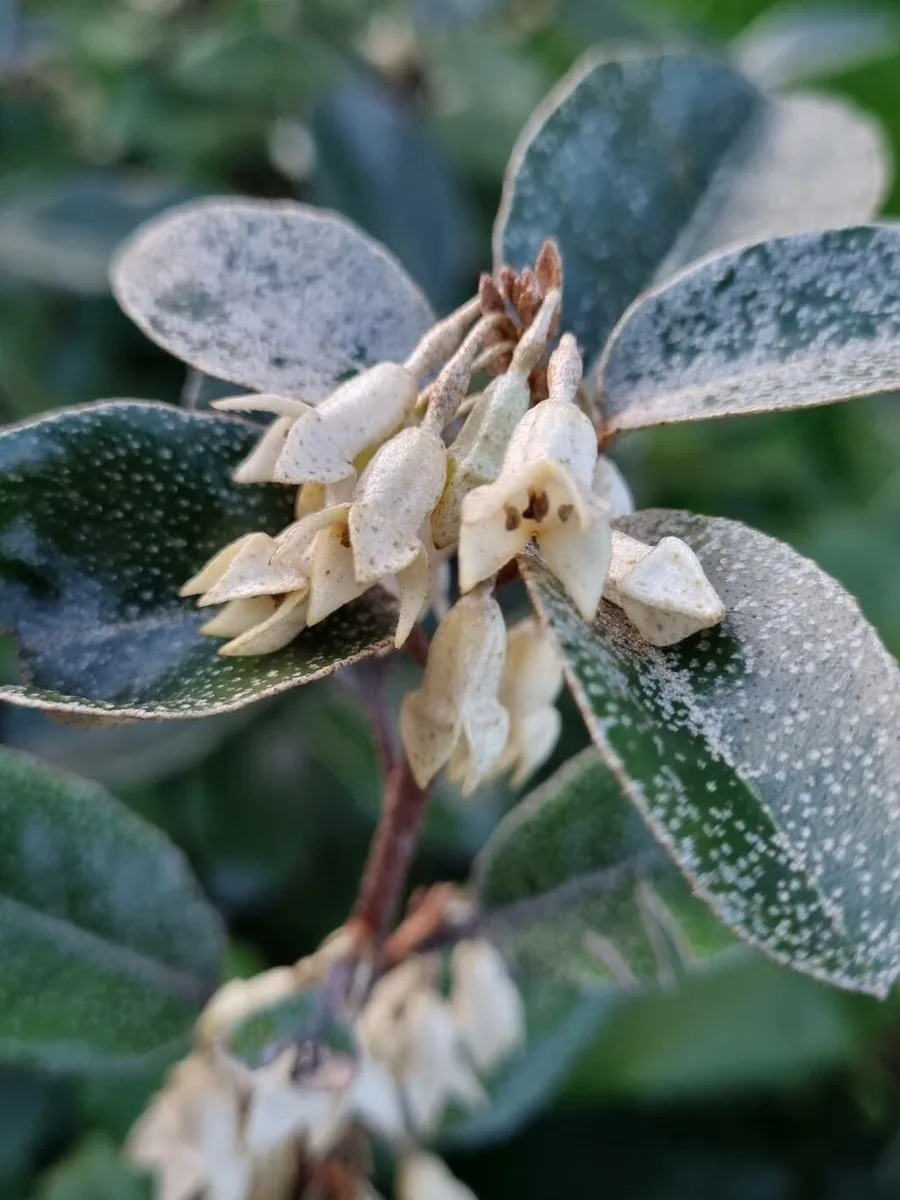
A large, dense, rounded evergreen shrub to 4m in height, with broad, leathery, dark or metallic sea-green leaves, silvery scaly beneath, and small, fragrant white flowers in autumn. This selection is especially prolific in flower and fruit production
Scientific classification
- Species
- oleaster 'Salcombe Seedling' (Elaeagnus × submacrophylla 'Salcombe Seedling')
- Genus
- Elaeagnus
- Family
- Elaeagnaceae
- Order
- Rosales
- Class
- Magnoliopsida
- Phylum
- Magnoliophyta
- Information to be completed
- Toxicity
- Shrubs
- Plant type
- 2.5-4 metres
- Height
- 2.5-4 metres
- Spread
- Evergreen
- Foliage
- Bushy
- Habit
- Spring · Summer · Autumn
- Season of interest
- Full sun · Partial shade
- Sunlight
- Information to be completed
- Ideal temperature









oleaster 'Salcombe Seedling' pictures
Distribution of oleaster 'Salcombe Seedling'
Distribution map
- Native
- Introduced
- Cultivated
Source:WCVP v16 · Royal Botanic Gardens, Kew · CC BY 3.0 · Boundaries:WGSRPD / TDWG
oleaster 'Salcombe Seedling' care guide
- Moderate regular watering, allowing brief slight drying between soakings
- Watering
- Full sun · Partial shade
- Sunlight

Watering
Moderate regular watering, allowing brief slight drying between soakings
Fertilizing
 Fertilizing
Balanced perennial feed every four weeks from spring through summer
Pruning
 Pruning
Prune lightly as needed to remove unwanted shoots and keep the shrub in shape. Prune in mid- to late spring.
Propagation
 Propagation
Propagate by semi-ripe cuttings in summer
Growing
 Growing
Grows best in well-drained soil in full sun or partial shade. Tolerant of full shade, dry soils and coastal winds but may become chlorotic on shallow chalky soils
Common pests and diseases
Diseases
May be susceptible to honey fungus, coral spot or leaf spot (fungal) see leaf damage on woody plants
Pests
Generally pest-free but may be susceptible to elaeagnus sucker
Explore the plant health library →




