
Penstemon Rock Candy Ruby ('Novapenrub')
Also known as: Information to be completed
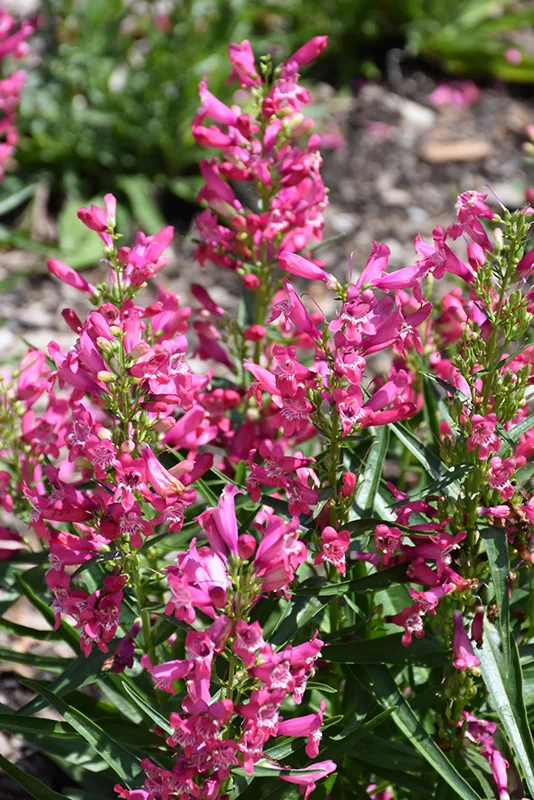
A compact, upright perennial with lance-shaped green foliage and smallish, long-lasting flared, tubular red flowers which appear from late spring through to the autumn
Scientific classification
- Species
- Penstemon Rock Candy Ruby ('Novapenrub') (Penstemon Rock Candy Ruby ('Novapenrub'))
- Genus
- Penstemon
- Family
- Plantaginaceae
- Information to be completed
- Toxicity
- Herbaceous Perennial
- Plant type
- 0.1-0.5 metres
- Height
- 0.1-0.5 metres
- Spread
- Deciduous
- Foliage
- Clump forming · Columnar upright
- Habit
- Spring · Summer · Autumn
- Season of interest
- Full sun · Partial shade
- Sunlight
- Information to be completed
- Ideal temperature









Penstemon Rock Candy Ruby ('Novapenrub') pictures
Distribution of Penstemon Rock Candy Ruby ('Novapenrub')
Distribution map
Information to be completed
Information to be completed
Culture
Information to be completed
Toxicity
Information to be completed
Quick identification of Penstemon Rock Candy Ruby ('Novapenrub')
Information to be completed
Penstemon Rock Candy Ruby ('Novapenrub') care guide
- Regular moderate irrigation, avoid fully dried growing medium
- Watering
- Full sun · Partial shade
- Sunlight
- Information to be completed
- Ideal temperature

Watering
Regular moderate irrigation, avoid fully dried growing medium
Fertilizing
 Fertilizing
Weak flowering feed every four weeks spring to fall bloom
Pruning
 Pruning
Deadhead after flowering to maintain vigour and prolong flowering, then cut back to 15cm in late winter or early spring
Propagation
 Propagation
Propagate by softwood cuttings in early summer or semi-hardwood cuttings in midsummer. Propagate by division in spring
Growing
 Growing
Grow in fertile, well-drained soil in full sun or partial shade. In cold areas, protect plant overwinter with a dry winter mulch. See penstemon cultivation for further advice
People also ask
Information to be completed
Common pests and diseases
Diseases
Generally disease-free but may be susceptible to powdery mildews and grey moulds
Pests
May be susceptible to slugs, snails, aphids and leaf and bud eelworms
Explore the plant health library →




