
geranium 'Rushmoor Amazon'
Also known as: Information to be completed
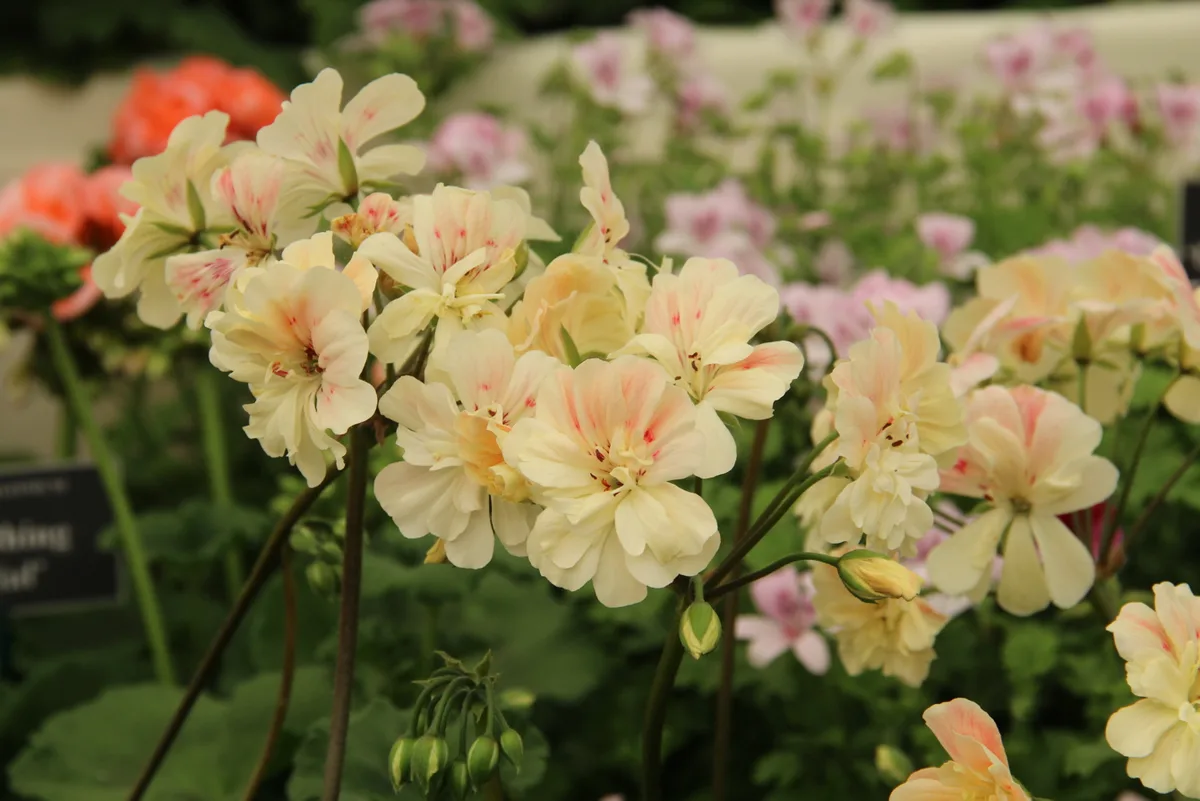
Rushmoor Amazon' (Rushmoor River Series) (d) is a pelargonium with pink-flecked, yellow, semi-double, 5-7cm flowers that are held on long stems giving an unusually open and relaxed head of bloom
Scientific classification
- Species
- geranium 'Rushmoor Amazon' (Pelargonium 'Rushmoor Amazon')
- Genus
- Pelargonium
- Family
- Geraniaceae
- Information to be completed
- Toxicity
- Bedding · Houseplants · Conservatory Greenhouse
- Plant type
- 0.1-0.5 metres
- Height
- 0.1-0.5 metres
- Spread
- Evergreen
- Foliage
- Bushy
- Habit
- Spring · Summer · Autumn · Winter
- Season of interest
- Full sun
- Sunlight
- Information to be completed
- Ideal temperature









geranium 'Rushmoor Amazon' pictures
Distribution of geranium 'Rushmoor Amazon'
Distribution map
Information to be completed
Information to be completed
Culture
Information to be completed
Toxicity
Information to be completed
Quick identification of geranium 'Rushmoor Amazon'
Information to be completed
geranium 'Rushmoor Amazon' care guide
- Let top soil dry halfway, overwatering quickly triggers stem rot disease
- Watering
- Full sun
- Sunlight
- Information to be completed
- Ideal temperature

Watering
Let top soil dry halfway, overwatering quickly triggers stem rot disease
Fertilizing
 Fertilizing
Weak flowering geranium feed biweekly in warm growing conditions
Pruning
 Pruning
Cut back in spring if plants have become leggy. Deadhead regularly
Propagation
 Propagation
Propagate by softwood cuttings in spring and summer or overwinter plants in frost free conditions
Growing
 Growing
Enjoys good light and frost-free conditions. A high potash feed encourages flowering in spring and summer. See Pelargonium cultivation
People also ask
Information to be completed
Common pests and diseases
Diseases
May suffer from grey moulds, Pelargonium rust, Pelargonium viruses and foot and root rots in wet soils
Pests
glasshouse leafhoppers, vine weevils, caterpillars, thrips, fungus gnats, and aphids can be troublesome; aphids are generally more problematic on over-wintered plants
Explore the plant health library →




