
raspberry 'Yummy'
Also known as: Information to be completed
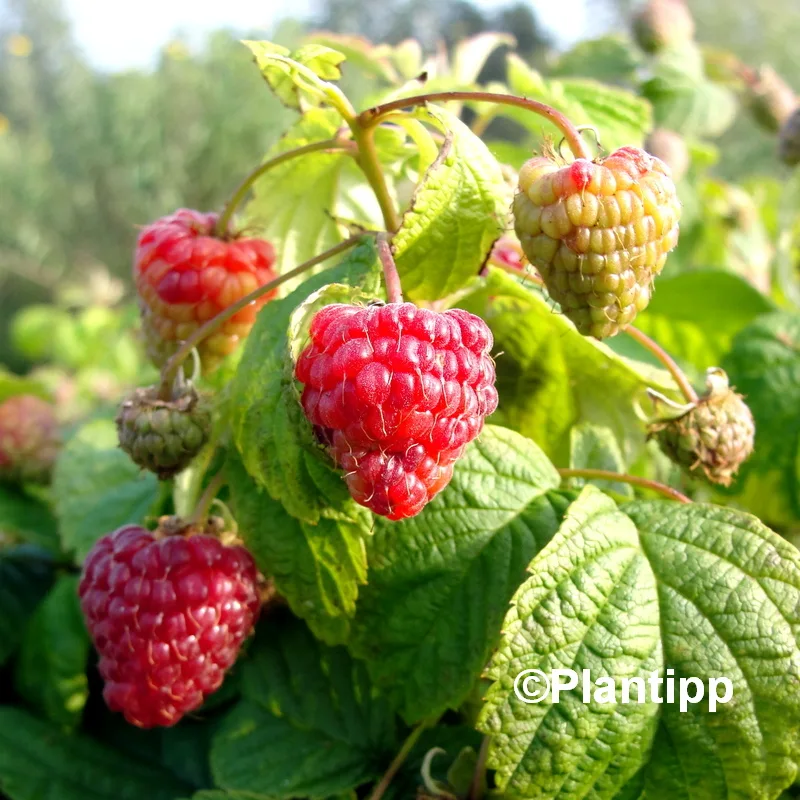
A compact, dwarf raspberry, producing fruit in the first year on almost thornless canes, reaching a height of 45cm. The juicy red fruit are produced in June/July and ideal for jams or eaten fresh.
Scientific classification
- Species
- raspberry 'Yummy' (Rubus idaeus BonBonBerry Yummy ('Jdeboer19'))
- Genus
- Rubus
- Family
- Rosaceae
- Order
- Rosales
- Class
- Magnoliopsida
- Phylum
- Magnoliophyta
- Information to be completed
- Toxicity
- Fruit Edible
- Plant type
- 0.1-0.5 metres
- Height
- 0.1-0.5 metres
- Spread
- Deciduous
- Foliage
- Suckering
- Habit
- Autumn · Spring · Summer
- Season of interest
- Full sun · Partial shade
- Sunlight
- Information to be completed
- Ideal temperature









raspberry 'Yummy' pictures
raspberry 'Yummy' care guide
- Deep watering during dry spells, allowing slight surface drying between soakings
- Watering
- Full sun · Partial shade
- Sunlight

Watering
Deep watering during dry spells, allowing slight surface drying between soakings
Fertilizing
 Fertilizing
Balanced shrub or tree feed once each early spring
Pruning
 Pruning
Cut down stems after fruiting
Propagation
 Propagation
Propagate by division in the dormant season. Lift new canes along with their rootballs. Choose only newly planted, disease-free stock from which to propagate
Growing
 Growing
The short stature makes this cultivar ideal for the smaller gardens and for containers. Grow in a sunny position, and best in slightly acidic well-drained soil. Keep the compost in containers moist in dry periods, watering with rain water in hard water areas and feed with a liquid general purpose fertiliser monthly in the growing season. May have the potential to become a nuisance if not managed well. See raspberry cultivation
Common pests and diseases
Diseases
May be susceptible to grey moulds, raspberry cane spot, a fungal leaf spot, raspberry cane blight or a virus
Pests
May be susceptible to raspberry beetle, raspberry leaf and bud mite, red berry mite or fruit red spider mite in sheltered places may be a problem
Explore the plant health library →




