
squash 'Vegetable Spaghetti'
Also known as: Information to be completed
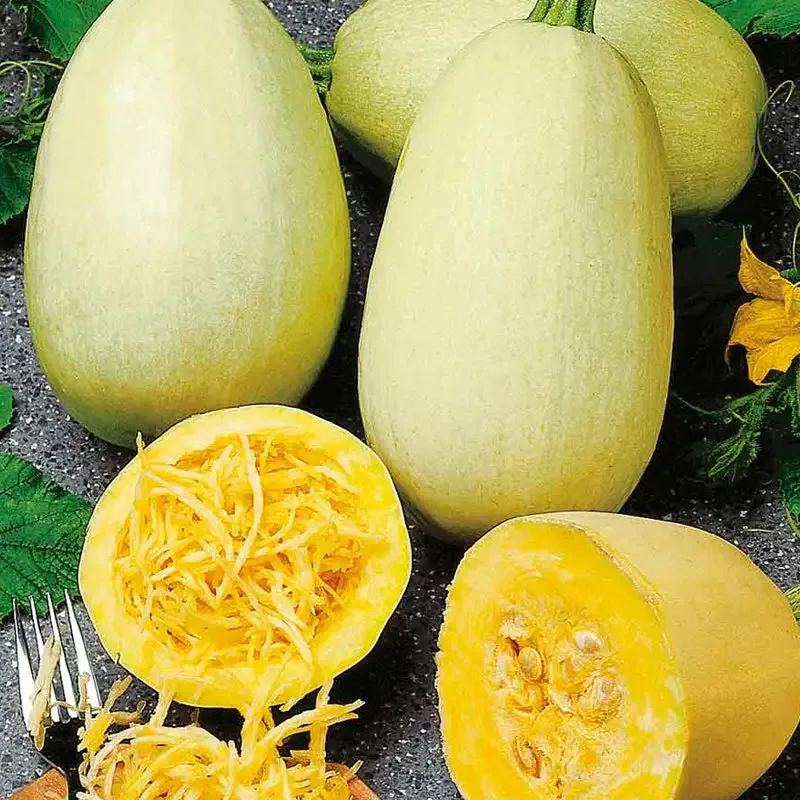
A well known winter squash cultivar, producing stems to approximately 60cm (2ft) high and 3m (10ft) across. Each plant is able to produce up to six rugby ball-shaped fruits weighing around 1.5 kg (3 lbs) each, which when ripe, have skin which are a pale orange colour. When harvested and baked, the orange flesh can be forked out, forming tender, spaghetti-like strands which can be used in exactly the same way as the true pasta version, but is considerably less calorific!
Scientific classification
- Species
- squash 'Vegetable Spaghetti' (Cucurbita pepo 'Vegetable Spaghetti')
- Genus
- Cucurbita
- Family
- Cucurbitaceae
- If crop is bitter, don't eat. Wear gloves and other protective equipment when handling
- Toxicity
- Annual Biennial
- Plant type
- 0.5-1 metres
- Height
- 1.5-2.5 metres
- Spread
- Deciduous
- Foliage
- Trailing
- Habit
- Spring · Summer · Autumn
- Season of interest
- Full sun
- Sunlight
- Information to be completed
- Ideal temperature









squash 'Vegetable Spaghetti' pictures
Distribution of squash 'Vegetable Spaghetti'
Distribution map
- Native
- Introduced
- Cultivated
Source:WCVP v16 · Royal Botanic Gardens, Kew · CC BY 3.0 · Boundaries:WGSRPD / TDWG
Culture
Information to be completed
Toxicity
If crop is bitter, don't eat. Wear gloves and other protective equipment when handling
Quick identification of squash 'Vegetable Spaghetti'
Information to be completed
squash 'Vegetable Spaghetti' care guide
- Water regularly, keeping the soil evenly moist; water more during fruiting.
- Watering
- Full sun
- Sunlight
- Information to be completed
- Ideal temperature

Watering
Water regularly, keeping the soil evenly moist; water more during fruiting.
Fertilizing
 Fertilizing
Apply a balanced fertilizer every 2-3 weeks during the growing season.
Pruning
 Pruning
No pruning required
Propagation
 Propagation
Propagate by seed. See sowing vegetable seeds or sowing seeds indoors for further advice
Growing
 Growing
Grow in fertile, moisture retentive but well drained, acidic to neutral soil in full sun. Sow indoors March to May in good quality seed compost. Sow the seeds on their side 1cm deep and maintain a constant temperature of 18-21C. Feed regularly with a high potassium fertiliser when the first fruits start to swell. See courgette cultivation for further advice
People also ask
Information to be completed
Common pests and diseases
Diseases
May be susceptible to grey moulds and powdery mildews
Pests
Generally pest-free
Explore the plant health library →




