
Antirrhinum (Bells Series)
Also known as: Information to be completed
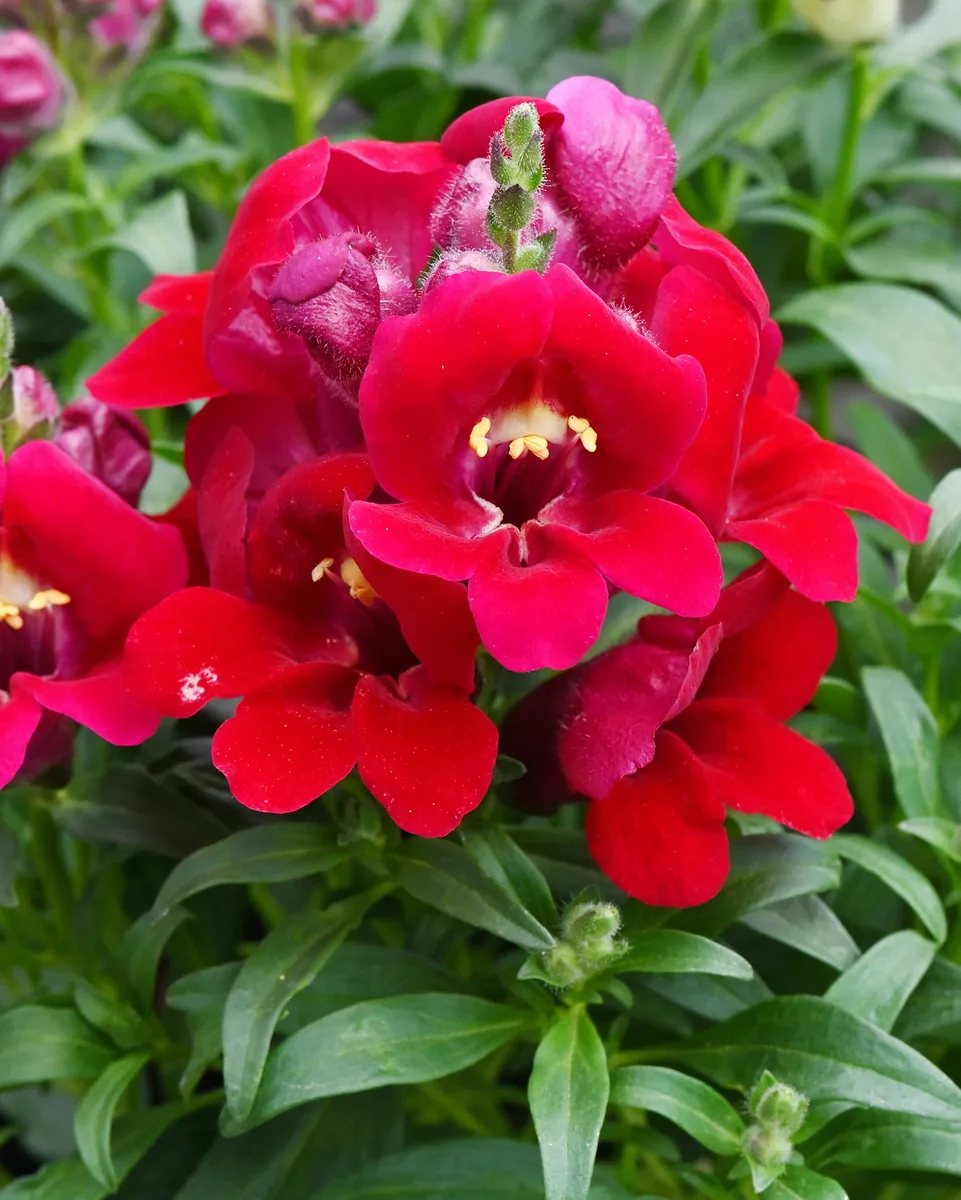
A group of short-lived perennials, often grown as annuals, 20-30cm high, with lance-shaped green leaves, and racemes of open-faced flowers, in shades of crimson, red, pink, bronze, yellow, and white, from summer to autumn
Scientific classification
- Species
- Antirrhinum (Bells Series) (Antirrhinum (Bells Series))
- Genus
- Antirrhinum
- Family
- Plantaginaceae
- Order
- Lamiales
- Class
- Magnoliopsida
- Phylum
- Magnoliophyta
- Information to be completed
- Toxicity
- Herbaceous Perennial · Annual Biennial
- Plant type
- 0.1-0.5 metres
- Height
- 0.1-0.5 metres
- Spread
- Deciduous
- Foliage
- Bushy
- Habit
- Spring · Summer · Autumn
- Season of interest
- Full sun
- Sunlight
- Information to be completed
- Ideal temperature









Antirrhinum (Bells Series) pictures
Antirrhinum (Bells Series) care guide
- Even soil moisture required, cut watering volume once autumn dormancy hits
- Watering
- Full sun
- Sunlight

Watering
Even soil moisture required, cut watering volume once autumn dormancy hits
Fertilizing
 Fertilizing
Balanced annual flower feed biweekly before and during blooming cycle
Pruning
 Pruning
No pruning required, but deadheading will prolong the flowering period
Propagation
 Propagation
Propagate by seed sown at 16-18°C in late summer or early autumn, and overwinter young plants under glass, or by seed in early spring
Growing
 Growing
Grow in a sunny position in well-drained soil
Common pests and diseases
Diseases
May be susceptible to antirrhinum rust, and powdery mildews; may also be affected by damping off, downy mildews, Fusarium wilt, leaf spots, sclerotinia diseases, shothole, Verticillium wilt, and other wilts
Pests
May be susceptible to aphids
Explore the plant health library →




