
oriental poppy 'Beauty of Livermere'
Also known as: poppy 'Beauty of Livermere'
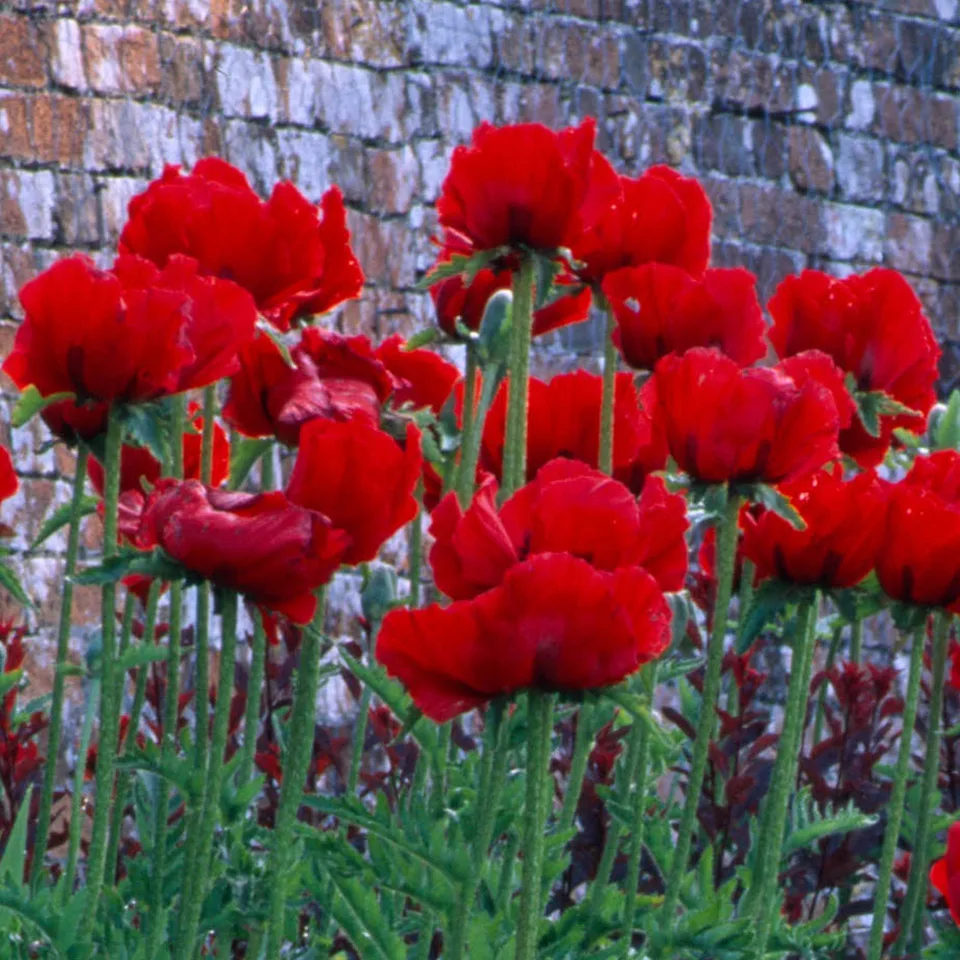
An herbaceous perennial to 1m tall, with toothed and bristly lance-shaped leaves to 30cm long, and single, deep scarlet flowers 20cm across in late spring and early summer, each petal with a bold black blotch at the base
Scientific classification
- Species
- oriental poppy 'Beauty of Livermere' (Papaver 'Beauty of Livermere')
- Genus
- Papaver
- Family
- Papaveraceae
- Order
- Ranunculales
- Class
- Magnoliopsida
- Phylum
- Magnoliophyta
- Information to be completed
- Toxicity
- Herbaceous Perennial
- Plant type
- 0.5-1 metres
- Height
- 0.5-1 metres
- Spread
- Deciduous
- Foliage
- Bushy
- Habit
- Spring · Summer
- Season of interest
- Full sun
- Sunlight
- Information to be completed
- Ideal temperature









oriental poppy 'Beauty of Livermere' pictures
oriental poppy 'Beauty of Livermere' care guide
- Water deeply once a week during dry spells, otherwise moderate watering.
- Watering
- Full sun
- Sunlight

Watering
Water deeply once a week during dry spells, otherwise moderate watering.
Fertilizing
 Fertilizing
Apply a balanced fertilizer in early spring before new growth appears.
Pruning
 Pruning
The foliage often starts dying back after flowering. Trim back the yellowing foliage. Second flush of growth often commences in early autumn. Remove dead leaves in spring
Propagation
 Propagation
Propagate by seed, but plants raised from seeds of named cultivars are likely to be different. Take root cuttings in late autumn/early winter. Divide in spring
Growing
 Growing
Can be grown in a wide range of well-drained soils in full sun. Improve soil with well-rotted organic matter prior to planting. Avoid overfeeding that encourages excessive foliage growth. It may require staking perennials
Common pests and diseases
Diseases
May be susceptible to downy mildews in damp conditions and powdery mildew
Pests
May be susceptible to aphids
Explore the plant health library →




