
oriental poppy 'Curlilocks'
Also known as: Information to be completed
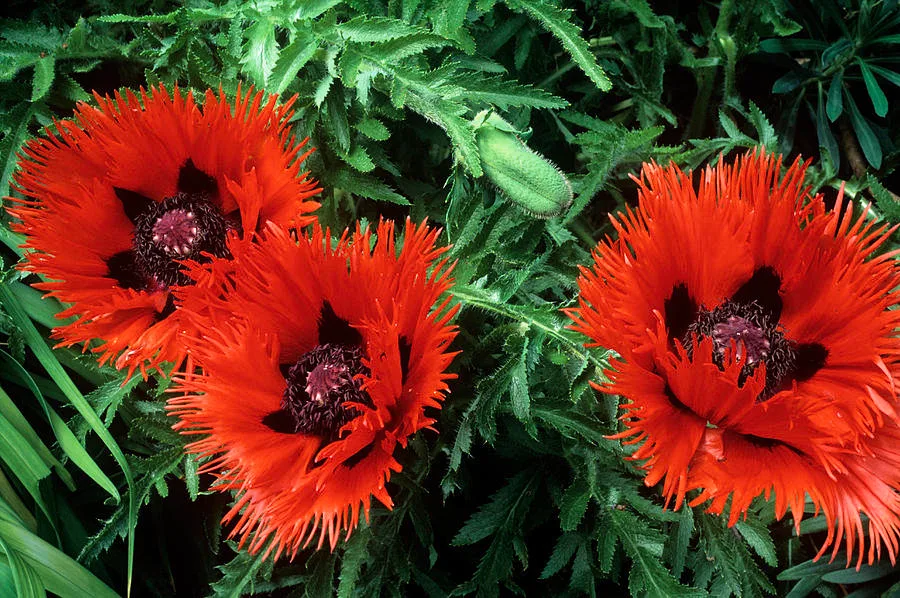
A clump-forming herbaceous perennial with finely divided creamy-white and green variegated foliage and tall, bristly stems with pendent buds that open up to large saucer-shaped, feathered orange-red flowers with dark blotches at the base of the petals in summer
Scientific classification
- Species
- oriental poppy 'Curlilocks' (Papaver 'Curlilocks')
- Genus
- Papaver
- Family
- Papaveraceae
- Information to be completed
- Toxicity
- Herbaceous Perennial
- Plant type
- 0.5-1 metres
- Height
- 0.1-0.5 metres
- Spread
- Deciduous
- Foliage
- Clump forming
- Habit
- Spring · Summer
- Season of interest
- Full sun
- Sunlight
- Information to be completed
- Ideal temperature









oriental poppy 'Curlilocks' pictures
Distribution of oriental poppy 'Curlilocks'
Distribution map
Information to be completed
Information to be completed
Culture
Information to be completed
Toxicity
Information to be completed
Quick identification of oriental poppy 'Curlilocks'
Information to be completed
oriental poppy 'Curlilocks' care guide
- Moderate regular watering, avoid prolonged drought and stagnant waterlogging
- Watering
- Full sun
- Sunlight
- Information to be completed
- Ideal temperature

Watering
Moderate regular watering, avoid prolonged drought and stagnant waterlogging
Fertilizing
 Fertilizing
Balanced perennial feed every four weeks spring through summer growth
Pruning
 Pruning
Cut back foliage as it dies down
Propagation
 Propagation
Propagate by division in spring or root cuttings in autumn and early winter
Growing
 Growing
Will grow well in any kind of soil that is well drained, not too fertile and in full sun. It may require some form of support to avoid collapsing in windy or rainy weather conditions. See staking perennials for further advice
People also ask
Information to be completed
Common pests and diseases
Diseases
May be susceptible to downy mildews, powdery mildews, fungal wilts and verticillium wilt
Pests
May be susceptible to aphids
Explore the plant health library →




