
oriental poppy 'Indian Chief'
Also known as: Information to be completed
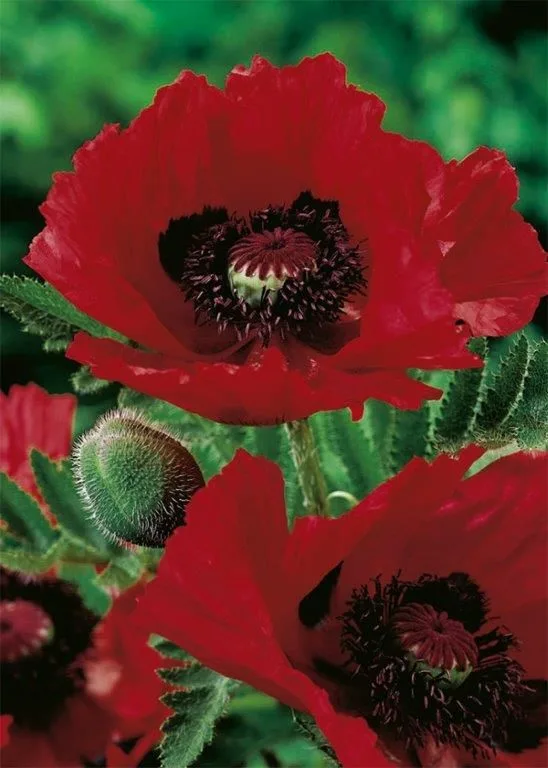
A clump-forming perennial 80cm high with bristly stems which are erect at first and then tend to sprawl unless supported, and pinnatisect, variously lobed and toothed, mid-green leaves, which die back in summer as a new basal rosette forms, and deep maroon-mahogany-red flowers, with dark purple-brown seed capsules and black stamens but without basal spots, in early summer; poppy flowers are a rich source of pollen for bees
Scientific classification
- Species
- oriental poppy 'Indian Chief' (Papaver 'Indian Chief')
- Genus
- Papaver
- Family
- Papaveraceae
- Order
- Ranunculales
- Class
- Magnoliopsida
- Phylum
- Magnoliophyta
- Information to be completed
- Toxicity
- Herbaceous Perennial
- Plant type
- 0.5-1 metres
- Height
- 0.5-1 metres
- Spread
- Deciduous
- Foliage
- Clump forming
- Habit
- Spring · Summer
- Season of interest
- Full sun
- Sunlight
- Information to be completed
- Ideal temperature









oriental poppy 'Indian Chief' pictures
oriental poppy 'Indian Chief' care guide
- Moderate regular watering, avoid prolonged drought and stagnant waterlogging
- Watering
- Full sun
- Sunlight

Watering
Moderate regular watering, avoid prolonged drought and stagnant waterlogging
Fertilizing
 Fertilizing
Balanced perennial feed every four weeks spring through summer growth
Pruning
 Pruning
Cut back dead flowering stems and dead leaves
Propagation
 Propagation
Propagate by root cuttings in late autumn or early winter, or by division in spring
Growing
 Growing
Grow in deep, moist but well-drained soil in full sun, and support if necessary
Common pests and diseases
Diseases
May be susceptible to downy mildews, powdery mildews, fungal wilts and verticillium wilt
Pests
May be susceptible to aphids
Explore the plant health library →




