
Lonicera ligustrina var. yunnanensis Tidy Tips ('Panmin')
Also known as: Information to be completed
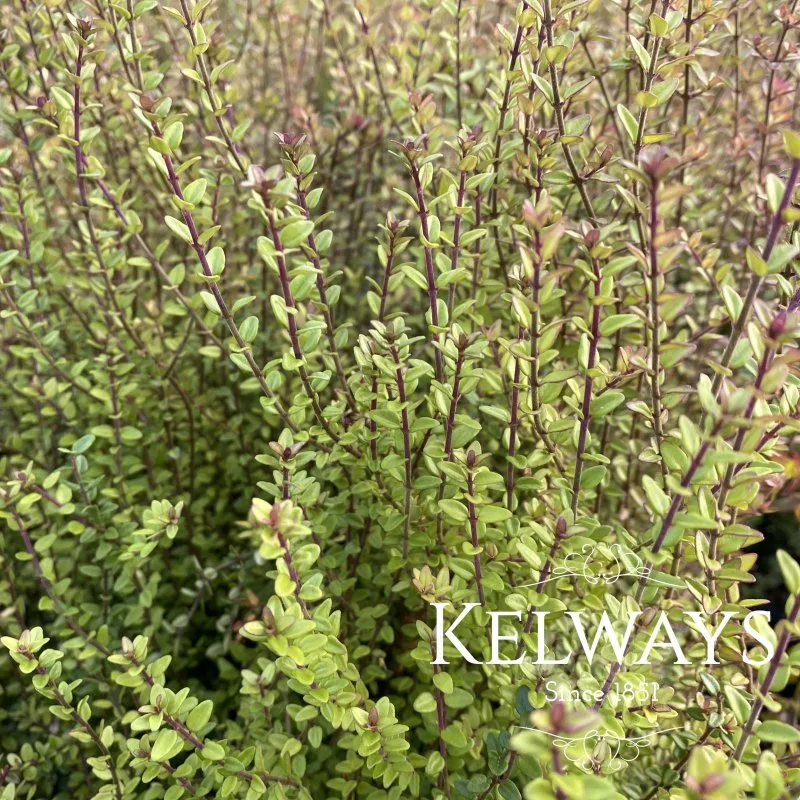
A very compact, dense, evergreen shrub of rounded habit, about 1.2m tall, with tiny dark green leaves, paler beneath. Pairs of tubular greenish-white flowers to 1cm long are produced from the leaf axils in spring and followed by blue-black berries
Scientific classification
- Species
- Lonicera ligustrina var. yunnanensis Tidy Tips ('Panmin') (Lonicera ligustrina var. yunnanensis Tidy Tips ('Panmin'))
- Genus
- Lonicera
- Family
- Caprifoliaceae
- Order
- Dipsacales
- Class
- Magnoliopsida
- Phylum
- Magnoliophyta
- Fruit are ornamental - not to be eaten. Wear gloves and other protective equipment when handling
- Toxicity
- Shrubs
- Plant type
- 1-1.5 metres
- Height
- 1-1.5 metres
- Spread
- Evergreen
- Foliage
- Bushy
- Habit
- Spring · Summer · Autumn · Winter
- Season of interest
- Full sun · Partial shade
- Sunlight
- Information to be completed
- Ideal temperature









Lonicera ligustrina var. yunnanensis Tidy Tips ('Panmin') pictures
Toxicity
Fruit are ornamental - not to be eaten. Wear gloves and other protective equipment when handling
Lonicera ligustrina var. yunnanensis Tidy Tips ('Panmin') care guide
- Moderate regular watering, allowing brief slight drying between soakings
- Watering
- Full sun · Partial shade
- Sunlight

Watering
Moderate regular watering, allowing brief slight drying between soakings
Fertilizing
 Fertilizing
Balanced perennial feed every four weeks from spring through summer
Pruning
 Pruning
Cut flowered growth back to strong young shoots below, removing up to a fifth of old stems near the base each year. Prune immediately after flowering.
Propagation
 Propagation
Propagate by layering, softwood cuttings, semi-ripe cuttings, leaf-bud cuttings and hardwood cuttings
Growing
 Growing
Grow shrubby honeysuckle in any well drained soil in full sun or partial shade. See honeysuckle (shrubby) cultivation
Common pests and diseases
Diseases
May be susceptible to powdery mildews, fungal leaf spot, silver leaf and honey fungus (rarely)
Pests
May be susceptible to honeysuckle aphids, Thrips and glasshouse whitefly
Explore the plant health library →




