
pink 'Corona Raspberry Magic'
Also known as: Information to be completed
A compact and bushy cultivar grown as an annual, flowering from late spring through to the end of summer. Single flowers are pink at the edges with a brighter pink and dark red centre, held above narrow green leaves
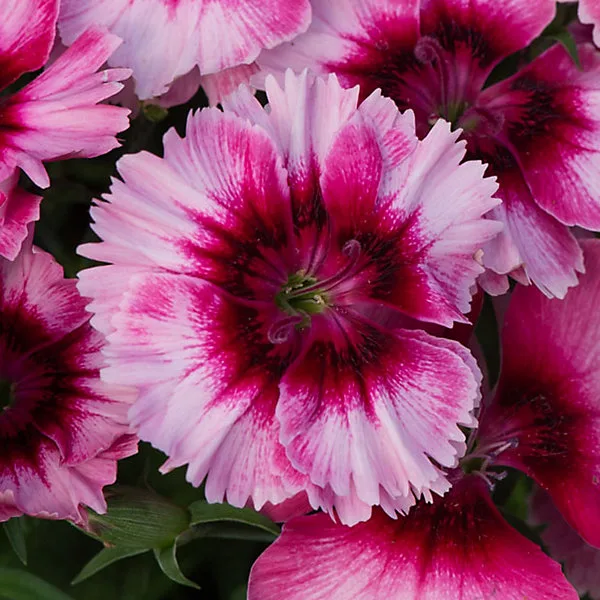
Scientific classification
- Species
- pink 'Corona Raspberry Magic' (Dianthus 'Corona Raspberry Magic')
- Genus
- Dianthus
- Family
- Caryophyllaceae
- Skin allergen, wear gloves and other protective equipment when handling]
- Toxicity
- Annual Biennial · Bedding
- Plant type
- 0.1-0.5 metres
- Height
- 0.1-0.5 metres
- Spread
- Semi evergreen
- Foliage
- Bushy
- Habit
- Spring · Summer · Autumn
- Season of interest
- Full sun
- Sunlight
- Information to be completed
- Ideal temperature









pink 'Corona Raspberry Magic' pictures
Distribution of pink 'Corona Raspberry Magic'
Distribution map
Information to be completed
Information to be completed
Culture
Information to be completed
Toxicity
Skin allergen, wear gloves and other protective equipment when handling]
Quick identification of pink 'Corona Raspberry Magic'
Information to be completed
pink 'Corona Raspberry Magic' care guide
- Water thoroughly when top layer of substrate fully dries
- Watering
- Full sun
- Sunlight
- Information to be completed
- Ideal temperature

Watering
Water thoroughly when top layer of substrate fully dries
Fertilizing
 Fertilizing
Diluted dianthus perennial feed every two weeks spring-summer
Pruning
 Pruning
Deadhead regularly to prolong flowering
Propagation
 Propagation
Propagate by softwood cuttings of non-flowering shoots in summer or by seed
Growing
 Growing
Grow in a well-drained soil in a sunny position. Harden off young plants before planting out in late spring. Deadheading is necessary to keep plants flowering through summer. Plants grown in poor soils or containers will benefit from liquid feeding
People also ask
Information to be completed
Common pests and diseases
Diseases
May be susceptible to powdery mildews, a rust, a virus and fusarium wilt
Pests
May be susceptible to slugs and aphids
Explore the plant health library →




