
shrubby everlasting 'Silverball'
Also known as: Information to be completed
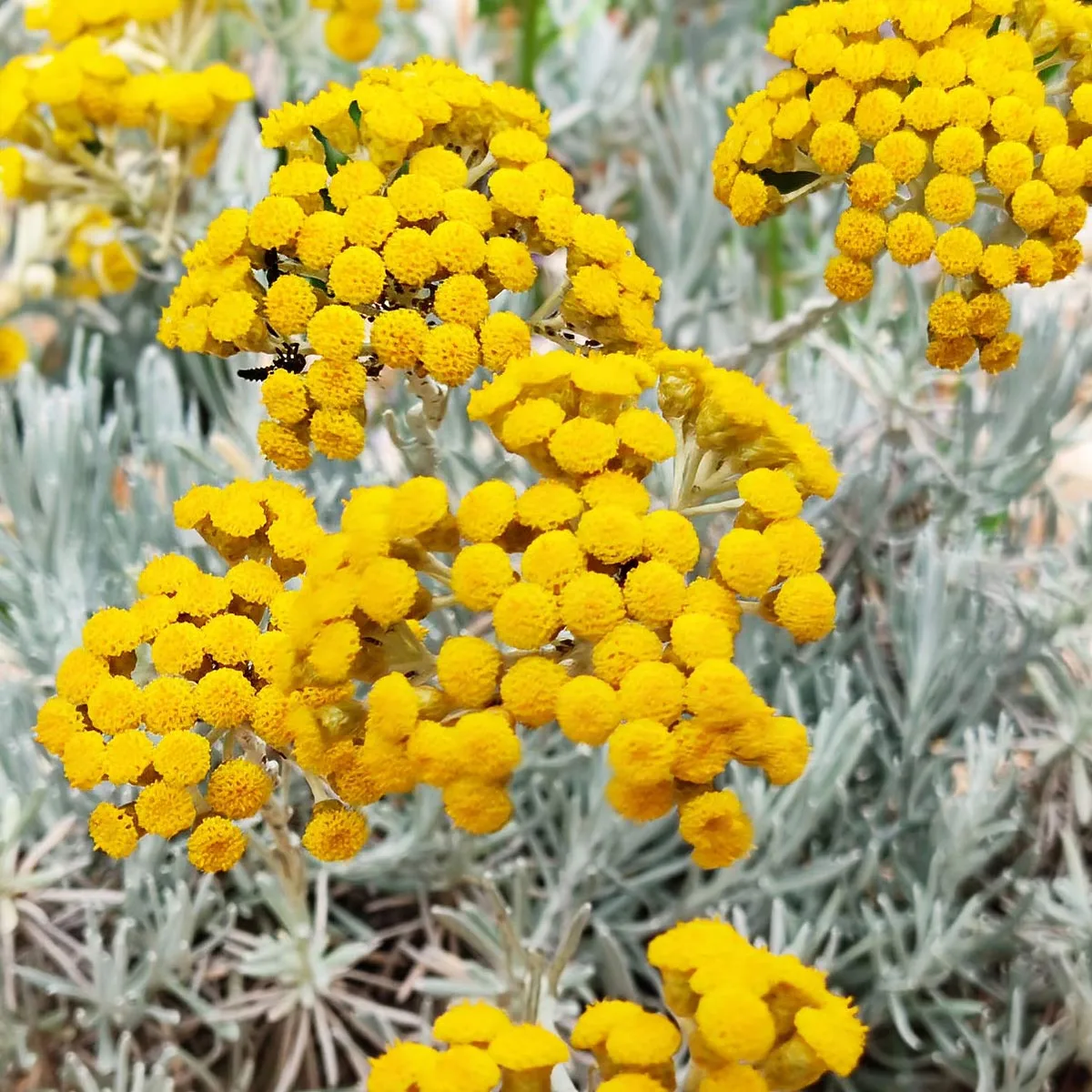
A semi-evergreen subshrub or woody-based perennial to around 40cm high, with a dense, bushy habit and linear, silvery leaves that are aromatic when crushed. Produces clusters of small yellow flowers in late summer
Scientific classification
- Species
- shrubby everlasting 'Silverball' (Helichrysum stoechas 'Silverball')
- Genus
- Helichrysum
- Family
- Asteraceae
- Order
- Asterales
- Class
- Magnoliopsida
- Phylum
- Magnoliophyta
- Information to be completed
- Toxicity
- Herbaceous Perennial
- Plant type
- 0.1-0.5 metres
- Height
- 0.1-0.5 metres
- Spread
- Semi evergreen
- Foliage
- Bushy
- Habit
- Spring · Summer · Autumn · Winter
- Season of interest
- Full sun
- Sunlight
- Information to be completed
- Ideal temperature









shrubby everlasting 'Silverball' pictures
Distribution of shrubby everlasting 'Silverball'
Distribution map
- Native
- Introduced
- Cultivated
Source:WCVP v16 · Royal Botanic Gardens, Kew · CC BY 3.0 · Boundaries:WGSRPD / TDWG
shrubby everlasting 'Silverball' care guide
- Allow soil to dry fully before each deep thorough watering
- Watering
- Full sun
- Sunlight

Watering
Allow soil to dry fully before each deep thorough watering
Fertilizing
 Fertilizing
Low-nitrogen silver foliage feed monthly warm growing months
Pruning
 Pruning
Shorten flowered shoots to about 1.5–2.5 cm from the previous year's growth. Prune in spring.
Propagation
 Propagation
Propagate by semi-ripe cuttings in summer
Growing
 Growing
Grow in a poor to moderately fertile, neutral to alkaline soil in full sun. Protect from cold drying winds, hard frosts and winter wet
Common pests and diseases
Diseases
May be susceptible to honey fungus in gardens where it is present but insufficient data to determine degree of susceptibility. May also be susceptible to downy mildews and powdery mildews
Pests
Generally pest-free
Explore the plant health library →




