
Dracaena fragrans 'Janet Lind'
Also known as: Information to be completed
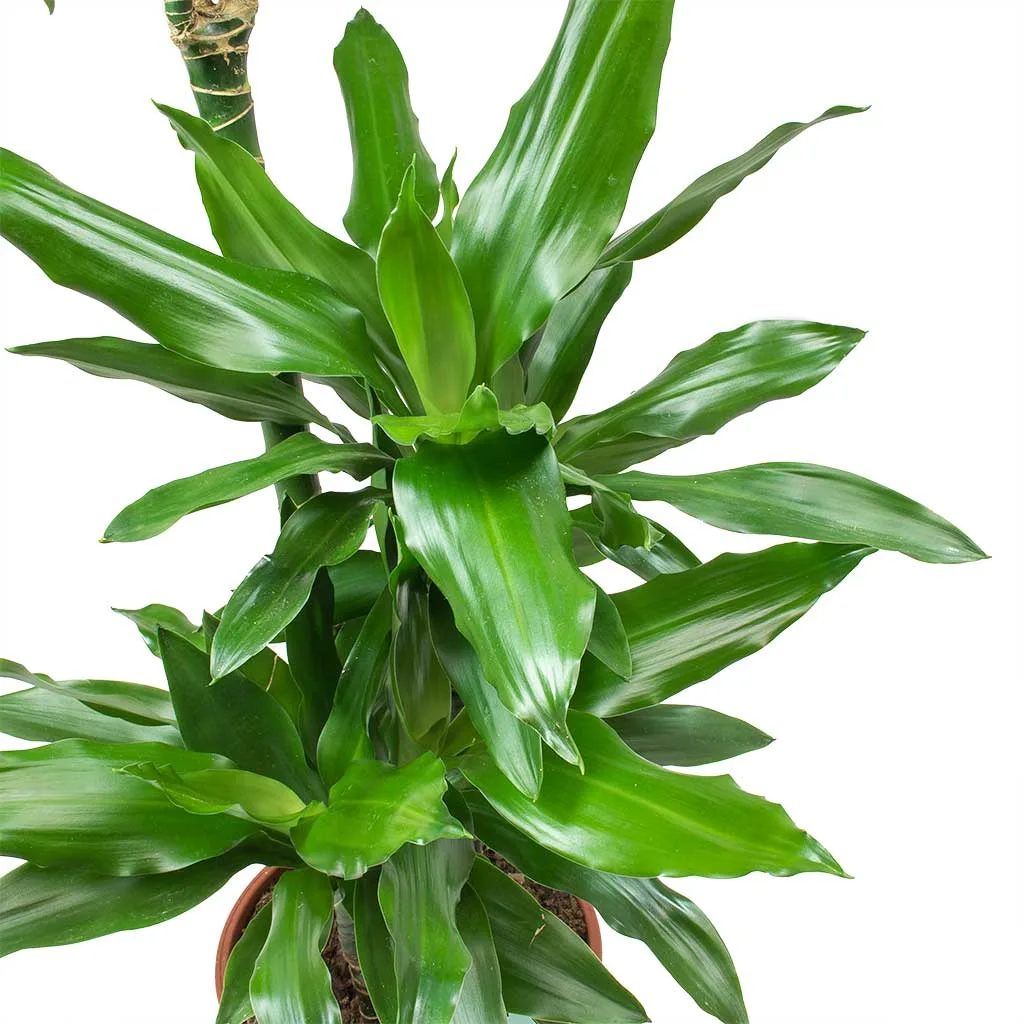
A tropical evergreen shrub, with an upright habit and sparsely branching stems. Leaves are stiff, sword-shaped and glossy, and dark green with some lighter green stripes
Scientific classification
- Species
- Dracaena fragrans 'Janet Lind' (Dracaena fragrans 'Janet Lind')
- Genus
- Dracaena
- Family
- Asparagaceae
- Order
- Asparagales
- Class
- Liliopsida
- Phylum
- Magnoliophyta
- Information to be completed
- Toxicity
- Houseplants
- Plant type
- 1.5-2.5 metres
- Height
- 0.1-0.5 metres
- Spread
- Evergreen
- Foliage
- Columnar upright
- Habit
- Spring · Summer · Autumn · Winter
- Season of interest
- Partial shade
- Sunlight
- Information to be completed
- Ideal temperature









Dracaena fragrans 'Janet Lind' pictures
Distribution of Dracaena fragrans 'Janet Lind'
Distribution map
- Native
- Introduced
- Cultivated
Source:WCVP v16 · Royal Botanic Gardens, Kew · CC BY 3.0 · Boundaries:WGSRPD / TDWG
Dracaena fragrans 'Janet Lind' care guide
- Moderate regular watering, allowing brief slight drying between soakings
- Watering
- Partial shade
- Sunlight

Watering
Moderate regular watering, allowing brief slight drying between soakings
Fertilizing
 Fertilizing
Balanced perennial feed every four weeks from spring through summer
Pruning
 Pruning
No pruning required, although weak stems may be shortened to 15cm in spring, and the resulting cutting used to propagate a new plant
Propagation
 Propagation
Propagate by semi-ripe cuttings in late spring to early summer; bottom heat may be required for rooting
Growing
 Growing
Grow in loam-based potting compost, in bright indirect light; this cultivar has some tolerance for lower light levels. Water moderately in the growing season, preferably with rainwater as plants dislike tapwater. Apply a balanced liquid feed monthly in the growing season; water sparingly in winter. Top dress or pot on in spring
Common pests and diseases
Diseases
Generally disease-free
Pests
May be susceptible to scale insects, glasshouse red spider mite, thrips and mealybugs
Explore the plant health library →




