
Primula sieboldii 'Tamashiki-no-miya'
Also known as: Information to be completed
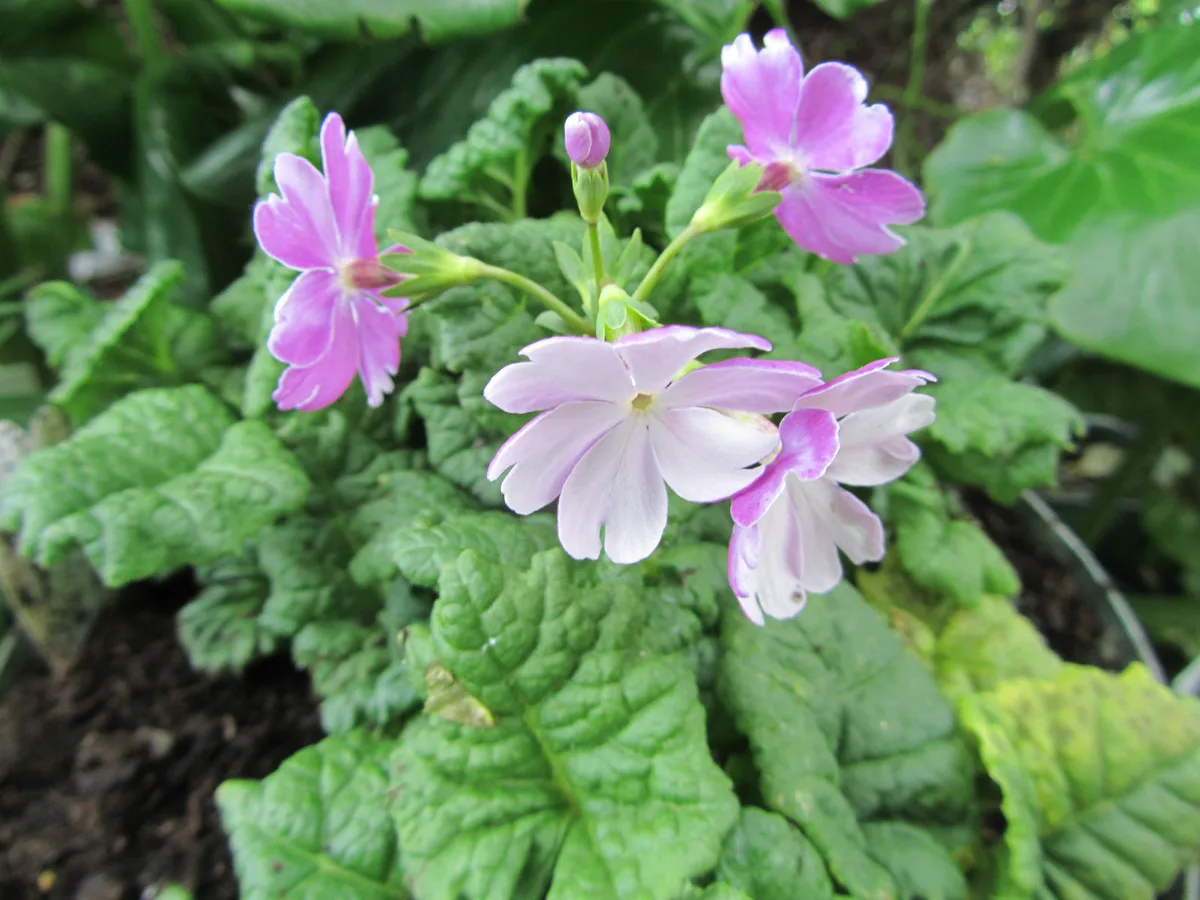
A compact, rosette-forming, deciduous perennial with pale green, wrinkled foliage and white flowers, pink on the reverse with a small yellow eye, appearing in the spring
Scientific classification
- Species
- Primula sieboldii 'Tamashiki-no-miya' (Primula sieboldii 'Tamashiki-no-miya')
- Genus
- Primula
- Family
- Primulaceae
- Order
- Ericales
- Class
- Magnoliopsida
- Phylum
- Magnoliophyta
- Information to be completed
- Toxicity
- Information to be completed
- Plant type
- Information to be completed
- Height
- Information to be completed
- Spread
- Deciduous
- Foliage
- Clump forming
- Habit
- Spring · Summer · Autumn
- Season of interest
- Partial shade
- Sunlight
- Information to be completed
- Ideal temperature









Primula sieboldii 'Tamashiki-no-miya' pictures
Distribution of Primula sieboldii 'Tamashiki-no-miya'
Distribution map
- Native
- Introduced
- Cultivated
Source:WCVP v16 · Royal Botanic Gardens, Kew · CC BY 3.0 · Boundaries:WGSRPD / TDWG
Primula sieboldii 'Tamashiki-no-miya' care guide
- Lightly damp soil, avoid drought stress during spring flowering cycle
- Watering
- Partial shade
- Sunlight

Watering
Lightly damp soil, avoid drought stress during spring flowering cycle
Fertilizing
 Fertilizing
Weak flowering primrose feed monthly active spring growth phase
Pruning
 Pruning
Tidy plant after flowering and remove diseased or damaged leaves
Propagation
 Propagation
Propagate by division in autumn
Growing
 Growing
Grow in partial shade, in deep humus-rich, moist, neutral to acid loam soil; tolerates full sun if the soil remains moist at all times
Common pests and diseases
Diseases
May be susceptible to a virus, grey mould (botrytis) or primula brown core
Pests
May be susceptible to aphids, leafhoppers, vine weevil and slugs
Explore the plant health library →




