
Skimmia japonica White Dwarf ('Moerings 1')
Also known as: Information to be completed
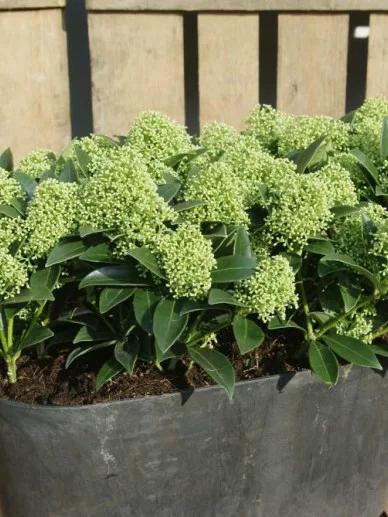
A compact evergreen shrub to 70cm high, with elliptic, glossy green leaves that are aromatic when crushed. Clusters of very small white flowers open from yellow-green buds in spring
Scientific classification
- Species
- Skimmia japonica White Dwarf ('Moerings 1') (Skimmia japonica White Dwarf ('Moerings 1'))
- Genus
- Skimmia
- Family
- Rutaceae
- Order
- Sapindales
- Class
- Magnoliopsida
- Phylum
- Magnoliophyta
- Fruit are ornamental, not to be eaten. Wear gloves and other protective equipment when handling]
- Toxicity
- Shrubs
- Plant type
- 0.5-1 metres
- Height
- 0.5-1 metres
- Spread
- Evergreen
- Foliage
- Bushy
- Habit
- Spring · Summer · Autumn · Winter
- Season of interest
- Full shade · Partial shade
- Sunlight
- Information to be completed
- Ideal temperature









Skimmia japonica White Dwarf ('Moerings 1') pictures
Toxicity
Fruit are ornamental, not to be eaten. Wear gloves and other protective equipment when handling]
Skimmia japonica White Dwarf ('Moerings 1') care guide
- Regular soft water supply, steady mild soil dampness
- Watering
- Full shade · Partial shade
- Sunlight

Watering
Regular soft water supply, steady mild soil dampness
Fertilizing
 Fertilizing
Acidic ericaceous feed monthly spring and summer months
Pruning
 Pruning
If needed, Usually little pruning is needed. Lightly shape if necessary, removing dead, damaged or diseased shoots. Prune after flowering.
Propagation
 Propagation
Propagate by semi-ripe cuttings in late summer. As this plant is protected by Plant Breeders' Rights, any propagation should be for personal rather than commercial use
Growing
 Growing
Grow in moderately fertile, moist but well drained soil, in light to full shade; prefers acidic to neutral soils but will tolerate alkaline soils where there is plenty of humus. Plants may become chlorotic on poor, dry soil or in too much sun. This is a male cultivar and won't produce berries
Common pests and diseases
Diseases
May be susceptible to Phytophthora and honey fungus
Pests
May be susceptible to scale insects, and to vine weevil when grown in containers
Explore the plant health library →




