
Lilium 'Primrose Hill'
Also known as: Information to be completed
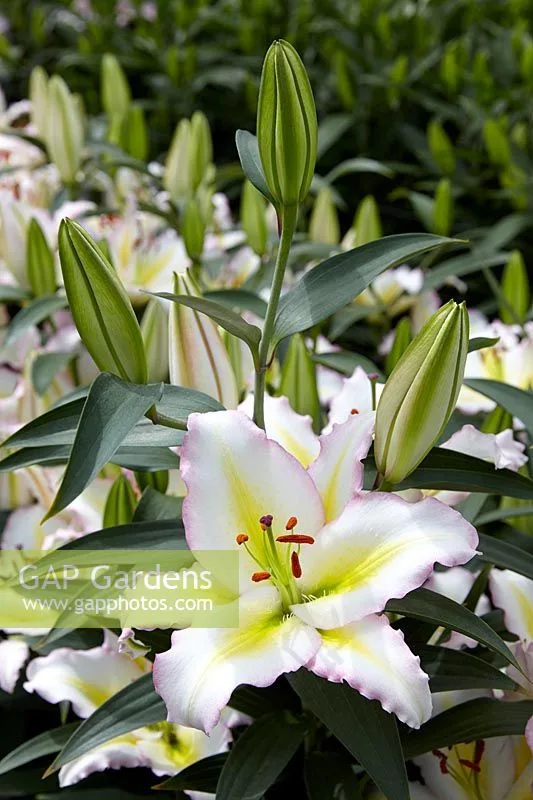
A bulbous perennial producing strong, upright stems to a height of 1.2m clothed in shiny, dark green, lance-shaped leaves and topped in early summer with clusters of large, upward-facing, trumpet-shaped scented white flowers with yellow bars on the petals and edged in pale purple
Scientific classification
- Species
- Lilium 'Primrose Hill' (Lilium 'Primrose Hill')
- Genus
- Lilium
- Family
- Liliaceae
- Order
- Liliales
- Class
- Liliopsida
- Phylum
- Magnoliophyta
- Ornamental bulbs - not to be eaten. Wear gloves and other protective equipment when handling
- Toxicity
- Bulbs
- Plant type
- 1-1.5 metres
- Height
- 0.1-0.5 metres
- Spread
- Deciduous
- Foliage
- Columnar upright
- Habit
- Spring · Summer · Autumn
- Season of interest
- Full sun · Partial shade
- Sunlight
- Information to be completed
- Ideal temperature









Lilium 'Primrose Hill' pictures
Toxicity
Ornamental bulbs - not to be eaten. Wear gloves and other protective equipment when handling
Lilium 'Primrose Hill' care guide
- Water regularly to keep soil damp, cease watering when foliage fades
- Watering
- Full sun · Partial shade
- Sunlight

Watering
Water regularly to keep soil damp, cease watering when foliage fades
Fertilizing
 Fertilizing
Bulb bloom fertilizer every two weeks pre and post flowering period
Pruning
 Pruning
No pruning required but deadheading will improve their appearance
Propagation
 Propagation
Propagate by division: detach offset bulblets when the leaves die down and plants become dormant
Growing
 Growing
Grow in well-drained soil enriched with leaf mould or well-rotted organic matter
Common pests and diseases
Diseases
May be susceptible to grey moulds, lily disease, other fungal diseases, and virus diseases; for more advice, see lily diseases
Pests
May be susceptible to lily beetle, aphids, slugs, snails, Thrips, leatherjackets, and wireworms, and to damage by rabbits and voles; plants in containers may be susceptible to vine weevil
Explore the plant health library →




