
pepper 'Lemon Dream'
Also known as: Information to be completed
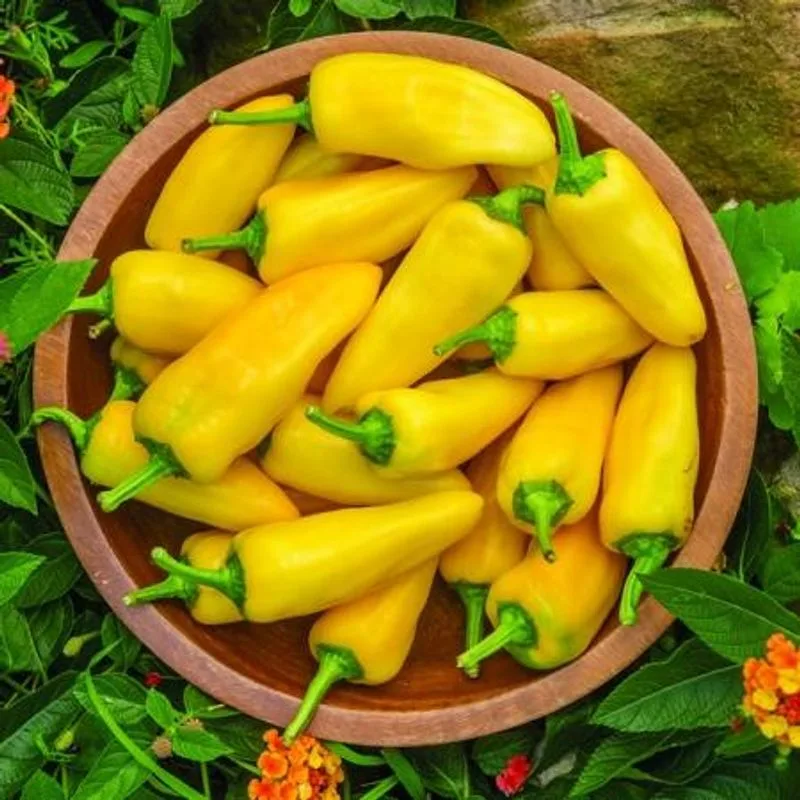
A compact annual to 45cm tall with mid- to dark green, lance-shaped leaves; small white flowers in summer are followed by green fruits maturing to bright yellow, mild and sweet-tasting peppers up to 7cm long
Scientific classification
- Species
- pepper 'Lemon Dream' (Capsicum annuum 'Lemon Dream')
- Genus
- Capsicum
- Family
- Solanaceae
- Order
- Solanales
- Class
- Magnoliopsida
- Phylum
- Magnoliophyta
- Irritant if eaten, skin/eye irritant. Wear gloves and other protective equipment when handling]
- Toxicity
- Conservatory Greenhouse · Annual Biennial
- Plant type
- 0.1-0.5 metres
- Height
- 0.1-0.5 metres
- Spread
- Deciduous
- Foliage
- Bushy
- Habit
- Spring · Summer · Autumn
- Season of interest
- Full sun
- Sunlight
- Information to be completed
- Ideal temperature









pepper 'Lemon Dream' pictures
Distribution of pepper 'Lemon Dream'
Distribution map
- Native
- Introduced
- Cultivated
Source:WCVP v16 · Royal Botanic Gardens, Kew · CC BY 3.0 · Boundaries:WGSRPD / TDWG
Toxicity
Irritant if eaten, skin/eye irritant. Wear gloves and other protective equipment when handling]
pepper 'Lemon Dream' care guide
- Keep moisture even through flowering and fruiting, avoiding hard dry swings
- Watering
- Full sun
- Sunlight

Watering
Keep moisture even through flowering and fruiting, avoiding hard dry swings
Fertilizing
 Fertilizing
Tomato or pepper feed every one to two weeks in fruiting season
Pruning
 Pruning
Pinch out growing tips of plants when they are about 20cm tall to encourage bushiness
Propagation
 Propagation
Propagate by seed. See sowing vegetable seeds or sowing seeds indoors for further advice
Growing
 Growing
Best grow inside on a sunny windowsill or in a greenhouse, but can be grown outside once all danger of frost has passed; select a sunny, sheltered position and grow in containers, growing bags or in open ground. Water regularly and feed with a high potassium liquid fertiliser once the first fruit has set
Common pests and diseases
Diseases
May be susceptible to blossom end rot
Pests
May be susceptible to glasshouse red spider mite and aphids
Explore the plant health library →




