
Papaver rhoeas 'Falling in Love'
Also known as: Information to be completed
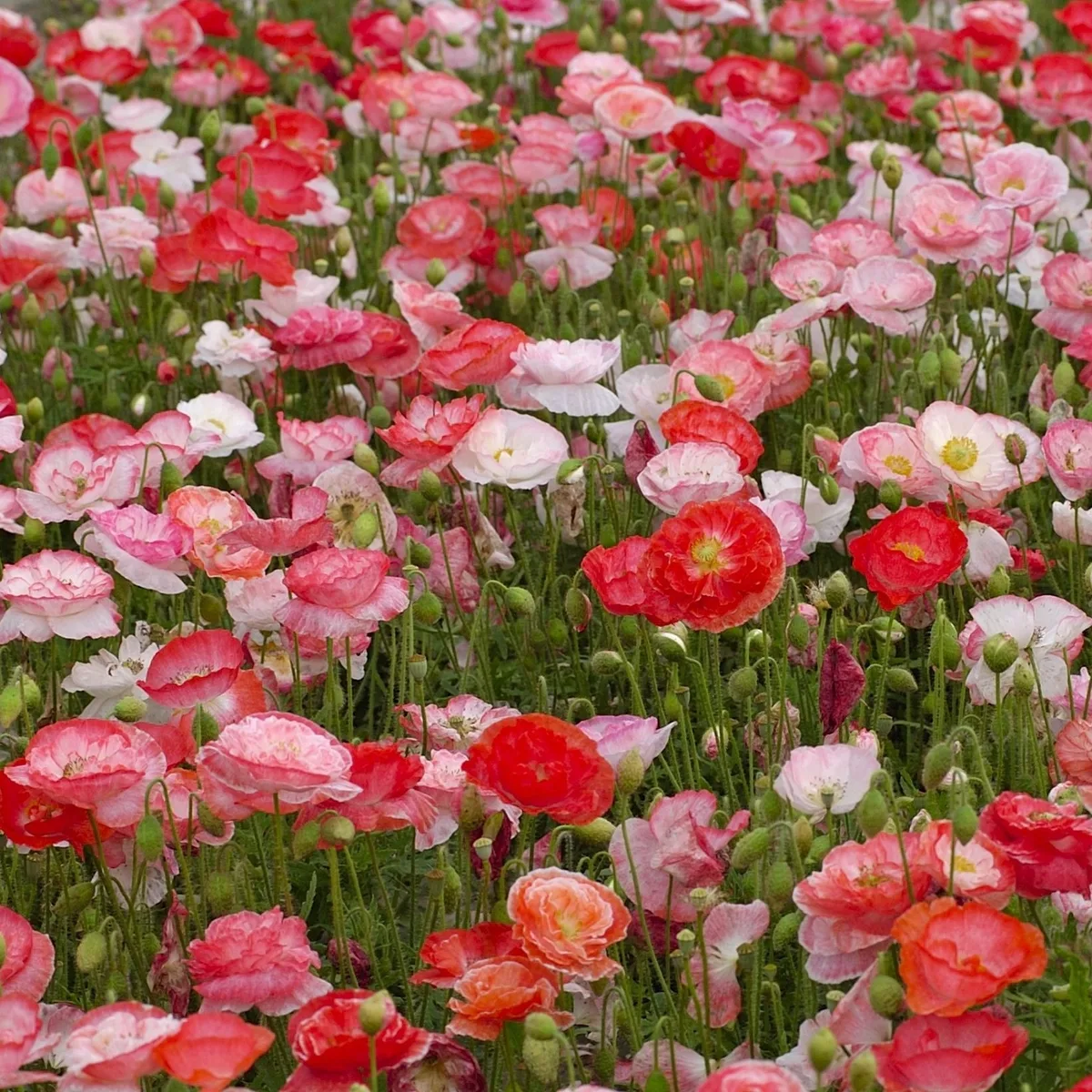
An annual poppy, to 60cm high, with finely divided, lightly hairy green leaves. In late spring to early summer, ruffled, semi-double and double flowers are produced on slender stems, in shades of white, rose pink and red
Scientific classification
- Species
- Papaver rhoeas 'Falling in Love' (Papaver rhoeas 'Falling in Love')
- Genus
- Papaver
- Family
- Papaveraceae
- Order
- Ranunculales
- Class
- Magnoliopsida
- Phylum
- Magnoliophyta
- Information to be completed
- Toxicity
- Annual Biennial
- Plant type
- 0.5-1 metres
- Height
- 0.1-0.5 metres
- Spread
- Deciduous
- Foliage
- Columnar upright
- Habit
- Spring · Summer
- Season of interest
- Full sun
- Sunlight
- Information to be completed
- Ideal temperature









Papaver rhoeas 'Falling in Love' pictures
Distribution of Papaver rhoeas 'Falling in Love'
Distribution map
- Native
- Introduced
- Cultivated
Source:WCVP v16 · Royal Botanic Gardens, Kew · CC BY 3.0 · Boundaries:WGSRPD / TDWG
Papaver rhoeas 'Falling in Love' care guide
- Moderate regular watering, avoid prolonged drought and stagnant waterlogging
- Watering
- Full sun
- Sunlight

Watering
Moderate regular watering, avoid prolonged drought and stagnant waterlogging
Fertilizing
 Fertilizing
Balanced perennial feed every four weeks spring through summer growth
Pruning
 Pruning
Deadhead to encourage more flowers
Propagation
 Propagation
Propagate by seed, sown successionally and in situ from early spring. Thin seedlings as required, but they do not like to be transplanted
Growing
 Growing
Grow in fertile, well-drained soil in full sun
Common pests and diseases
Diseases
May be susceptible to downy mildews, powdery mildews, fungal wilts and verticillium wilt
Pests
May be susceptible to aphids
Explore the plant health library →




