
Zinnia elegans 'Scabiosaeflora'
Also known as: Information to be completed
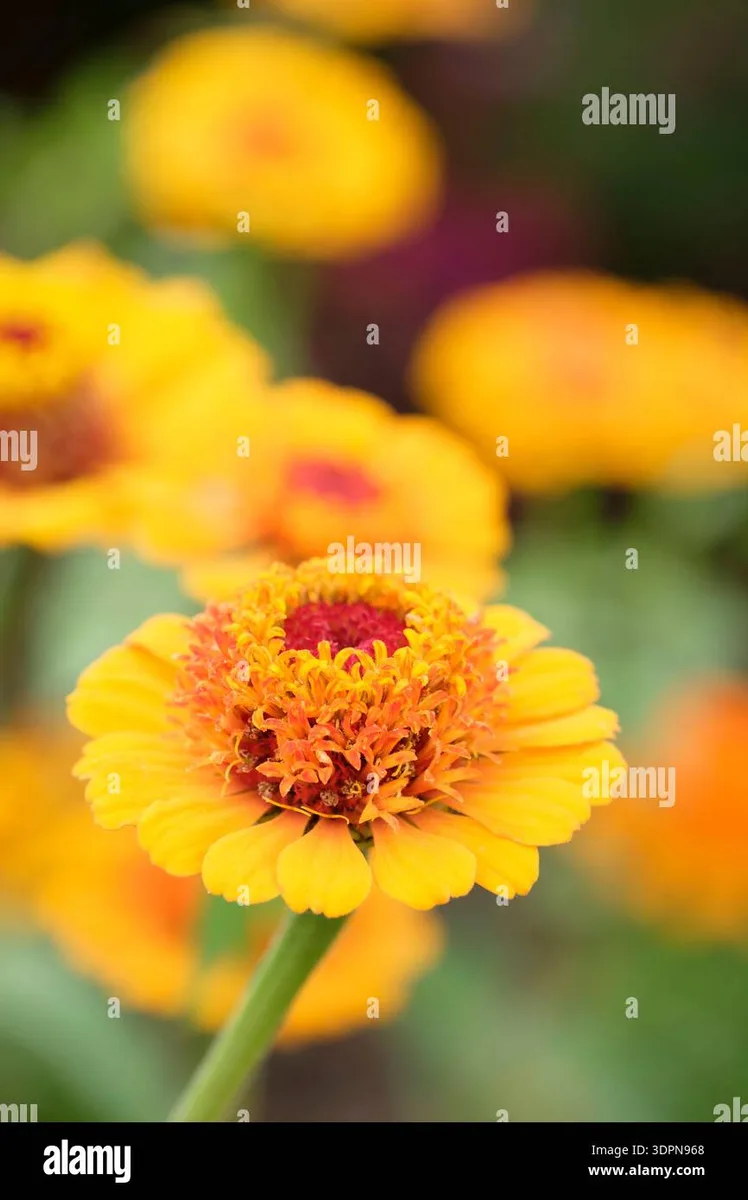
A bushy, half-hardy annual, producing flowers in a range of colours from red, pink, yellow and orange. Each flower has a single outer ring of petals and a dome of florets in the centre, which resemble a scabious or peony. The flowers are held above mid-green foliage on stems up to 75cm (30in) high, making them ideal to grow for cutting, or for including in the wildlife garden where they will attract pollinating insects such as bees and butterflies.
Scientific classification
- Species
- Zinnia elegans 'Scabiosaeflora' (Zinnia elegans 'Scabiosaeflora')
- Genus
- Zinnia
- Family
- Asteraceae
- Order
- Asterales
- Class
- Magnoliopsida
- Phylum
- Magnoliophyta
- Information to be completed
- Toxicity
- Annual Biennial
- Plant type
- 0.5-1 metres
- Height
- 0.1-0.5 metres
- Spread
- Deciduous
- Foliage
- Bushy
- Habit
- Spring · Summer · Autumn
- Season of interest
- Full sun
- Sunlight
- Information to be completed
- Ideal temperature









Zinnia elegans 'Scabiosaeflora' pictures
Distribution of Zinnia elegans 'Scabiosaeflora'
Distribution map
- Native
- Introduced
- Cultivated
Source:WCVP v16 · Royal Botanic Gardens, Kew · CC BY 3.0 · Boundaries:WGSRPD / TDWG
Zinnia elegans 'Scabiosaeflora' care guide
- Moderate regular watering, avoid prolonged drought and stagnant waterlogging
- Watering
- Full sun
- Sunlight

Watering
Moderate regular watering, avoid prolonged drought and stagnant waterlogging
Fertilizing
 Fertilizing
Balanced perennial feed every four weeks spring through summer growth
Pruning
 Pruning
Deadhead to prolong flowering
Propagation
 Propagation
Propagate by seed sown in pots in spring or, in warm areas, sown in situ in late spring
Growing
 Growing
Grow in well-drained, fertile, humus-rich soil in a warm, sunny position
Common pests and diseases
Diseases
May be susceptible to foot and root rot, grey moulds, fungal leaf spot and powdery mildews
Pests
Generally pest-free
Explore the plant health library →




