
eulalia 'Strictus Compactus'
Also known as: Information to be completed
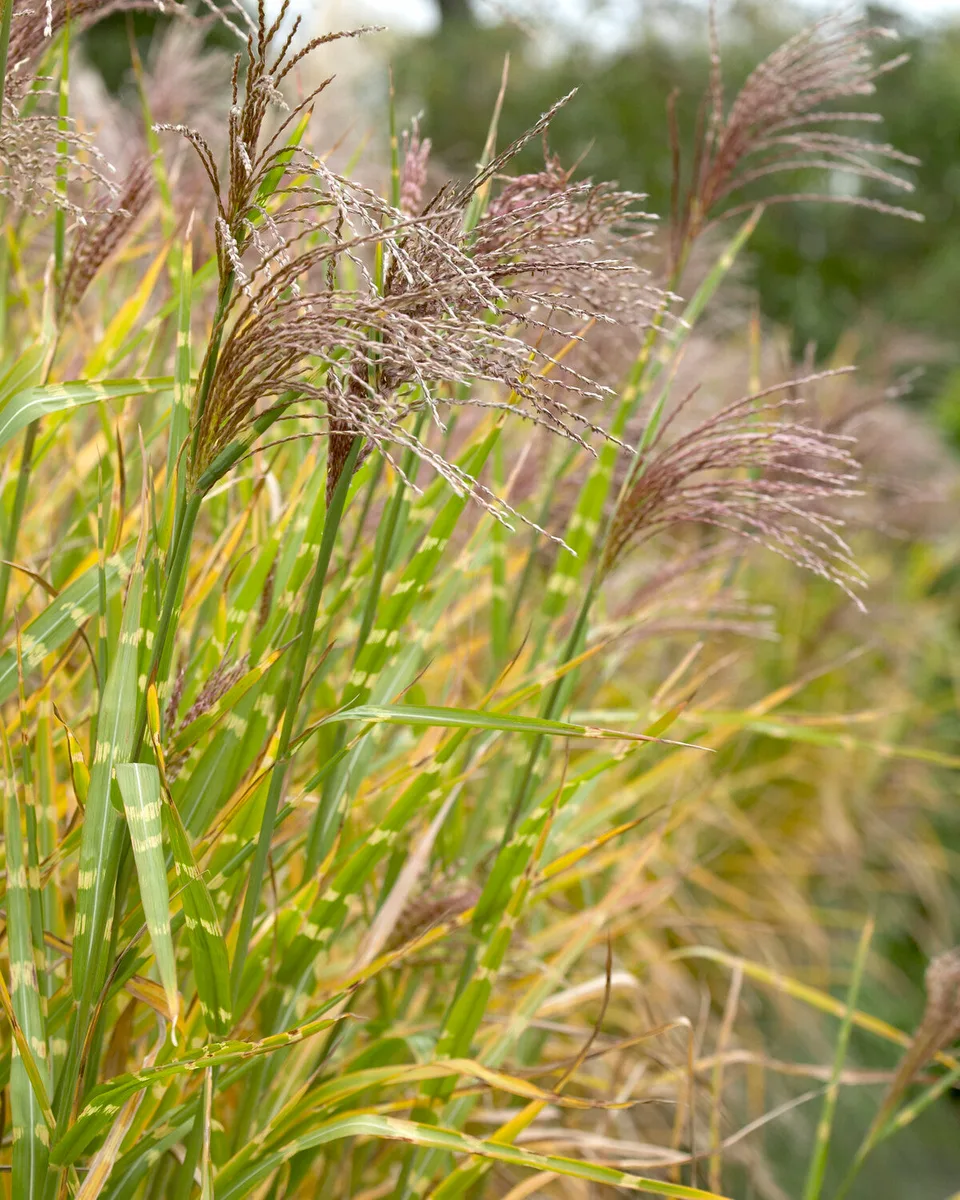
Compact, clump-forming, deciduous grass, 1-1.2m tall, with upright, rather spikey, bright green leaves banded yellow, and fading to pale gold in autumn, then pale brown in winter. Feathery flower panicles open silvery-pink in late summer and early autumn, fading to silver and remaining on the plant over winter
Scientific classification
- Species
- eulalia 'Strictus Compactus' (Miscanthus sinensis 'Strictus Compactus')
- Genus
- Miscanthus
- Family
- Poaceae
- Information to be completed
- Toxicity
- Information to be completed
- Plant type
- 1-1.5 metres
- Height
- 0.5-1 metres
- Spread
- Information to be completed
- Foliage
- Information to be completed
- Habit
- Information to be completed
- Season of interest
- Information to be completed
- Sunlight
- Information to be completed
- Ideal temperature









eulalia 'Strictus Compactus' pictures
Distribution of eulalia 'Strictus Compactus'
Distribution map
Information to be completed
Information to be completed
Culture
Information to be completed
Toxicity
Information to be completed
Quick identification of eulalia 'Strictus Compactus'
Information to be completed
eulalia 'Strictus Compactus' care guide
- Moderate regular watering, allowing brief slight drying between soakings
- Watering
- Information to be completed
- Sunlight
- Information to be completed
- Ideal temperature

Watering
Moderate regular watering, allowing brief slight drying between soakings
Fertilizing
 Fertilizing
Balanced perennial feed every four weeks from spring through summer
Pruning
 Pruning
Cut down dead foliage and old flowered stems as they deteriorate, or by early spring
Propagation
 Propagation
Propagate by division in spring - can be slow to establish
Growing
 Growing
Grow in any moderately fertile, moist but well-drained soil in full sun, best in an open position. Protect from excessive winter wet. See ornamental grasses cultivation
People also ask
Information to be completed
Common pests and diseases
Diseases
Generally disease-free
Pests
Generally pest-free
Explore the plant health library →




