
good King Henry
Also known as: all good; blite; English mercury; false mercury; fat-hen; flowering dock; friar's pot herb; good Henry; goosefoot; Lincolnshire asparagus; mark weed; markery; mercury; mercury goosefoot; perennial goosefoot; Roman plant; shoemaker's heels; wild mercury; wild spinach
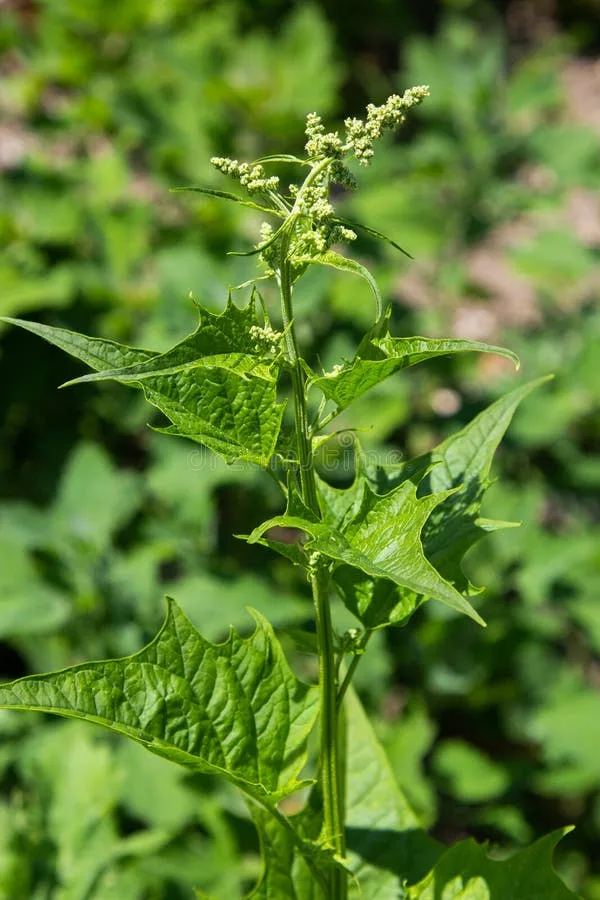
An edible perennial with tiny yellowy green flowers and bright mid-green arrow-shaped leaves. Can be eaten raw or cooked and tasting similar to spinach. Keep picking for tasty and tender leaves, and to avoid the plant running to seed too soon
Scientific classification
- Species
- good King Henry (Chenopodium bonus-henricus)
- Genus
- Chenopodium
- Family
- Amaranthaceae
- Order
- Caryophyllales
- Class
- Magnoliopsida
- Phylum
- Magnoliophyta
- Information to be completed
- Toxicity
- Herbs - Culinary · Herbaceous Perennial
- Plant type
- 0.5-1 metres
- Height
- 0.1-0.5 metres
- Spread
- Deciduous
- Foliage
- Columnar upright · Bushy
- Habit
- Spring · Summer · Autumn
- Season of interest
- Full shade · Partial shade
- Sunlight
- Information to be completed
- Ideal temperature









good King Henry pictures
Distribution of good King Henry
Distribution map
- Native
- Introduced
- Cultivated
Locally extinct or doubtful records are excluded from native and introduced layers.
Source:WCVP v16 · Royal Botanic Gardens, Kew · CC BY 3.0 · Boundaries:WGSRPD / TDWG
good King Henry care guide
- Moderate regular watering, allowing brief slight drying between soakings
- Watering
- Full shade · Partial shade
- Sunlight

Watering
Moderate regular watering, allowing brief slight drying between soakings
Fertilizing
 Fertilizing
Balanced perennial feed every four weeks from spring through summer
Pruning
 Pruning
Harvest the leaves as required, to keep the plant compact and cropping well. Only pick lightly in the first year after planting
Propagation
 Propagation
Propagate by seed. See sowing vegetable seeds
Growing
 Growing
Grow in any well-drained fertile soil, in a sunny or semi-shaded position. In the ideal growing conditions they can grow quite rapidly and may require staking if they become too tall
Common pests and diseases
Diseases
Generally disease-free
Pests
Generally pest-free
Explore the plant health library →




