
Hydrangea arborescens BellaRagazza Mauvette ('Ncha7')
Also known as: Information to be completed
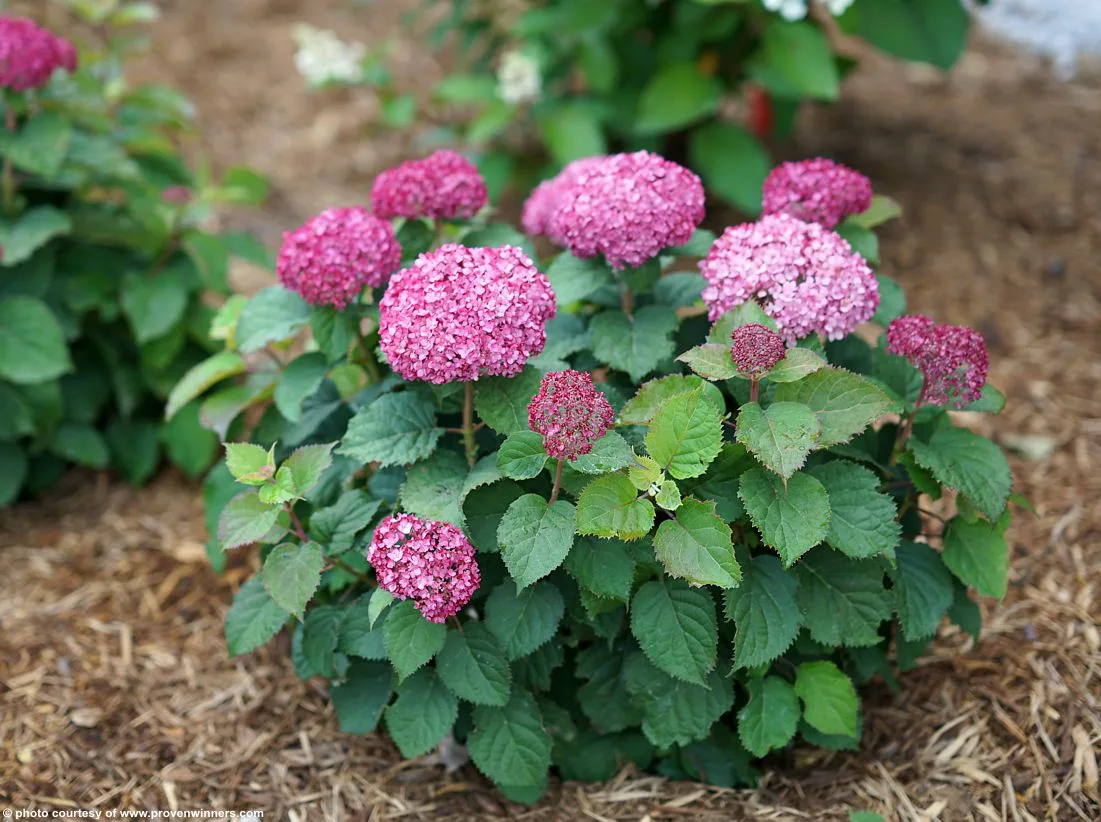
A dwarf, deciduous herbaceous perennial to around 75cm in height, with oval-shaped dark green veined and serrated foliage and large, rounded dark pink-purple flowers appearing from summer through until the autumn
Scientific classification
- Species
- Hydrangea arborescens BellaRagazza Mauvette ('Ncha7') (Hydrangea arborescens BellaRagazza Mauvette ('Ncha7'))
- Genus
- Hydrangea
- Family
- Hydrangeaceae
- Order
- Cornales
- Class
- Magnoliopsida
- Phylum
- Magnoliophyta
- Skin allergen. Wear gloves and other protective equipment when handling
- Toxicity
- Shrubs
- Plant type
- 0.5-1 metres
- Height
- 0.5-1 metres
- Spread
- Deciduous
- Foliage
- Bushy
- Habit
- Spring · Summer · Autumn
- Season of interest
- Partial shade
- Sunlight
- Information to be completed
- Ideal temperature









Hydrangea arborescens BellaRagazza Mauvette ('Ncha7') pictures
Toxicity
Skin allergen. Wear gloves and other protective equipment when handling
Hydrangea arborescens BellaRagazza Mauvette ('Ncha7') care guide
- Consistently moist root zone, add extra water during warm dry weather
- Watering
- Partial shade
- Sunlight

Watering
Consistently moist root zone, add extra water during warm dry weather
Fertilizing
 Fertilizing
Hydrangea shrub feed every four weeks spring through early summer
Pruning
 Pruning
Use the method for the hydrangea type: remove faded mophead flowers to the first healthy bud pair; paniculata and arborescens may have last year's stems shortened to healthy bud pairs. Climbing hydrangeas need overlong shoots trimmed after flowering. Most types are pruned in late winter or early spring; climbing hydrangeas are pruned after flowering in summer.
Propagation
 Propagation
Propagate by softwood cuttings in early summer or hardwood cuttings in winter
Growing
 Growing
Grow in any moist but well-drained soil in partial shade or grow in sun if soil remains reliably moist. See shrubby hydrangea cultivation for further advice
Common pests and diseases
Diseases
May be susceptible to a leaf spot, grey moulds, powdery mildews and honey fungus
Pests
May be susceptible to aphids, capsid bug, hydrangea scale and vine weevil
Explore the plant health library →




