
David's alchornea
Also known as: Information to be completed
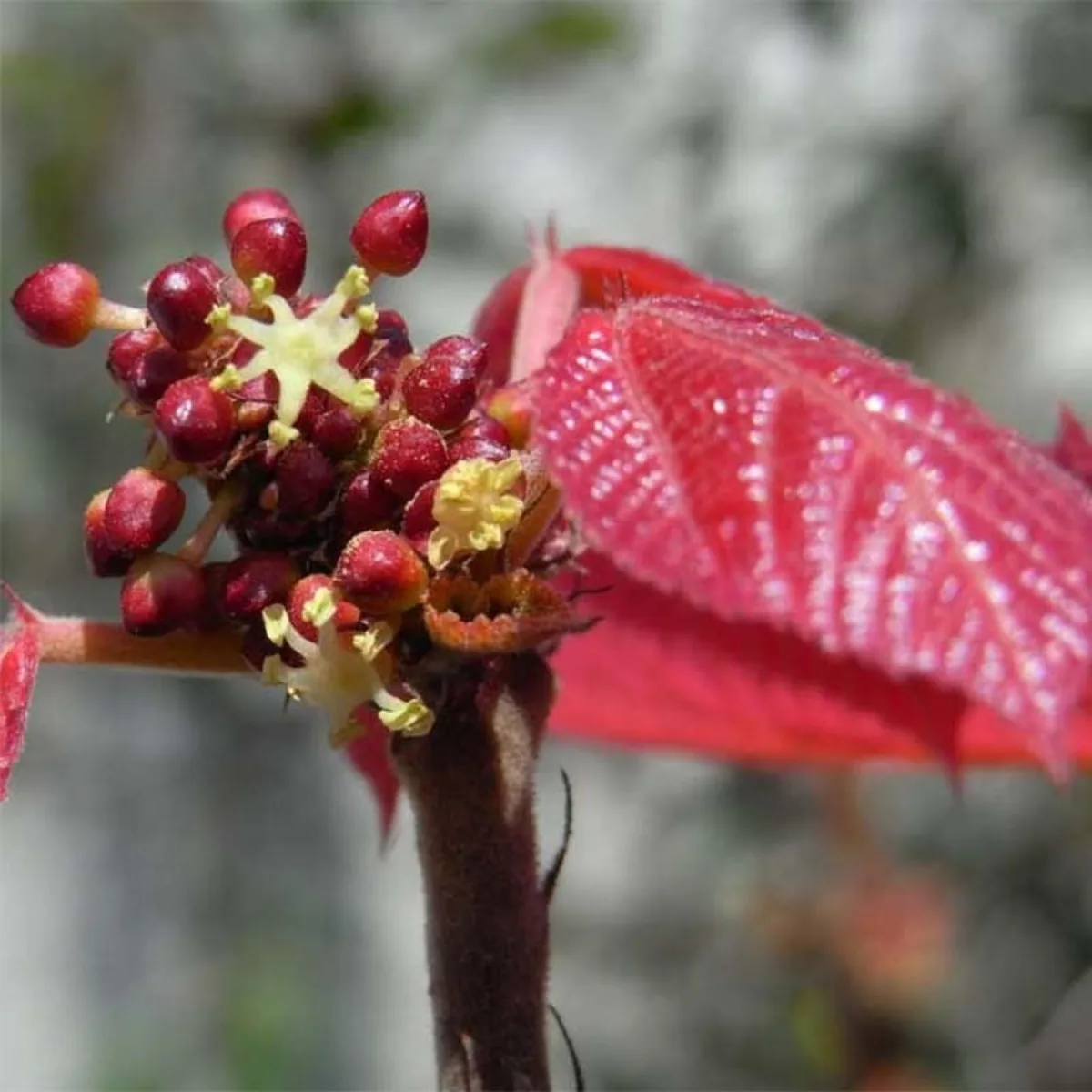
A suckering shrub with upright shoots developing from ground level with limited branching. Large, heart-shaped leaves open vivid pink, changing through pale pink, cream and pale green to mid-green, then turning red and yellow in autumn. Clusters of tiny, red and green flowers appear along the stems in summer
Scientific classification
- Species
- David's alchornea (Alchornea davidii)
- Genus
- Alchornea
- Family
- Euphorbiaceae
- Information to be completed
- Toxicity
- Shrubs
- Plant type
- 2.5-4 metres
- Height
- 2.5-4 metres
- Spread
- Deciduous
- Foliage
- Suckering
- Habit
- Autumn · Spring · Summer
- Season of interest
- Partial shade
- Sunlight
- Information to be completed
- Ideal temperature









David's alchornea pictures
Distribution of David's alchornea
Distribution map
Southern China
Information to be completed
Culture
Information to be completed
Toxicity
Information to be completed
Quick identification of David's alchornea
Information to be completed
David's alchornea care guide
- Deep watering weekly in heat, reduce volume in cool weather
- Watering
- Partial shade
- Sunlight
- Information to be completed
- Ideal temperature

Watering
Deep watering weekly in heat, reduce volume in cool weather
Fertilizing
 Fertilizing
Balanced woody shrub fertilizer applied once per early spring
Pruning
 Pruning
Little pruning is needed. Remove diseased, damaged, crowded or crossing shoots and unwanted growth. Timing depends on the plant: generally late winter or early spring; plants prone to bleeding and deciduous magnolias need different timing, and deciduous azaleas and lilacs are pruned after flowering.
Propagation
 Propagation
Propagate by seed or by removing and replanting suckers in autumn
Growing
 Growing
Best in semi-shade, sheltered from cold, spring winds. Suckers may need to be kept in check
People also ask
Information to be completed
Common pests and diseases
Diseases
Generally disease-free
Pests
Generally pest-free
Explore the plant health library →




