
Calycanthus floridus 'Burgundy Spice'
Also known as: Information to be completed
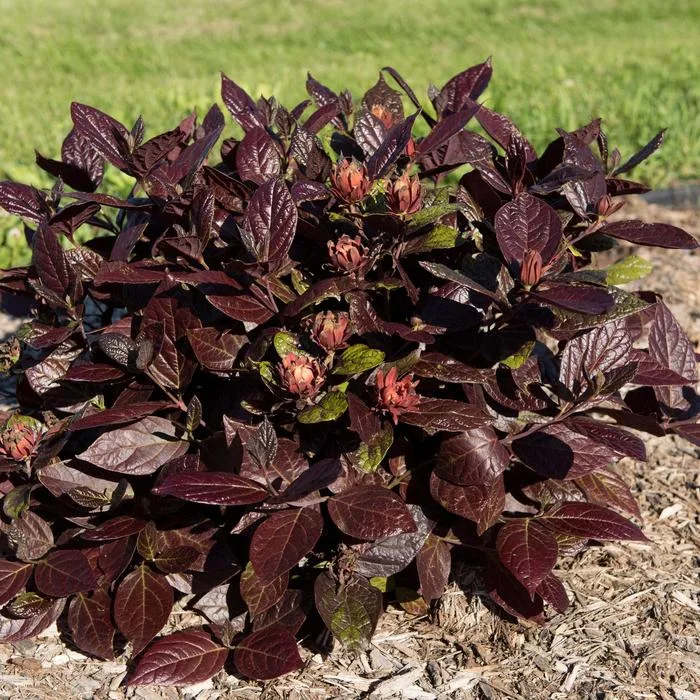
A bushy and sometimes suckering deciduous shrub to around 2.5m high, with oval-shaped, glossy dark green leaves strongly flushed with reddish-purple, especially in sun. Sweetly scented orange-red flowers with narrow strappy petals are borne at the ends of short branchlets in late spring or early summer, followed by urn-shaped seed capsules. Leaves turn red, orange and yellow in autumn
Scientific classification
- Species
- Calycanthus floridus 'Burgundy Spice' (Calycanthus floridus 'Burgundy Spice')
- Genus
- Calycanthus
- Family
- Calycanthaceae
- Order
- Laurales
- Class
- Magnoliopsida
- Phylum
- Magnoliophyta
- Harmful if eaten. Wear gloves and other protective equipment when handling
- Toxicity
- Shrubs
- Plant type
- 1.5-2.5 metres
- Height
- 1.5-2.5 metres
- Spread
- Deciduous
- Foliage
- Bushy
- Habit
- Autumn · Spring · Summer
- Season of interest
- Full sun · Partial shade
- Sunlight
- Information to be completed
- Ideal temperature









Calycanthus floridus 'Burgundy Spice' pictures
Distribution of Calycanthus floridus 'Burgundy Spice'
Distribution map
- Native
- Introduced
- Cultivated
Source:WCVP v16 · Royal Botanic Gardens, Kew · CC BY 3.0 · Boundaries:WGSRPD / TDWG
Toxicity
Harmful if eaten. Wear gloves and other protective equipment when handling
Calycanthus floridus 'Burgundy Spice' care guide
- Medium watering rate, soil may dry lightly between irrigation cycles
- Watering
- Full sun · Partial shade
- Sunlight

Watering
Medium watering rate, soil may dry lightly between irrigation cycles
Fertilizing
 Fertilizing
All-purpose shrub fertilizer once annually during early spring growth
Pruning
 Pruning
Prune immediately after flowering to shape and maintain size. Remove root suckers promptly
Propagation
 Propagation
Propagate by softwood cuttings in summer, by layering in autumn, or by division, removing suckers in spring
Growing
 Growing
Grow in fertile, moist but well-drained soil, will tolerate light shade but foliage colour and flowering are best in full sun. May suffer from frost damage in very cold winters
Common pests and diseases
Diseases
May be susceptible to honey fungus (rarely)
Pests
Generally pest-free
Explore the plant health library →




