
Weigela coraeensis var. fragrans
Also known as: Information to be completed
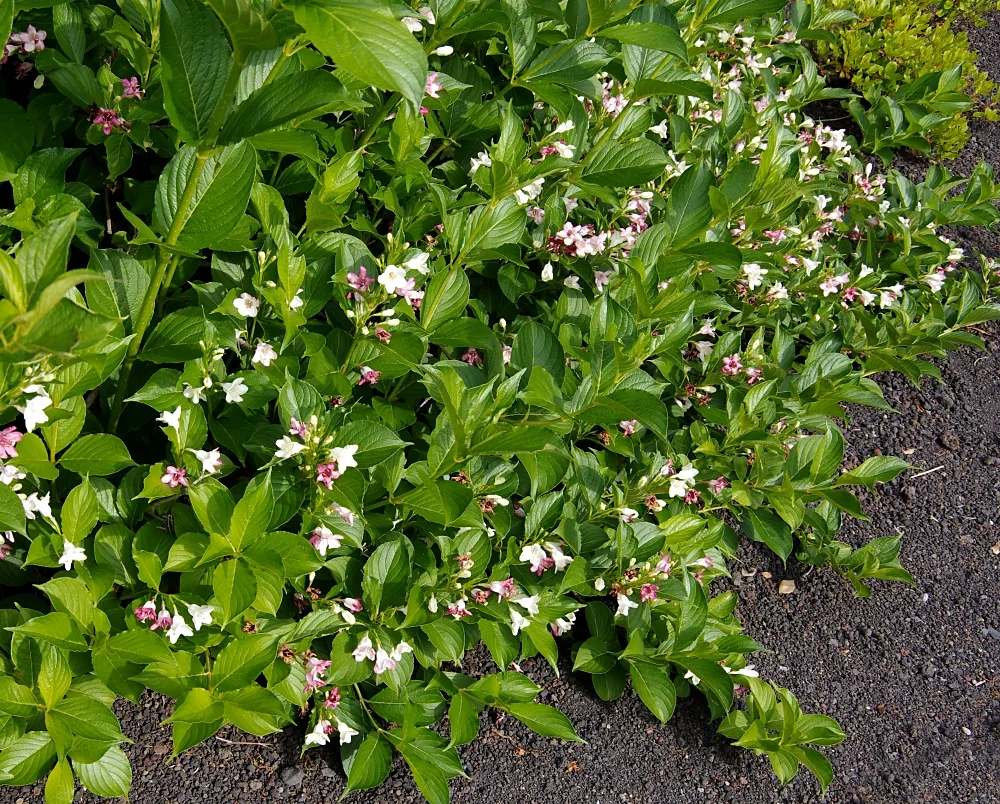
Large, elegant, deciduous shrub about 5m tall, with broadly eliptic, pointed dark green leaves, and white buds open to small, bell-shaped, fragrant white or pale rose flowers deepening to carmine and flowering in early summer
Scientific classification
- Species
- Weigela coraeensis var. fragrans (Weigela coraeensis var. fragrans)
- Genus
- Weigela
- Family
- Caprifoliaceae
- Order
- Dipsacales
- Class
- Magnoliopsida
- Phylum
- Tracheophyta
- Information to be completed
- Toxicity
- Shrubs
- Plant type
- 4-8 metres
- Height
- 4-8 metres
- Spread
- Deciduous
- Foliage
- Information to be completed
- Habit
- Spring · Summer · Autumn
- Season of interest
- Full sun · Partial shade
- Sunlight
- Information to be completed
- Ideal temperature









Weigela coraeensis var. fragrans pictures
Distribution of Weigela coraeensis var. fragrans
Distribution map
- Native
- Introduced
- Cultivated
Source:WCVP v16 · Royal Botanic Gardens, Kew · CC BY 3.0 · Boundaries:WGSRPD / TDWG
Weigela coraeensis var. fragrans care guide
- Water young plants regularly; once established, water during dry spells but avoid overwatering.
- Watering
- Full sun · Partial shade
- Sunlight

Watering
Water young plants regularly; once established, water during dry spells but avoid overwatering.
Fertilizing
 Fertilizing
Apply a general-purpose fertilizer in early spring and again after flowering.
Pruning
 Pruning
Cut flowered growth back to strong young shoots below, removing up to a fifth of old stems near the base each year. Prune immediately after flowering.
Propagation
 Propagation
Propagate by softwood cuttings in early summer, semi-ripe cuttings in midsummer or hardwood cuttings in late autumn and winter
Growing
 Growing
Grow in moist but well-drained fertile soils in sun or partial shade
Common pests and diseases
Diseases
May be susceptible to honey fungus
Pests
May be susceptible to leaf and bud eelworms, capsid bug and brown scale
Explore the plant health library →




