
bergamot [Dancing Bird]
Also known as: Information to be completed
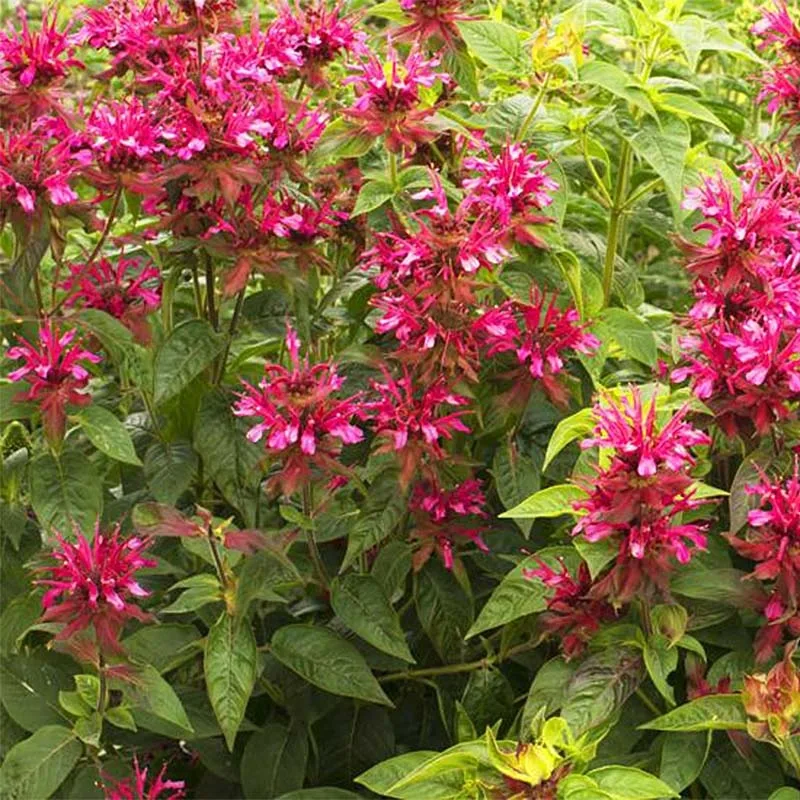
A clump-forming perennial to around 50cm tall with aromatic, toothed leaves and in summer, whorled clusters ofdeep pinkish-red flowers
Scientific classification
- Species
- bergamot [Dancing Bird] (Monarda didyma Dancing Bird ('Allmobird'))
- Genus
- Monarda
- Family
- Lamiaceae
- Information to be completed
- Toxicity
- Herbs - Culinary · Herbaceous Perennial
- Plant type
- 0.1-0.5 metres
- Height
- 0.1-0.5 metres
- Spread
- Deciduous
- Foliage
- Clump forming
- Habit
- Spring · Summer · Autumn
- Season of interest
- Full sun
- Sunlight
- Information to be completed
- Ideal temperature









bergamot [Dancing Bird] pictures
Distribution of bergamot [Dancing Bird]
Distribution map
Information to be completed
Information to be completed
Culture
Information to be completed
Toxicity
Information to be completed
Quick identification of bergamot [Dancing Bird]
Information to be completed
bergamot [Dancing Bird] care guide
- Keep soil evenly moist, especially in summer heat
- Watering
- Full sun
- Sunlight
- Information to be completed
- Ideal temperature

Watering
Keep soil evenly moist, especially in summer heat
Fertilizing
 Fertilizing
Balanced feed in spring and after first bloom
Pruning
 Pruning
No pruning required, though deadheading may prolong flowering
Propagation
 Propagation
Propagate by division in spring, before new growth begins, or by basal softwood cuttings in spring
Growing
 Growing
Grow in fertile, humus-rich, moisture-retentive but well-drained soil in full sun
People also ask
Information to be completed
Common pests and diseases
Diseases
Monardas may be affected by powdery mildews, especially in hot, dry summers; this cultivar is said to be mildew-resistant
Pests
May be affected by slugs, especially in spring
Explore the plant health library →




