
Streptocarpus 'Leah'
Also known as: Information to be completed
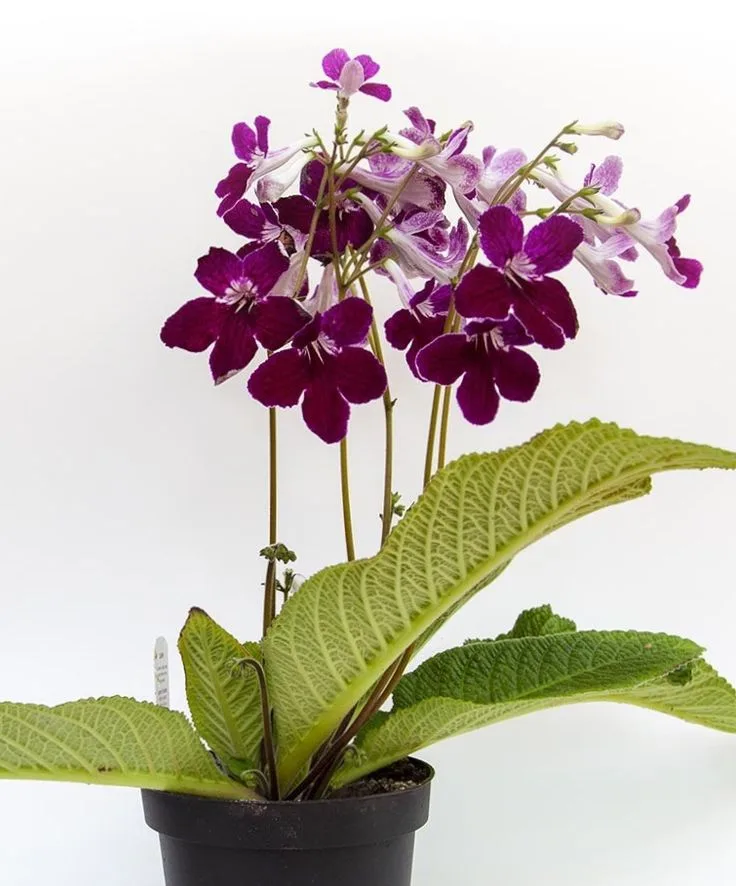
An evergreen clump-forming perennial with long, thick dark green leaves and long, thin flower stalks which produce dark, velvety plum-red flowers with white edges and a white throat from Spring through to the Autumn. An ideal houseplant
Scientific classification
- Species
- Streptocarpus 'Leah' (Streptocarpus 'Leah')
- Genus
- Streptocarpus
- Family
- Gesneriaceae
- Information to be completed
- Toxicity
- Herbaceous Perennial · Conservatory Greenhouse · Houseplants
- Plant type
- Information to be completed
- Height
- Information to be completed
- Spread
- Deciduous
- Foliage
- Clump forming
- Habit
- Spring · Summer · Autumn
- Season of interest
- Partial shade
- Sunlight
- Information to be completed
- Ideal temperature









Streptocarpus 'Leah' pictures
Distribution of Streptocarpus 'Leah'
Distribution map
Information to be completed
Information to be completed
Culture
Information to be completed
Toxicity
Information to be completed
Quick identification of Streptocarpus 'Leah'
Information to be completed
Streptocarpus 'Leah' care guide
- Steady lightly damp soil, never let entire root mass dry completely
- Watering
- Partial shade
- Sunlight
- Information to be completed
- Ideal temperature

Watering
Steady lightly damp soil, never let entire root mass dry completely
Fertilizing
 Fertilizing
Weak general houseplant feed every four weeks warm season
Pruning
 Pruning
Remove faded flower stems
Propagation
 Propagation
Propagate by leaf cuttings or by division
Growing
 Growing
Grow as a houseplant in free-draining compost on an east or west-facing windowsill, or grow in a temperate or warm greenhouse in bright filtered light with shade from hot sun. Water sparingly, preferably from the bottom, as compost dries in winter and in the growing season water freely allowing compost to dry out between waterings; feed fortnightly with a high-potassium fertiliser. See Streptocarpus cultivation
People also ask
Information to be completed
Common pests and diseases
Diseases
May be susceptible to grey moulds (botrytis) or powdery mildews
Pests
May be susceptible to glasshouse leafhoppers, mealybugs, thrips, vine weevil and tarsonemid mite
Explore the plant health library →




