
Eucalyptus gunnii France Bleu ('Rengun')
Also known as: Information to be completed
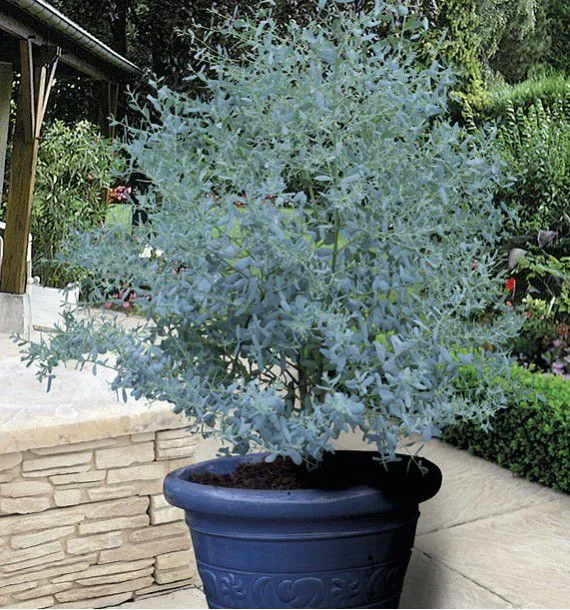
A dwarf form of the species, growing to a maximum height of 2m (6½ft), making it ideal for smaller city gardens and growing in containers. Juvenile foliage is ovate and an intense blue-green. Adult foliage is sickle-shaped and sage-green. Foliage is aromatic. Hard pruning is required every year in early spring to maintain the production of the more ornamental juvenile foliage. White flowers appear in autumn and are attractive to bees and other pollinators.
Scientific classification
- Species
- Eucalyptus gunnii France Bleu ('Rengun') (Eucalyptus gunnii France Bleu ('Rengun'))
- Genus
- Eucalyptus
- Family
- Myrtaceae
- Order
- Myrtales
- Class
- Magnoliopsida
- Phylum
- Magnoliophyta
- Information to be completed
- Toxicity
- Shrubs
- Plant type
- 1.5-2.5 metres
- Height
- 0.5-1 metres
- Spread
- Evergreen
- Foliage
- Bushy
- Habit
- Spring · Summer · Autumn · Winter
- Season of interest
- Full sun
- Sunlight
- Information to be completed
- Ideal temperature









Eucalyptus gunnii France Bleu ('Rengun') pictures
Eucalyptus gunnii France Bleu ('Rengun') care guide
- Moderate regular watering, allow slight surface soil dryness
- Watering
- Full sun
- Sunlight

Watering
Moderate regular watering, allow slight surface soil dryness
Fertilizing
 Fertilizing
Diluted eucalyptus feed monthly spring and summer growth months
Pruning
 Pruning
Little pruning is needed. Remove diseased, damaged, crowded or crossing shoots and unwanted growth. Timing depends on the plant: generally late winter or early spring; plants prone to bleeding and deciduous magnolias need different timing, and deciduous azaleas and lilacs are pruned after flowering.
Propagation
 Propagation
Propagate by seed at 13-18°C in spring and summer
Growing
 Growing
Grows best in slightly acidic, moist but well drained soil, in full sun. Shelter from cold, drying winds especially when young. See eucalyptus cultivation
Common pests and diseases
Diseases
May be susceptible to silver leaf, oedema and honey fungus
Pests
May be susceptible to eucalyptus gall wasp and eucalyptus sucker
Explore the plant health library →




