
pink 'Flutterby'
Also known as: Information to be completed
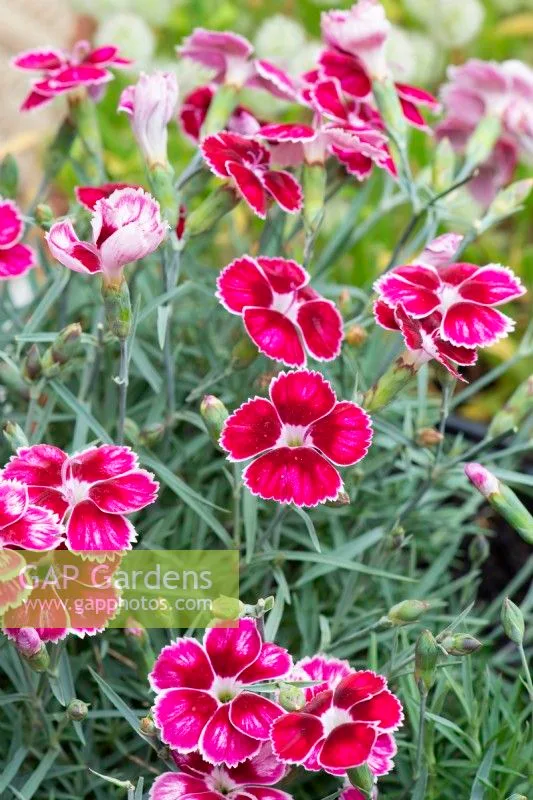
A compact evergreen perennial with grey-green leaves. Scented, single flowers are produced in summer. Flowers are magenta-pink with a thin white margin
Scientific classification
- Species
- pink 'Flutterby' (Dianthus 'Flutterby')
- Genus
- Dianthus
- Family
- Caryophyllaceae
- Skin allergen, wear gloves and other protective equipment when handling]
- Toxicity
- Herbaceous Perennial
- Plant type
- 0.1-0.5 metres
- Height
- 0.1-0.5 metres
- Spread
- Evergreen
- Foliage
- Clump forming
- Habit
- Spring · Summer · Autumn · Winter
- Season of interest
- Full sun
- Sunlight
- Information to be completed
- Ideal temperature









pink 'Flutterby' pictures
Distribution of pink 'Flutterby'
Distribution map
Information to be completed
Information to be completed
Culture
Information to be completed
Toxicity
Skin allergen, wear gloves and other protective equipment when handling]
Quick identification of pink 'Flutterby'
Information to be completed
pink 'Flutterby' care guide
- Moderate watering, slight dryness tolerated between irrigation cycles
- Watering
- Full sun
- Sunlight
- Information to be completed
- Ideal temperature

Watering
Moderate watering, slight dryness tolerated between irrigation cycles
Fertilizing
 Fertilizing
Diluted bloom fertilizer applied every three warm season weeks
Pruning
 Pruning
Deadhead regularly to prolong flowering. Lightly trim after flowering or in spring
Propagation
 Propagation
Propagate by softwood cuttings of non-flowering shoots in summer
Growing
 Growing
Grow in full sun in well-drained soil. Suitable for containers
People also ask
Information to be completed
Common pests and diseases
Diseases
May be susceptible to powdery mildews, a rust, a virus and fusarium wilt
Pests
May be susceptible to slugs and aphids
Explore the plant health library →




