
tulip 'Spryng Break'
Also known as: Information to be completed
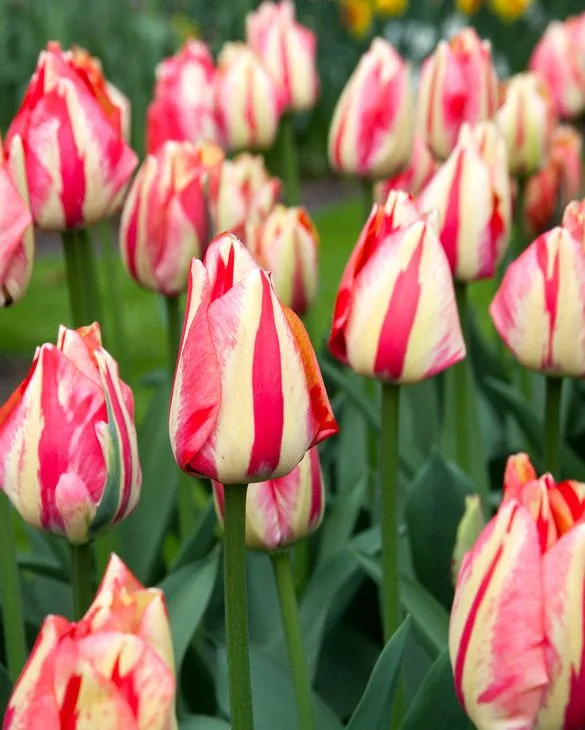
A bulbous perennial with grey-green leaves and sturdy stems to 60cm tall bearing large spring flowers opening creamy-white with pinkish-red flames that become more dominant as the flower ages
Scientific classification
- Species
- tulip 'Spryng Break' (Tulipa 'Spryng Break')
- Genus
- Tulipa
- Family
- Liliaceae
- Harmful if eaten, skin allergen. Wear gloves and other protective equipment when handling]
- Toxicity
- Bulbs
- Plant type
- 0.5-1 metres
- Height
- 0.1-0.5 metres
- Spread
- Deciduous
- Foliage
- Columnar upright
- Habit
- Spring
- Season of interest
- Full sun
- Sunlight
- Information to be completed
- Ideal temperature









tulip 'Spryng Break' pictures
Distribution of tulip 'Spryng Break'
Distribution map
Information to be completed
Information to be completed
Culture
Information to be completed
Toxicity
Harmful if eaten, skin allergen. Wear gloves and other protective equipment when handling]
Quick identification of tulip 'Spryng Break'
Information to be completed
tulip 'Spryng Break' care guide
- Moist soil leaf growth phase, cut water once foliage withers fully
- Watering
- Full sun
- Sunlight
- Information to be completed
- Ideal temperature

Watering
Moist soil leaf growth phase, cut water once foliage withers fully
Fertilizing
 Fertilizing
Weak tulip bulb nutrient feed monthly pre-bud development stage
Pruning
 Pruning
Deadhead after flowering
Propagation
 Propagation
Propagate by lifting and separating offsets; see bulb propagation
Growing
 Growing
Plant 10 to 15cm deep in fertile, well-drained soil. Protect from excessive wet and shelter from strong winds. See tulip cultivation
People also ask
Information to be completed
Common pests and diseases
Diseases
May be susceptible to tulip fire and bulb rot in poorly drained soil
Pests
May be susceptible to slugs, aphids and stem and bulb eelworm; squirrels may eat the bulbs
Explore the plant health library →




