
Paulownia tomentosa 'Hulsdonk'
Also known as: Information to be completed
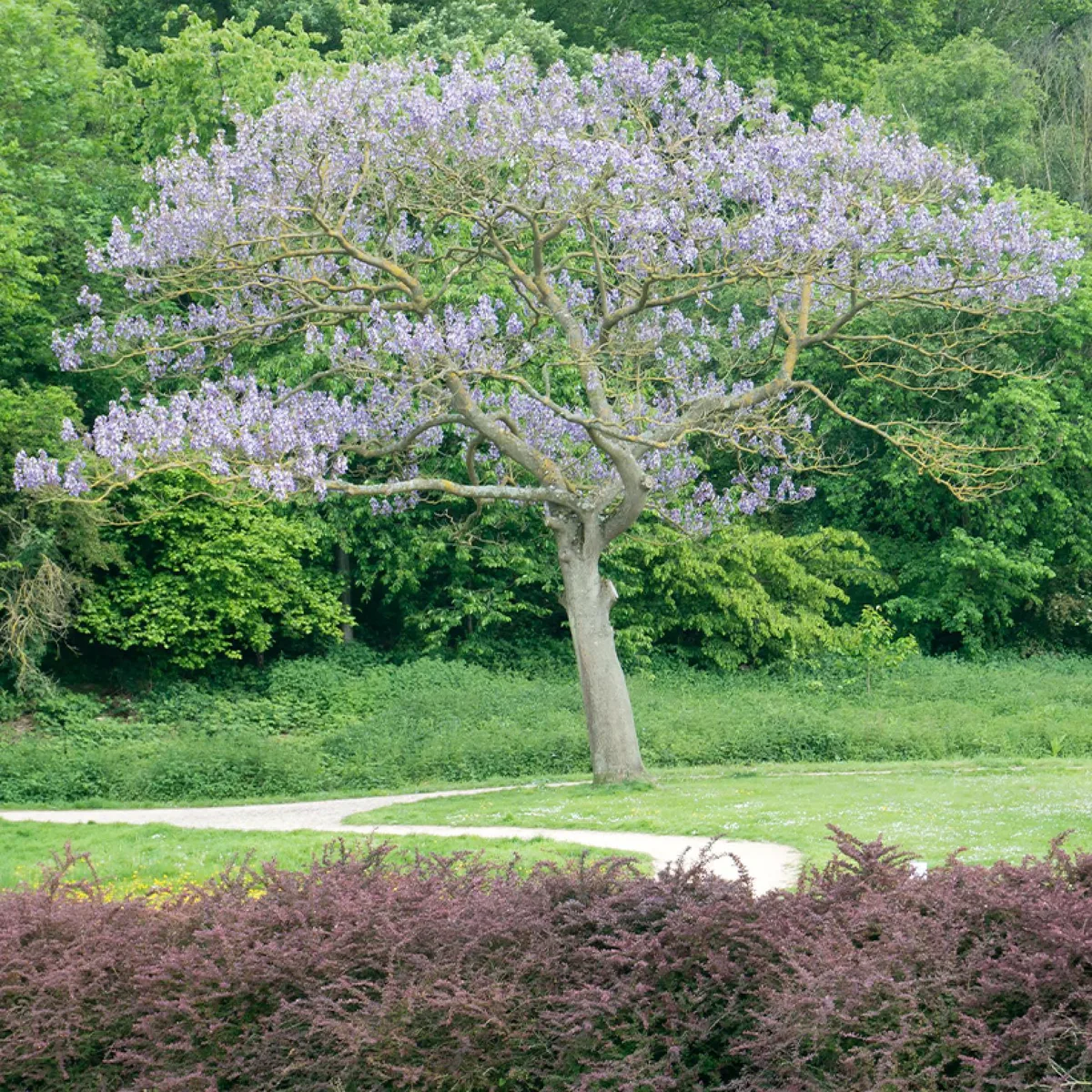
A fast-growing large deciduous tree to over 20m. It has large heart-shaped green leaves with a furry texture. Golden brown flower buds are produced in autumn and then open the following spring, before the leaves open. Flowers are large clusters of mauve bells with a sweet smell.
Scientific classification
- Species
- Paulownia tomentosa 'Hulsdonk' (Paulownia tomentosa 'Hulsdonk')
- Genus
- Paulownia
- Family
- Paulowniaceae
- Order
- Lamiales
- Class
- Magnoliopsida
- Phylum
- Magnoliophyta
- Information to be completed
- Toxicity
- Trees
- Plant type
- Higher than 12 metres
- Height
- wider than 8 metres
- Spread
- Deciduous
- Foliage
- Columnar upright
- Habit
- Spring · Summer · Autumn · Winter
- Season of interest
- Full sun · Partial shade
- Sunlight
- Information to be completed
- Ideal temperature









Paulownia tomentosa 'Hulsdonk' pictures
Distribution of Paulownia tomentosa 'Hulsdonk'
Distribution map
- Native
- Introduced
- Cultivated
Source:WCVP v16 · Royal Botanic Gardens, Kew · CC BY 3.0 · Boundaries:WGSRPD / TDWG
Paulownia tomentosa 'Hulsdonk' care guide
- Deep regular watering young paulownia trees, mature plants resist dryness
- Watering
- Full sun · Partial shade
- Sunlight

Watering
Deep regular watering young paulownia trees, mature plants resist dryness
Fertilizing
 Fertilizing
Deciduous tree granular feed applied one time each early spring annually
Pruning
 Pruning
Little pruning is needed. Remove diseased, damaged, crowded or crossing shoots and unwanted growth. Timing depends on the plant: generally late winter or early spring; plants prone to bleeding and deciduous magnolias need different timing, and deciduous azaleas and lilacs are pruned after flowering.
Propagation
 Propagation
Propagate by seed - although easy it will not come true to variety. For the actual variety, root cutting is most successful.
Growing
 Growing
Grow in moist, fertile soil. Protect young trees from frost. Can be pollarded for leaf effect. Very tolerant of atmospheric pollution. For more advice see tree cultivation
Common pests and diseases
Diseases
May be susceptible to honey fungus
Pests
Generally pest-free
Explore the plant health library →




