
Syringa × hyacinthiflora 'Angel White'
Also known as: Information to be completed
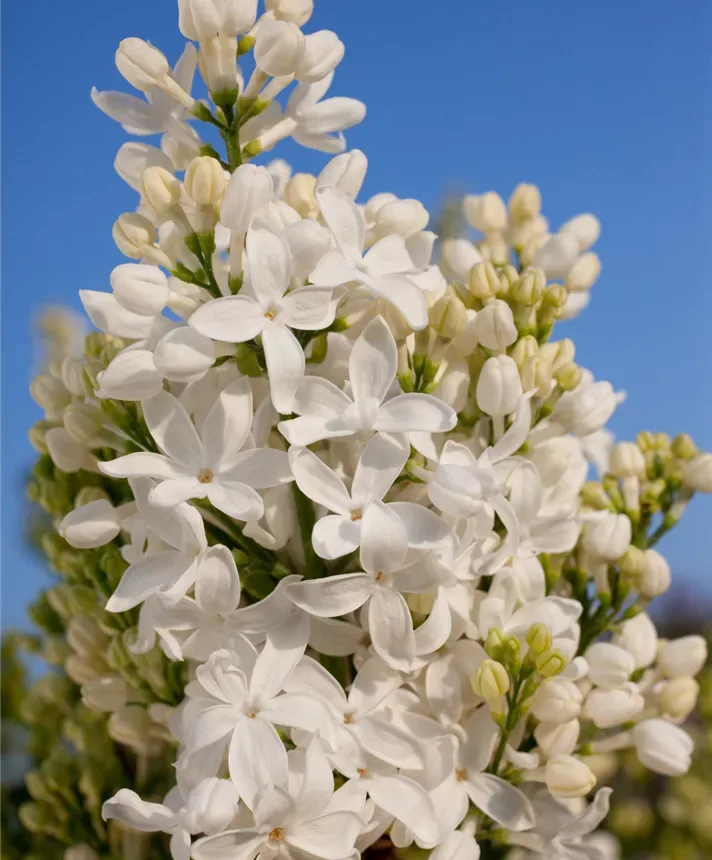
A deciduous upright shrub to 5m tall. It has green leaves and in spring - earlier than common Lilacs - it has masses of sweetly scented, pure white flowers
Scientific classification
- Species
- Syringa × hyacinthiflora 'Angel White' (Syringa × hyacinthiflora 'Angel White')
- Genus
- Syringa
- Family
- Oleaceae
- Order
- Lamiales
- Class
- Magnoliopsida
- Phylum
- Magnoliophyta
- Information to be completed
- Toxicity
- Shrubs
- Plant type
- 4-8 metres
- Height
- 4-8 metres
- Spread
- Deciduous
- Foliage
- Bushy · Clump forming
- Habit
- Spring · Summer · Autumn
- Season of interest
- Full sun
- Sunlight
- Information to be completed
- Ideal temperature









Syringa × hyacinthiflora 'Angel White' pictures
Syringa × hyacinthiflora 'Angel White' care guide
- Deep watering during dry spells, allowing slight surface drying between soakings
- Watering
- Full sun
- Sunlight

Watering
Deep watering during dry spells, allowing slight surface drying between soakings
Fertilizing
 Fertilizing
Balanced shrub or tree feed once each early spring
Pruning
 Pruning
Little pruning is needed. Remove diseased, damaged, crowded or crossing shoots and unwanted growth. Timing depends on the plant: generally late winter or early spring; plants prone to bleeding and deciduous magnolias need different timing, and deciduous azaleas and lilacs are pruned after flowering. Hard pruning is tolerated if needed.
Propagation
 Propagation
Propagate by softwood cuttings in summer
Growing
 Growing
Easy to grow in good light, in moist but well-drained soil. It likes neutral to alkaline soil and thrives in chalky ground.
Common pests and diseases
Diseases
May be susceptible to lilac blight, honey fungus, phytophthora, powdery mildews and bacterial canker (Pseudomonas Syringae)
Pests
May be susceptible to lilac leaf-mining moth, privet thrips; and also to pigeon damage
Explore the plant health library →




