
Betonica macrantha 'Rosea'
Also known as: Information to be completed
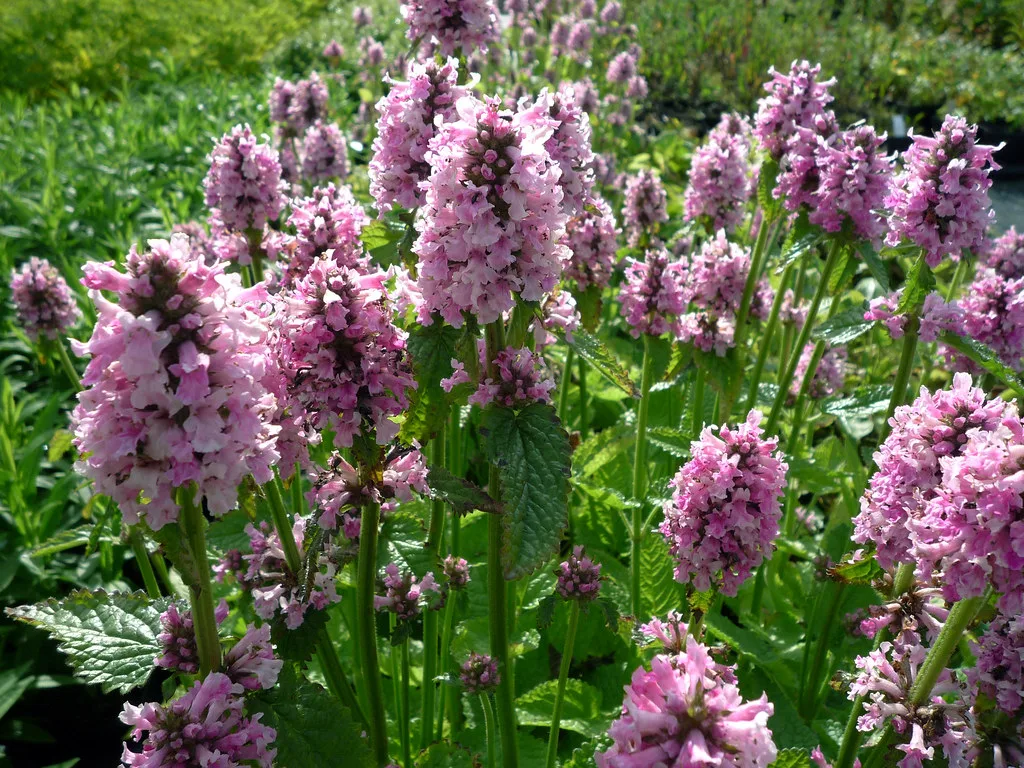
A compact, clump-forming herbaceous perennial, producing dense heads of rose-pink flowers in summer, on erect stems up to 0.6m (2ft) high, above mats of green, scalloped, crinkled foliage. The flowers are extremely attractive to bees and other pollinators, making the plants a good choice for including in a wildlife garden.
Scientific classification
- Species
- Betonica macrantha 'Rosea' (Betonica macrantha 'Rosea')
- Genus
- Betonica
- Family
- Lamiaceae
- Order
- Lamiales
- Class
- Magnoliopsida
- Phylum
- Tracheophyta
- Information to be completed
- Toxicity
- Herbaceous Perennial
- Plant type
- 0.5-1 metres
- Height
- 0.5-1 metres
- Spread
- Deciduous · Semi evergreen
- Foliage
- Clump forming
- Habit
- Spring · Summer · Autumn
- Season of interest
- Full sun · Partial shade
- Sunlight
- Information to be completed
- Ideal temperature









Betonica macrantha 'Rosea' pictures
Distribution of Betonica macrantha 'Rosea'
Distribution map
- Native
- Introduced
- Cultivated
Source:WCVP v16 · Royal Botanic Gardens, Kew · CC BY 3.0 · Boundaries:WGSRPD / TDWG
Betonica macrantha 'Rosea' care guide
- Moderate regular watering, avoid prolonged drought and stagnant waterlogging
- Watering
- Full sun · Partial shade
- Sunlight

Watering
Moderate regular watering, avoid prolonged drought and stagnant waterlogging
Fertilizing
 Fertilizing
Balanced perennial feed every four weeks spring through summer growth
Pruning
 Pruning
Remove old stems and foliage as plant dies back for the winter
Propagation
 Propagation
Propagate by seed at 21°C (70F) in spring and by basal or stem-tip softwood cuttings in spring. Propagate by division in spring
Growing
 Growing
Grow in well-drained soil in full sun. Tolerant of partial shade. Protect from excessive winter wet.
Common pests and diseases
Diseases
May be susceptible to powdery mildews and root rot in heavy wet soil
Pests
May be susceptible to slug and snail damage
Explore the plant health library →




