
pumpkin 'Casperita'
Also known as: Information to be completed
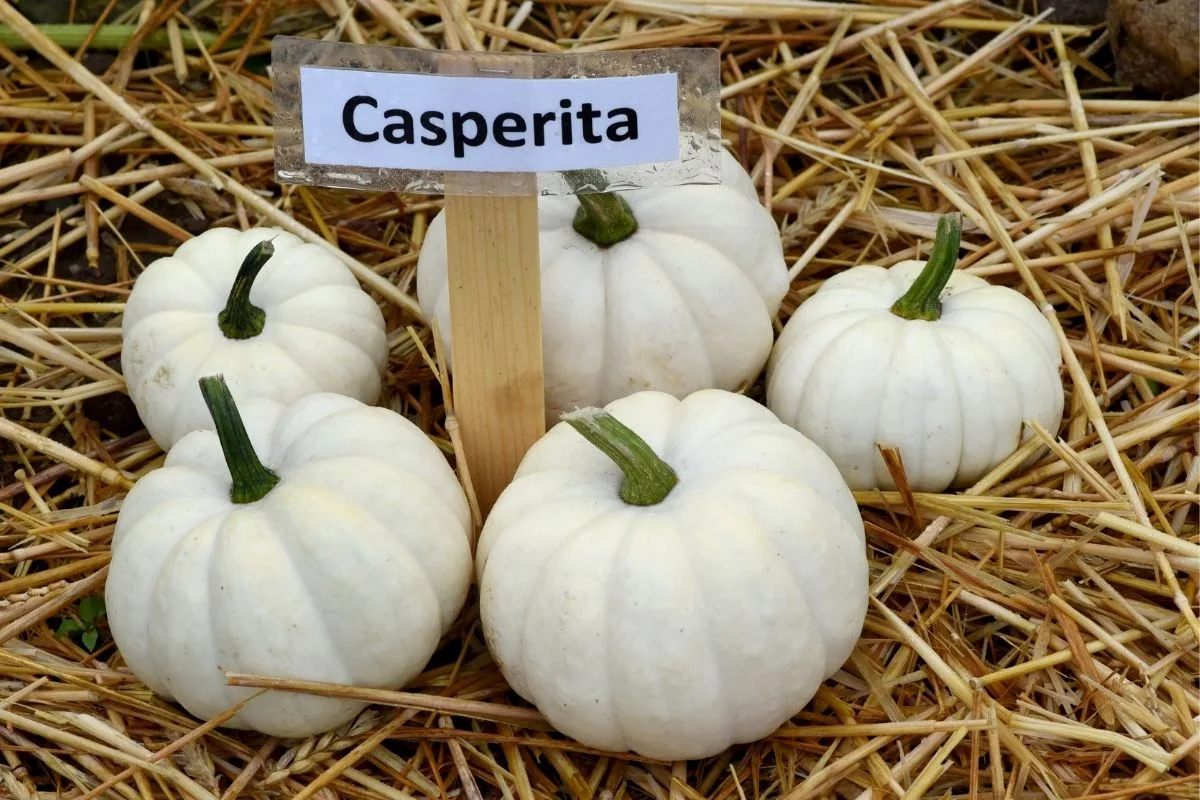
A winter squash producing small, white pumkins on trailing vines. The ribbed, smooth-skinned fruits with sweet, plae flesh reach up to 14cm in diameter and 500-750g; this cultivar is said to show good resistance to powdery mildews
Scientific classification
- Species
- pumpkin 'Casperita' (Cucurbita 'Casperita')
- Genus
- Cucurbita
- Family
- Cucurbitaceae
- If crop is bitter, don't eat. Wear gloves and other protective equipment when handling
- Toxicity
- Annual Biennial
- Plant type
- 0.5-1 metres
- Height
- 1.5-2.5 metres
- Spread
- Deciduous
- Foliage
- Bushy · Trailing
- Habit
- Summer · Autumn
- Season of interest
- Full sun
- Sunlight
- Information to be completed
- Ideal temperature









pumpkin 'Casperita' pictures
Distribution of pumpkin 'Casperita'
Distribution map
Information to be completed
Information to be completed
Culture
Information to be completed
Toxicity
If crop is bitter, don't eat. Wear gloves and other protective equipment when handling
Quick identification of pumpkin 'Casperita'
Information to be completed
pumpkin 'Casperita' care guide
- Keep moisture even through flowering and fruiting, avoiding hard dry swings
- Watering
- Full sun
- Sunlight
- Information to be completed
- Ideal temperature

Watering
Keep moisture even through flowering and fruiting, avoiding hard dry swings
Fertilizing
 Fertilizing
Tomato or pepper feed every one to two weeks in fruiting season
Pruning
 Pruning
No pruning required
Propagation
 Propagation
Propagate by seed. See sowing vegetable seeds
Growing
 Growing
Grow in rich, fertile, well drained soil in full sun. Start indoors from mid-late April, sowing in individual pots with seeds on their side about 1.5cm deep. Harden off before June then transplant outdoors to final growing position. See vegetable cultivation
People also ask
Information to be completed
Common pests and diseases
Diseases
May be susceptible to grey moulds and powdery mildews
Pests
May be susceptible to slugs and snails
Explore the plant health library →




