
okra 'Clemson Spineless'
Also known as: Information to be completed
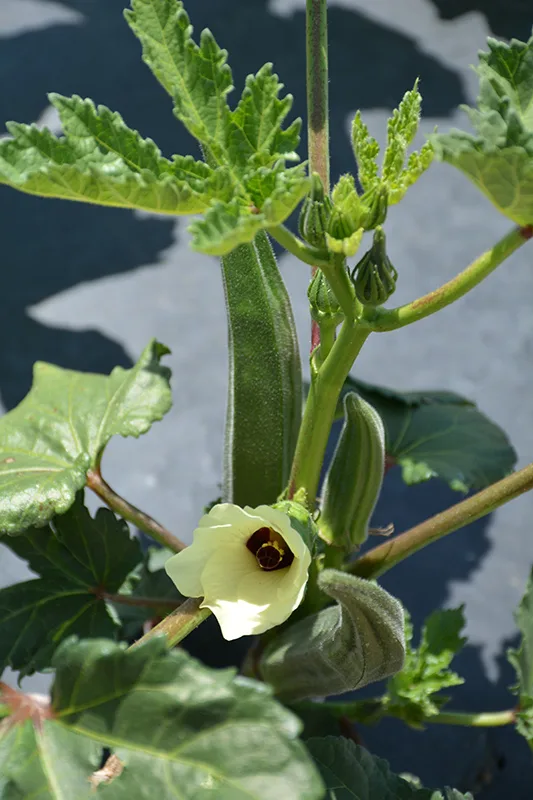
A nearly thorn-free annual which grows to around 1.5m in a summer. It has palmate green leaves and cream flowers with a dark red eye. These are produced in small clusters daily, which then develop into elongated green fruits, best harvested at 4-5cm long.
Scientific classification
- Species
- okra 'Clemson Spineless' (Abelmoschus esculentus 'Clemson Spineless')
- Genus
- Abelmoschus
- Family
- Malvaceae
- Information to be completed
- Toxicity
- Annual Biennial
- Plant type
- 1.5-2.5 metres
- Height
- 1-1.5 metres
- Spread
- Deciduous
- Foliage
- Columnar upright
- Habit
- Spring · Summer · Autumn
- Season of interest
- Full sun
- Sunlight
- Information to be completed
- Ideal temperature









okra 'Clemson Spineless' pictures
Distribution of okra 'Clemson Spineless'
Distribution map
Information to be completed
Information to be completed
Culture
Information to be completed
Toxicity
Information to be completed
Quick identification of okra 'Clemson Spineless'
Information to be completed
okra 'Clemson Spineless' care guide
- Regular deep watering, mulch ground to slow moisture loss rate
- Watering
- Full sun
- Sunlight
- Information to be completed
- Ideal temperature

Watering
Regular deep watering, mulch ground to slow moisture loss rate
Fertilizing
 Fertilizing
Balanced vegetable fertilizer every month warm growing season
Pruning
 Pruning
No pruning required. Keep harvesting young seed pods to prolong flowering. Wear gloves to protect against irritating hairs on stems
Propagation
 Propagation
Propagate by seed. See sowing vegetable seeds
Growing
 Growing
Grow in fertile, moisture-retentive soil under glass
People also ask
Information to be completed
Common pests and diseases
Diseases
May be susceptible to grey moulds
Pests
May be susceptible to glasshouse red spider mite and glasshouse whitefly
Explore the plant health library →




