
Japanese aralia 'Tsumugi-shibori'
Also known as: Japanese aralia 'Spider's Web'
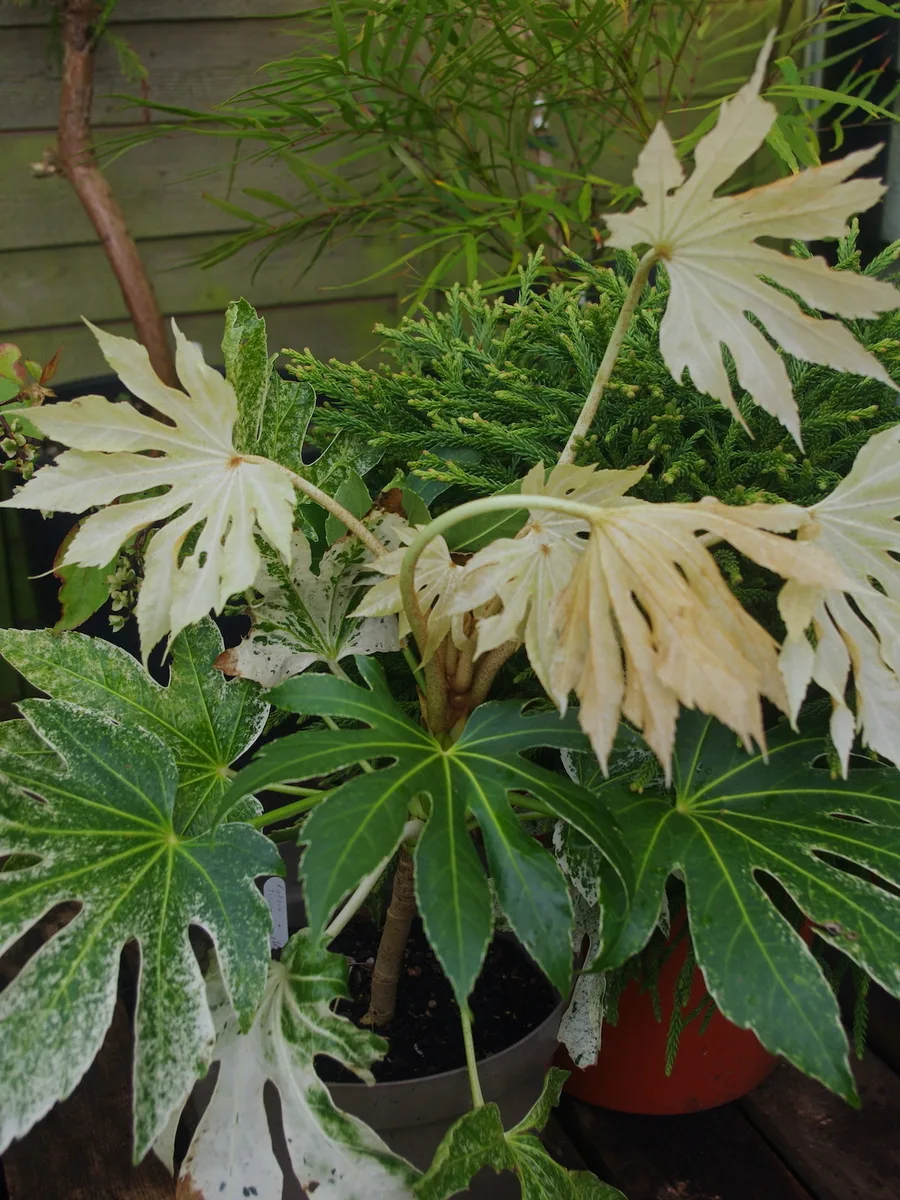
A bushy, evergreen shrub growing to 2m tall. The dark-green leaves are heavily-speckled with white, particularly at the edges, but the white variegation can sometimes spread across the whole leaf. Terminal clusters of white flowers in autumn are followed by black berries
Scientific classification
- Species
- Japanese aralia 'Tsumugi-shibori' (Fatsia japonica 'Tsumugi-shibori')
- Genus
- Fatsia
- Family
- Araliaceae
- Order
- Apiales
- Class
- Magnoliopsida
- Phylum
- Tracheophyta
- Fruit are ornamental - not to be eaten. Wear gloves and other protective equipment when handling
- Toxicity
- Shrubs
- Plant type
- 1.5-2.5 metres
- Height
- 1.5-2.5 metres
- Spread
- Evergreen
- Foliage
- Bushy
- Habit
- Spring · Summer · Autumn · Winter
- Season of interest
- Full shade · Partial shade
- Sunlight
- Information to be completed
- Ideal temperature









Japanese aralia 'Tsumugi-shibori' pictures
Distribution of Japanese aralia 'Tsumugi-shibori'
Distribution map
- Native
- Introduced
- Cultivated
Source:WCVP v16 · Royal Botanic Gardens, Kew · CC BY 3.0 · Boundaries:WGSRPD / TDWG
Toxicity
Fruit are ornamental - not to be eaten. Wear gloves and other protective equipment when handling
Japanese aralia 'Tsumugi-shibori' care guide
- Consistently damp shade medium, avoid fully dried root ball state
- Watering
- Full shade · Partial shade
- Sunlight

Watering
Consistently damp shade medium, avoid fully dried root ball state
Fertilizing
 Fertilizing
All-purpose diluted foliage feed once monthly warm growing months
Pruning
 Pruning
Prune lightly as needed to remove unwanted shoots and keep the shrub in shape. Prune in mid- to late spring.
Propagation
 Propagation
Propagate by semi-hardwood cuttings
Growing
 Growing
Grows best in partial shade in moist but well-drained soil with protection from cold drying winds; can tolerate full shade. This cultivar is slower to establish and reach its ultimate height compared with the species and may also be less hardy, especially when young
Common pests and diseases
Diseases
May be susceptible to a leaf spot and honey fungus
Pests
May be susceptible to scale insects, thrips and mealybugs
Explore the plant health library →




