
abutilon 'Tennant's White'
Also known as: Information to be completed
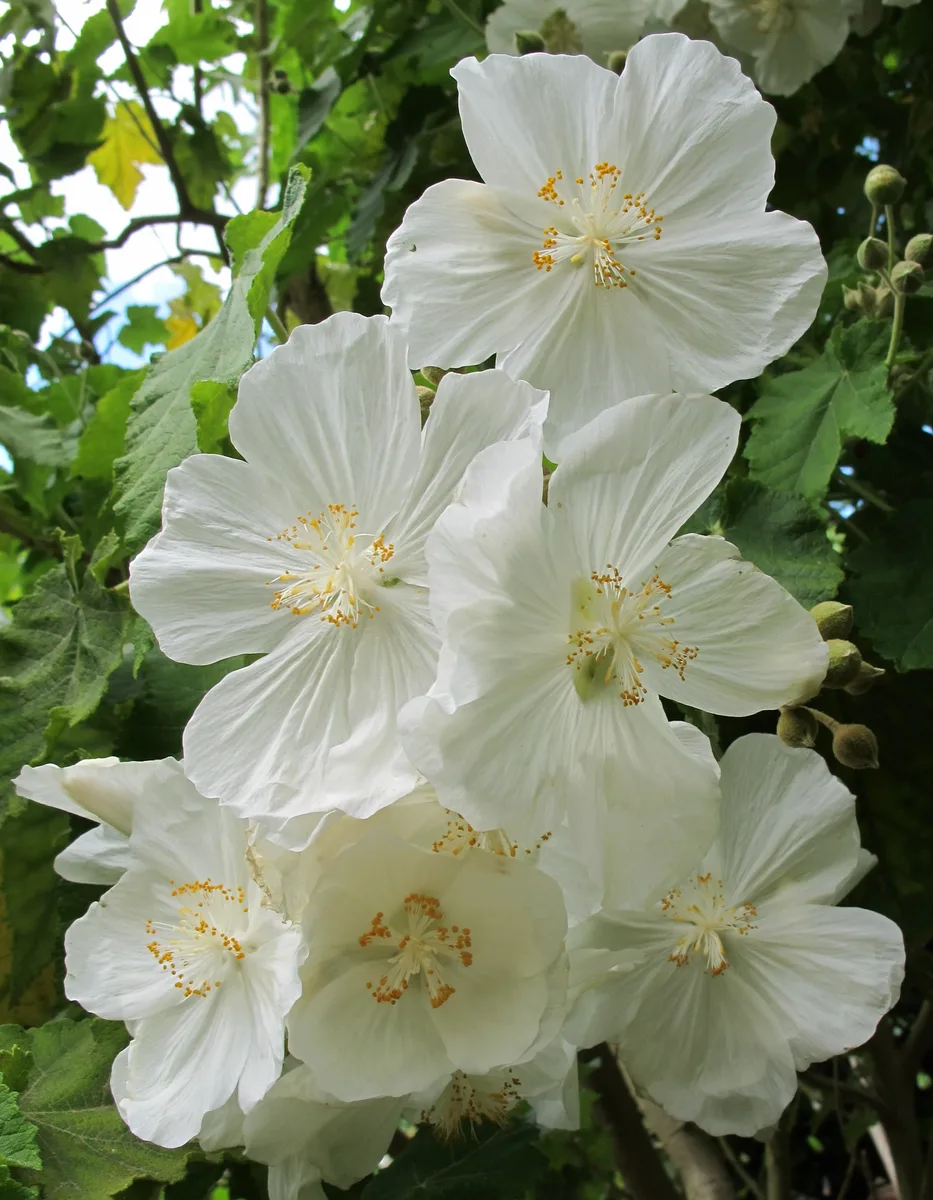
A large deciduous shrub. Leaves maple-like with 3 or 5 serrate lobes. Flowers saucer-shaped, 8cm in width, pure white, in early summer
Scientific classification
- Species
- abutilon 'Tennant's White' (Corynabutilon vitifolium 'Tennant's White')
- Genus
- Corynabutilon
- Family
- Malvaceae
- Order
- Malvales
- Class
- Magnoliopsida
- Phylum
- Tracheophyta
- Information to be completed
- Toxicity
- Shrubs
- Plant type
- 2.5-4 metres
- Height
- 1.5-2.5 metres
- Spread
- Deciduous
- Foliage
- Bushy
- Habit
- Spring · Summer · Autumn
- Season of interest
- Full sun
- Sunlight
- Information to be completed
- Ideal temperature









abutilon 'Tennant's White' pictures
Distribution of abutilon 'Tennant's White'
Distribution map
- Native
- Introduced
- Cultivated
Source:WCVP v16 · Royal Botanic Gardens, Kew · CC BY 3.0 · Boundaries:WGSRPD / TDWG
abutilon 'Tennant's White' care guide
- Moderate regular watering, avoid prolonged drought or waterlogging
- Watering
- Full sun
- Sunlight

Watering
Moderate regular watering, avoid prolonged drought or waterlogging
Fertilizing
 Fertilizing
Balanced feed in spring and light repeat in growth season
Pruning
 Pruning
Shorten last year's flowering stems to one or two buds from the older woody framework. Remove thin, weak and dead shoots. Prune in early to mid-spring as growth resumes; avoid winter pruning that exposes new shoots to frost.
Propagation
 Propagation
Propagate by softwood cuttings in spring
Growing
 Growing
Grow under glass or indoors in a loam-based potting compost in full light. When in growth water freely and apply a balanced liquid fertiliser monthly. Water sparingly in winter, keeping barely moist. Can be grown outdoors in warmer climates
Common pests and diseases
Diseases
Generally disease free
Pests
May be attacked by glasshouse whitefly, glasshouse red spider mite, mealybugs and scale insects
Explore the plant health library →




