
philodendron 'Brasil'
Also known as: Information to be completed
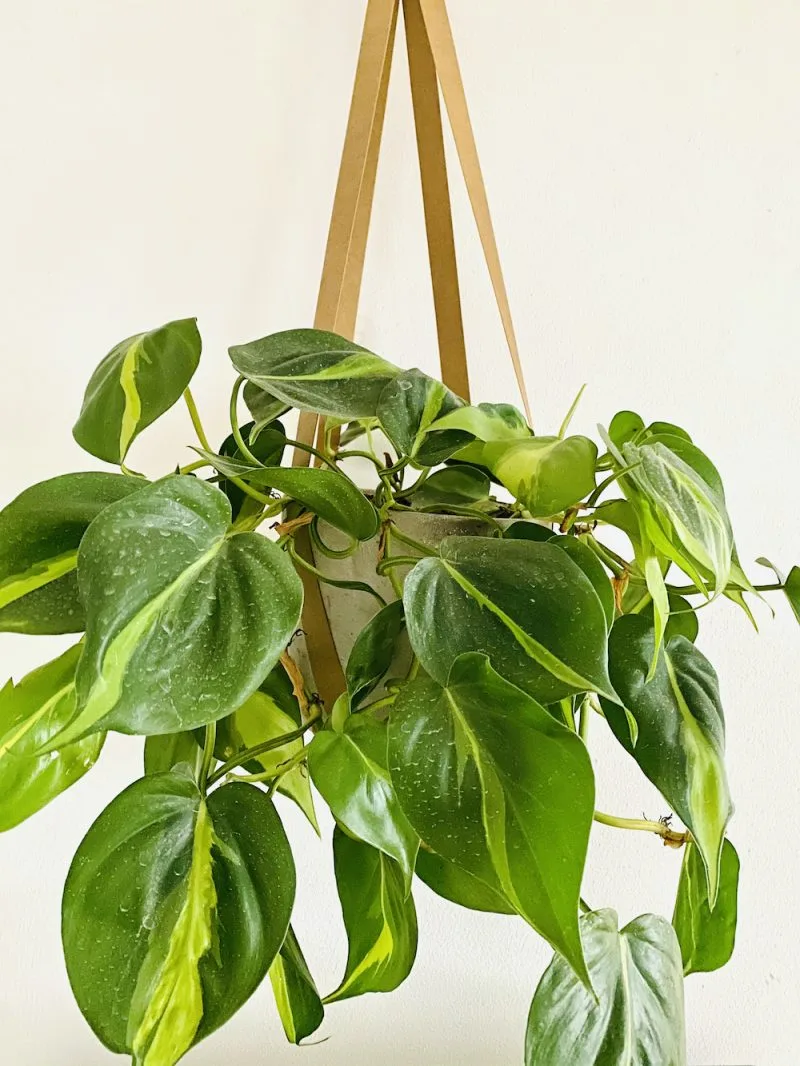
A trailing houseplant with large, heart-shaped, glossy green and golden-yellow variegated leaves. May produce spathes of green-white flowers when mature. Leaves can grow to very long lengths making it ideal in a hanging basket or on a shelf. A great plant for using en mass as a living curtain and also as an air purifier
Scientific classification
- Species
- philodendron 'Brasil' (Philodendron hederaceum 'Brasil')
- Genus
- Philodendron
- Family
- Araceae
- Order
- Alismatales
- Class
- Liliopsida
- Phylum
- Magnoliophyta
- Harmful if eaten, skin/eye irritant/allergen. Wear gloves and other protective equipment when handling]
- Toxicity
- Houseplants
- Plant type
- 2.5-4 metres
- Height
- 0.1-0.5 metres
- Spread
- Evergreen
- Foliage
- Trailing
- Habit
- Spring · Summer · Autumn · Winter
- Season of interest
- Full sun · Partial shade
- Sunlight
- Information to be completed
- Ideal temperature









philodendron 'Brasil' pictures
Distribution of philodendron 'Brasil'
Distribution map
- Native
- Introduced
- Cultivated
Locally extinct or doubtful records are excluded from native and introduced layers.
Source:WCVP v16 · Royal Botanic Gardens, Kew · CC BY 3.0 · Boundaries:WGSRPD / TDWG
Toxicity
Harmful if eaten, skin/eye irritant/allergen. Wear gloves and other protective equipment when handling]
philodendron 'Brasil' care guide
- Moderate regular watering, allowing brief slight drying between soakings
- Watering
- Full sun · Partial shade
- Sunlight

Watering
Moderate regular watering, allowing brief slight drying between soakings
Fertilizing
 Fertilizing
Balanced perennial feed every four weeks from spring through summer
Pruning
 Pruning
No pruning required, trim length if necessary
Propagation
 Propagation
Propagate by seed surface sown at 19 to 24 °C in spring or layer in spring
Growing
 Growing
Grow under glass in a loam-based potting compost in bright filtered light with shade from hot sun, mist daily. When in growth water moderately and apply a balanced liquid fertilizer monthly. Water sparingly at other times, allowing the top of the soil to dry out slightly between waterings.
Common pests and diseases
Diseases
Generally disease-free
Pests
May be susceptible to scale insects and glasshouse red spider mite
Explore the plant health library →




