
Salvia rosmarinus 'Joyce DeBaggio'
Also known as: Information to be completed
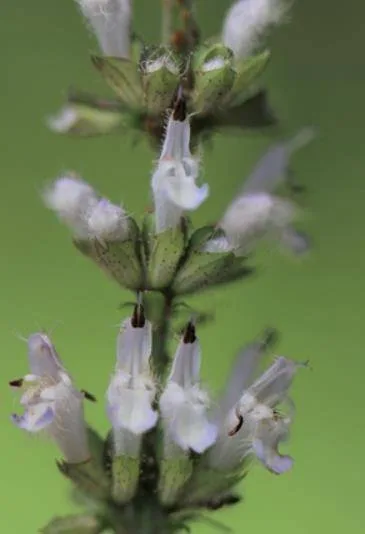
A bushy evergreen shrub, up to around 1.2m high, with highly aromatic, linear dark green leaves flushed with golden yellow, especially when young. Small blue flowers are produced in the leaf axils in late spring and early summer
Scientific classification
- Species
- Salvia rosmarinus 'Joyce DeBaggio' (Salvia rosmarinus 'Joyce DeBaggio')
- Genus
- Salvia
- Family
- Lamiaceae
- Order
- Lamiales
- Class
- Magnoliopsida
- Phylum
- Tracheophyta
- Skin allergen. Wear gloves and other protective equipment when handling
- Toxicity
- Herbs - Culinary · Shrubs
- Plant type
- 1-1.5 metres
- Height
- 0.5-1 metres
- Spread
- Evergreen
- Foliage
- Bushy
- Habit
- Spring · Summer · Autumn · Winter
- Season of interest
- Full sun
- Sunlight
- Information to be completed
- Ideal temperature









Salvia rosmarinus 'Joyce DeBaggio' pictures
Distribution of Salvia rosmarinus 'Joyce DeBaggio'
Distribution map
- Native
- Introduced
- Cultivated
Source:WCVP v16 · Royal Botanic Gardens, Kew · CC BY 3.0 · Boundaries:WGSRPD / TDWG
Toxicity
Skin allergen. Wear gloves and other protective equipment when handling
Salvia rosmarinus 'Joyce DeBaggio' care guide
- Moderate regular watering, allowing brief slight drying between soakings
- Watering
- Full sun
- Sunlight

Watering
Moderate regular watering, allowing brief slight drying between soakings
Fertilizing
 Fertilizing
Balanced perennial feed every four weeks from spring through summer
Pruning
 Pruning
Prune lightly as needed to remove unwanted shoots and keep the shrub in shape. Prune in mid- to late spring.
Propagation
 Propagation
Propagate by heel cuttings in spring or by semi-ripe cuttings in late summer
Growing
 Growing
Thrives in a sunny spot, in light, well-drained soil that is not too acidic. Protect from excess winter wet, and from hard frosts in colder locations. See rosemary cultivation for more advice
Common pests and diseases
Diseases
May be susceptible to honey fungus (rarely), powdery mildews, verticillium wilt and foot and root rots
Pests
May be susceptible to rosemary beetle, cuckoo spit, sage leafhopper, tortrix moth and scale insects
Explore the plant health library →




