
sneezeweed 'Strawberry Sundae'
Also known as: Information to be completed
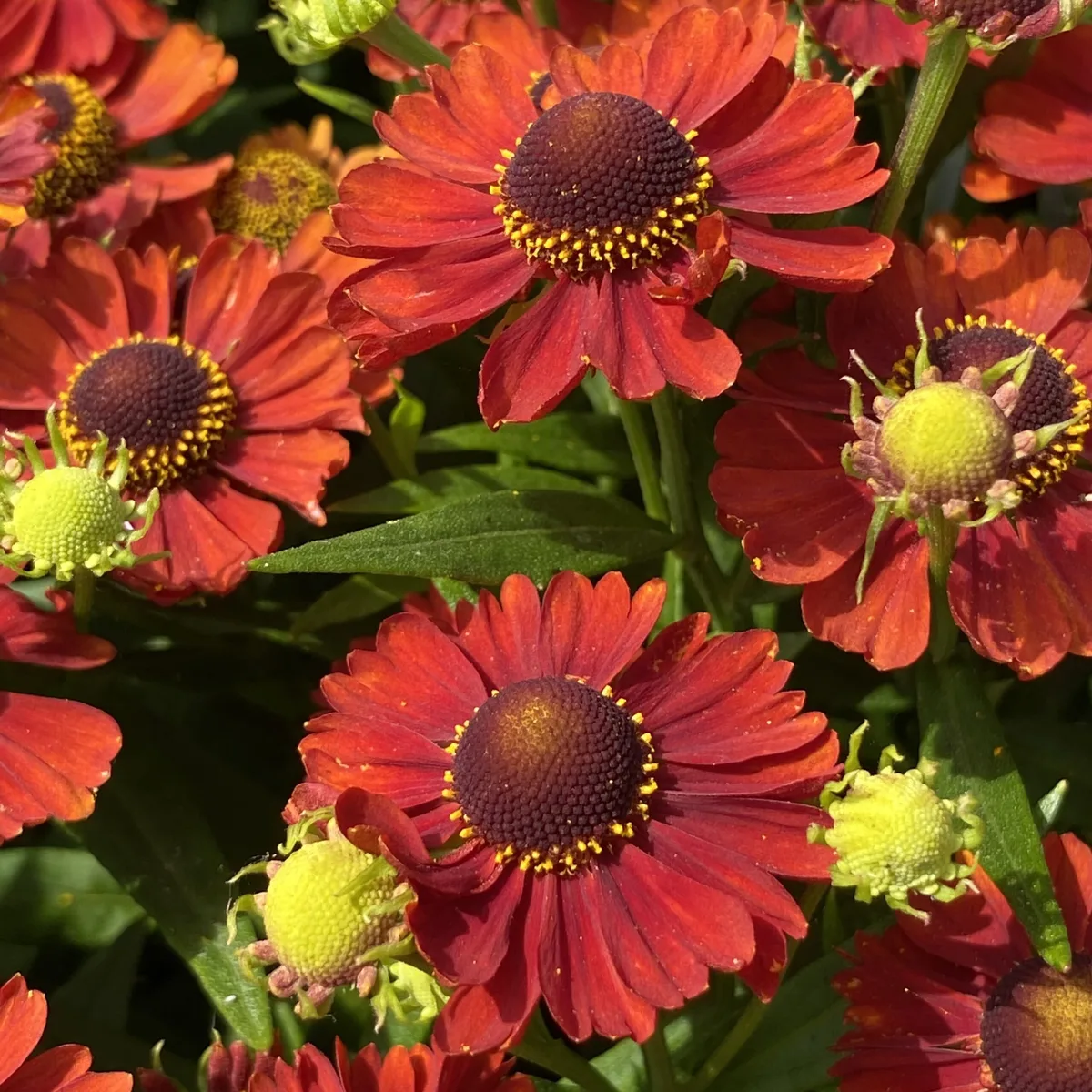
A compact, clump-forming perennial to 50cm high, with branching stems and ovate to lance-shaped green leaves. Numerous small, daisy-like flowers are produced at the tips of wiry stems from late summer to autumn, with dome-shaped dark brown central discs surrounded by deep red petals
Scientific classification
- Species
- sneezeweed 'Strawberry Sundae' (Helenium 'Strawberry Sundae')
- Genus
- Helenium
- Family
- Asteraceae
- Information to be completed
- Toxicity
- Herbaceous Perennial
- Plant type
- 0.1-0.5 metres
- Height
- 0.1-0.5 metres
- Spread
- Deciduous
- Foliage
- Bushy · Clump forming
- Habit
- Spring · Summer · Autumn
- Season of interest
- Full sun
- Sunlight
- Information to be completed
- Ideal temperature









sneezeweed 'Strawberry Sundae' pictures
Distribution of sneezeweed 'Strawberry Sundae'
Distribution map
Information to be completed
Information to be completed
Culture
Information to be completed
Toxicity
Information to be completed
Quick identification of sneezeweed 'Strawberry Sundae'
Information to be completed
sneezeweed 'Strawberry Sundae' care guide
- Moderate regular watering, avoid prolonged drought or waterlogging
- Watering
- Full sun
- Sunlight
- Information to be completed
- Ideal temperature

Watering
Moderate regular watering, avoid prolonged drought or waterlogging
Fertilizing
 Fertilizing
Balanced feed in spring and light repeat in growth season
Pruning
 Pruning
No pruning required, deadhead to prolong flowering
Propagation
 Propagation
Propagate by seed or by basal softwood cuttings in spring, or by division in spring or late autumn
Growing
 Growing
Grow in full sun in fertile, moisture-retentive, humus-rich soil. Keep well watered in summer dry spells. Divide every two to three years to maintain vigour
People also ask
Information to be completed
Common pests and diseases
Diseases
May be susceptible to powdery mildews, leaf spot, Verticillium wilt and virus diseases
Pests
May be susceptible to stem and bulb eelworm, tortrix moth, slugs and snails
Explore the plant health library →




