
rosemary Albiflora Group
Also known as: white rosemary
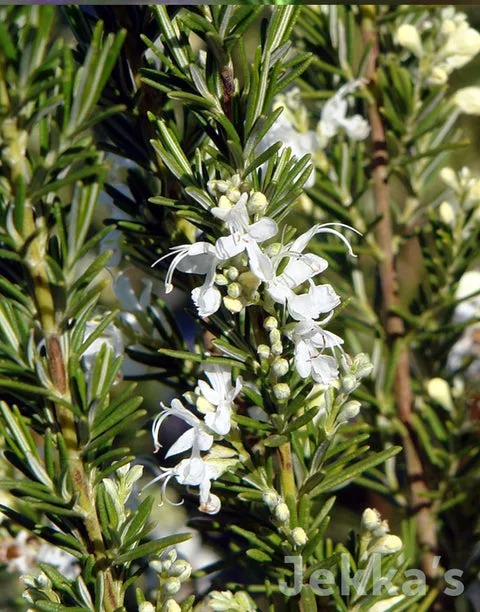
A bushy, upright, aromatic evergreen shrub to 80cm in height with needle-like, linear, deep green leaves with grey-felted undersides and rolled down edges. Small, white, tubular flowers appear amongst the leaves, in mid-spring to summer and occasionally in autumn
Scientific classification
- Species
- rosemary Albiflora Group (Salvia rosmarinus (Albiflora Group))
- Genus
- Salvia
- Family
- Lamiaceae
- Order
- Lamiales
- Class
- Magnoliopsida
- Phylum
- Tracheophyta
- Skin allergen. Wear gloves and other protective equipment when handling
- Toxicity
- Herbs - Culinary · Shrubs
- Plant type
- 1.5-2.5 metres
- Height
- 1.5-2.5 metres
- Spread
- Evergreen
- Foliage
- Bushy
- Habit
- Spring · Summer · Autumn · Winter
- Season of interest
- Full sun
- Sunlight
- Information to be completed
- Ideal temperature









rosemary Albiflora Group pictures
Distribution of rosemary Albiflora Group
Distribution map
- Native
- Introduced
- Cultivated
Source:WCVP v16 · Royal Botanic Gardens, Kew · CC BY 3.0 · Boundaries:WGSRPD / TDWG
Toxicity
Skin allergen. Wear gloves and other protective equipment when handling
rosemary Albiflora Group care guide
- Allow full soil drying between deep watering sessions
- Watering
- Full sun
- Sunlight

Watering
Allow full soil drying between deep watering sessions
Fertilizing
 Fertilizing
Diluted low-nitrogen herb feed monthly warm growing season
Pruning
 Pruning
Prune lightly as needed to remove unwanted shoots and keep the shrub in shape. Prune in mid- to late spring.
Propagation
 Propagation
Propagate by semi-hardwood cuttings
Growing
 Growing
Prefers poor, well-drained soil and may be used as a low hedge which should be trimmed after flowering. See rosemary cultivation for further advice
Common pests and diseases
Diseases
May be susceptible to honey fungus (rarely), powdery mildews, verticillium wilt and foot and root rots
Pests
May be susceptible to rosemary beetle, cuckoo spit, sage leafhopper, tortrix moth and scale insects
Explore the plant health library →




