
courgette 'Lorea'
Also known as: Information to be completed
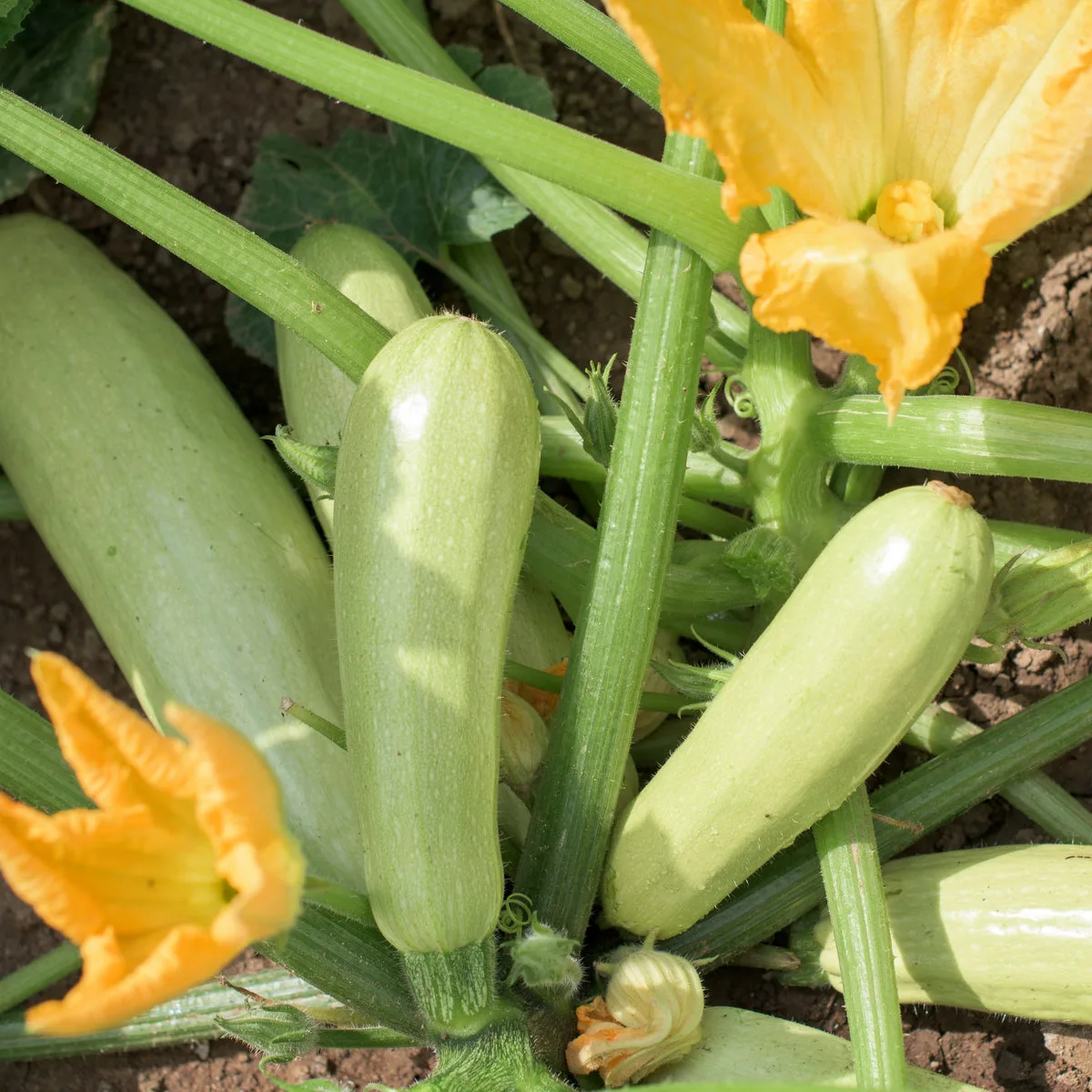
This productive French variety of courgette has a sweet, delicate taste and is versatile in the kitchen. The pretty fruit are often referred to as ‘white’ but are in fact a very pale light green and cylindrical in shape. It’s a semi late variety, so you can be harvesting from July until October.
Scientific classification
- Species
- courgette 'Lorea' (Cucurbita pepo 'Lorea')
- Genus
- Cucurbita
- Family
- Cucurbitaceae
- If crop is bitter, don't eat. Wear gloves and other protective equipment when handling
- Toxicity
- Annual Biennial
- Plant type
- 0.5-1 metres
- Height
- 1-1.5 metres
- Spread
- Deciduous
- Foliage
- Bushy
- Habit
- Spring · Summer · Autumn
- Season of interest
- Full sun
- Sunlight
- Information to be completed
- Ideal temperature









courgette 'Lorea' pictures
Distribution of courgette 'Lorea'
Distribution map
Information to be completed
Information to be completed
Culture
Information to be completed
Toxicity
If crop is bitter, don't eat. Wear gloves and other protective equipment when handling
Quick identification of courgette 'Lorea'
Information to be completed
courgette 'Lorea' care guide
- Keep moisture even through flowering and fruiting, avoiding hard dry swings
- Watering
- Full sun
- Sunlight
- Information to be completed
- Ideal temperature

Watering
Keep moisture even through flowering and fruiting, avoiding hard dry swings
Fertilizing
 Fertilizing
Tomato or pepper feed every one to two weeks in fruiting season
Pruning
 Pruning
No pruning required. Regular harvesting extends cropping.
Propagation
 Propagation
Propagate by seed. See sowing vegetable seeds or sowing seeds indoors for further advice
Growing
 Growing
Grow in a sunny spot in rich, well-drained soil. Enrich soil with well rotted horse manure or compost during the previous autumn or that spring. Courgettes prefer acidic to neutral soil so adjust pH if neccessary. Courgettes are thirsty and hungry plants so need regular watering and a feed every 10–14 days with a high potassium liquid fertiliser, such as tomato feed, once the first fruits start to swell. Harvest July to October. See courgette cultivation for futher information.
People also ask
Information to be completed
Common pests and diseases
Diseases
May be susceptible to aphids, Powdery mildews, downy mildews and grey moulds.
Pests
May be susceptible to slugs and snails.
Explore the plant health library →




