
Hydrangea paniculata Living Pink & Rose ('Lc No14')
Also known as: Information to be completed
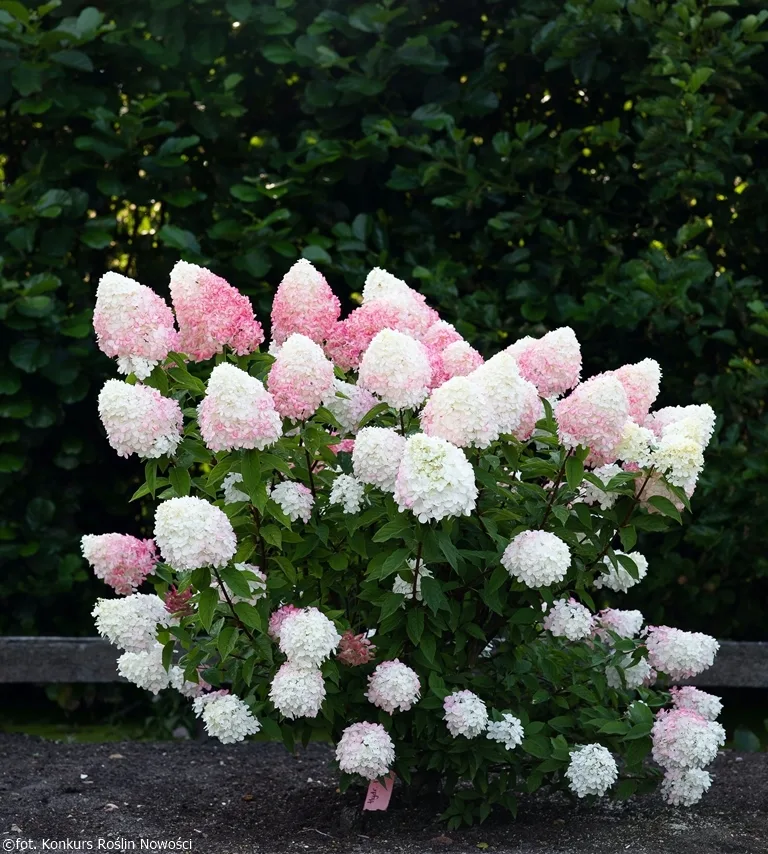
A bushy deciduous shrub, to around 1.2m high, with sturdy, reddish stems and narrowly oval-shaped green leaves with finely serrated edges. Large, densely packed cones of small, bright white flowers are produced in mid summer, gradually turning deep rose pink as they mature
Scientific classification
- Species
- Hydrangea paniculata Living Pink & Rose ('Lc No14') (Hydrangea paniculata Living Pink & Rose ('Lc No14'))
- Genus
- Hydrangea
- Family
- Hydrangeaceae
- Order
- Cornales
- Class
- Magnoliopsida
- Phylum
- Magnoliophyta
- Skin allergen. Wear gloves and other protective equipment when handling
- Toxicity
- Shrubs
- Plant type
- 1-1.5 metres
- Height
- 1-1.5 metres
- Spread
- Deciduous
- Foliage
- Bushy
- Habit
- Spring · Summer
- Season of interest
- Full sun · Partial shade
- Sunlight
- Information to be completed
- Ideal temperature









Hydrangea paniculata Living Pink & Rose ('Lc No14') pictures
Toxicity
Skin allergen. Wear gloves and other protective equipment when handling
Hydrangea paniculata Living Pink & Rose ('Lc No14') care guide
- Consistently moist root zone, add extra water during warm dry weather
- Watering
- Full sun · Partial shade
- Sunlight

Watering
Consistently moist root zone, add extra water during warm dry weather
Fertilizing
 Fertilizing
Hydrangea shrub feed every four weeks spring through early summer
Pruning
 Pruning
Use the method for the hydrangea type: remove faded mophead flowers to the first healthy bud pair; paniculata and arborescens may have last year's stems shortened to healthy bud pairs. Climbing hydrangeas need overlong shoots trimmed after flowering. Most types are pruned in late winter or early spring; climbing hydrangeas are pruned after flowering in summer.
Propagation
 Propagation
Propagate by softwood cuttings in early summer, or by hardwood cuttings in winter
Growing
 Growing
Thrives in humus rich soil, that is consistently moist but not waterlogged. Position in sun or part-day shade; in warmer areas, plants may benefit from shade from hot afternoon sun. Mulch in spring, and provide shelter from cold, drying winds. See shrubby hydrangea cultivation for more detailed advice
Common pests and diseases
Diseases
May be susceptible to a leaf spot, powdery mildews, grey moulds (Botrytis) and honey fungus (rarely)
Pests
May be susceptible to aphids, capsid bug, red spider mite, stem and bulb eelworm, vine weevil and scale insects
Explore the plant health library →




