
tuberose
Also known as: mistress of the night; omixochitl; silver leaf
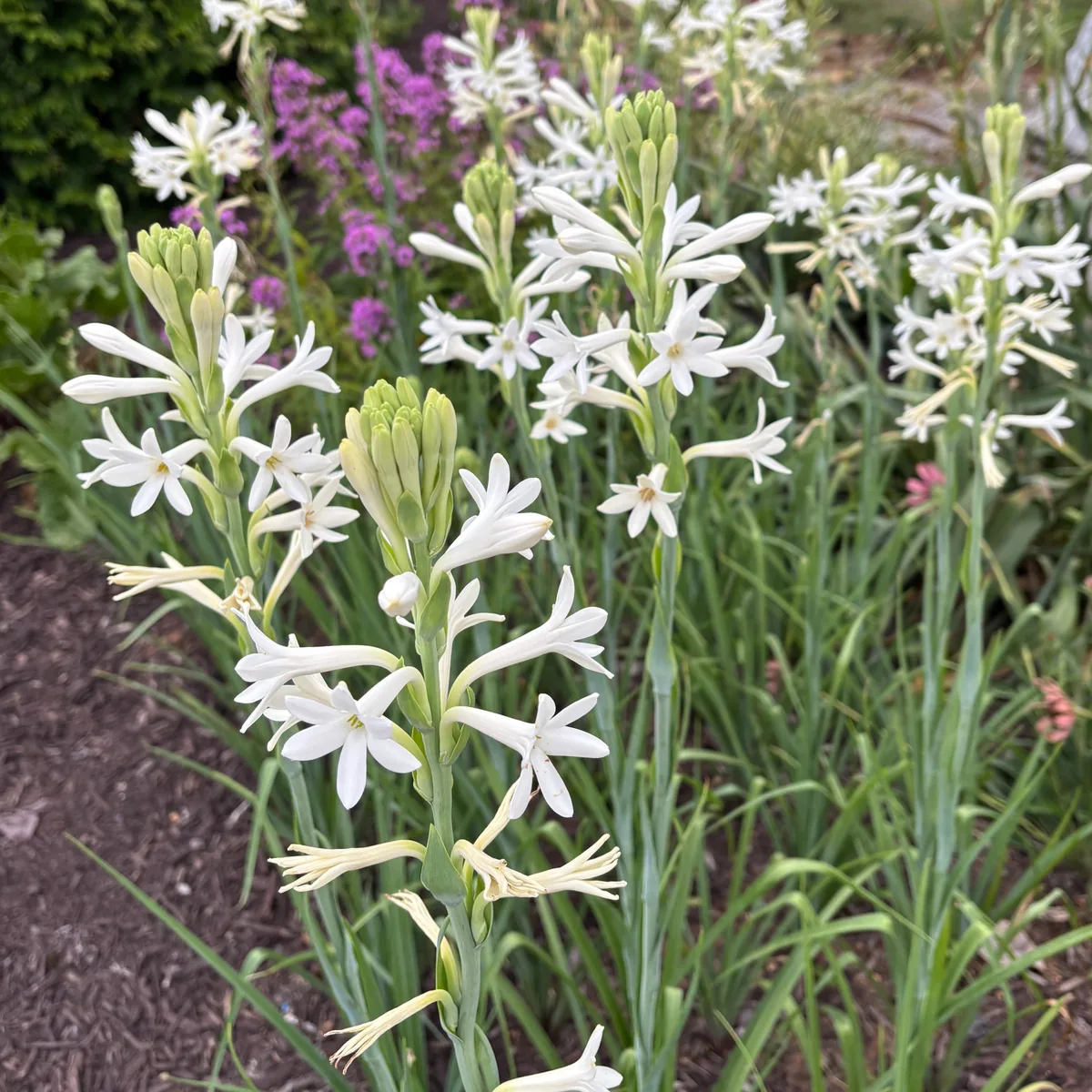
P. tuberosa has strappy leaves and spikes of white, waxy, funnel-shaped flowers in summer. It's famous for its heady scent, especially as a cut flower
Scientific classification
- Species
- tuberose (Agave amica)
- Genus
- Agave
- Family
- Asparagaceae
- Order
- Asparagales
- Class
- Liliopsida
- Phylum
- Magnoliophyta
- Skin irritant. Wear gloves and other protective equipment when handling
- Toxicity
- Conservatory Greenhouse
- Plant type
- 0.5-1 metres
- Height
- 0.1-0.5 metres
- Spread
- Deciduous
- Foliage
- Columnar upright
- Habit
- Spring · Summer
- Season of interest
- Full sun
- Sunlight
- Information to be completed
- Ideal temperature









tuberose pictures
Distribution of tuberose
Distribution map
- Native
- Introduced
- Cultivated
Source:WCVP v16 · Royal Botanic Gardens, Kew · CC BY 3.0 · Boundaries:WGSRPD / TDWG
Toxicity
Skin irritant. Wear gloves and other protective equipment when handling
tuberose care guide
- Moderate regular watering, allowing brief slight drying between soakings
- Watering
- Full sun
- Sunlight

Watering
Moderate regular watering, allowing brief slight drying between soakings
Fertilizing
 Fertilizing
Balanced perennial feed every four weeks from spring through summer
Pruning
 Pruning
No pruning required
Propagation
 Propagation
Propagate by seed or offsets in spring
Growing
 Growing
Requires a minimum temperature of 15°C, so must be overwintered indoors. Dry off pots at the end of summer when leaves begin to die down, beginning watering and feeding again in spring. See houseplant cacti and succulent cultivation for further information
Common pests and diseases
Diseases
Generally disease-free
Pests
May be susceptible to scale insects
Explore the plant health library →




