
hebe 'Lady Ann'
Also known as: Information to be completed
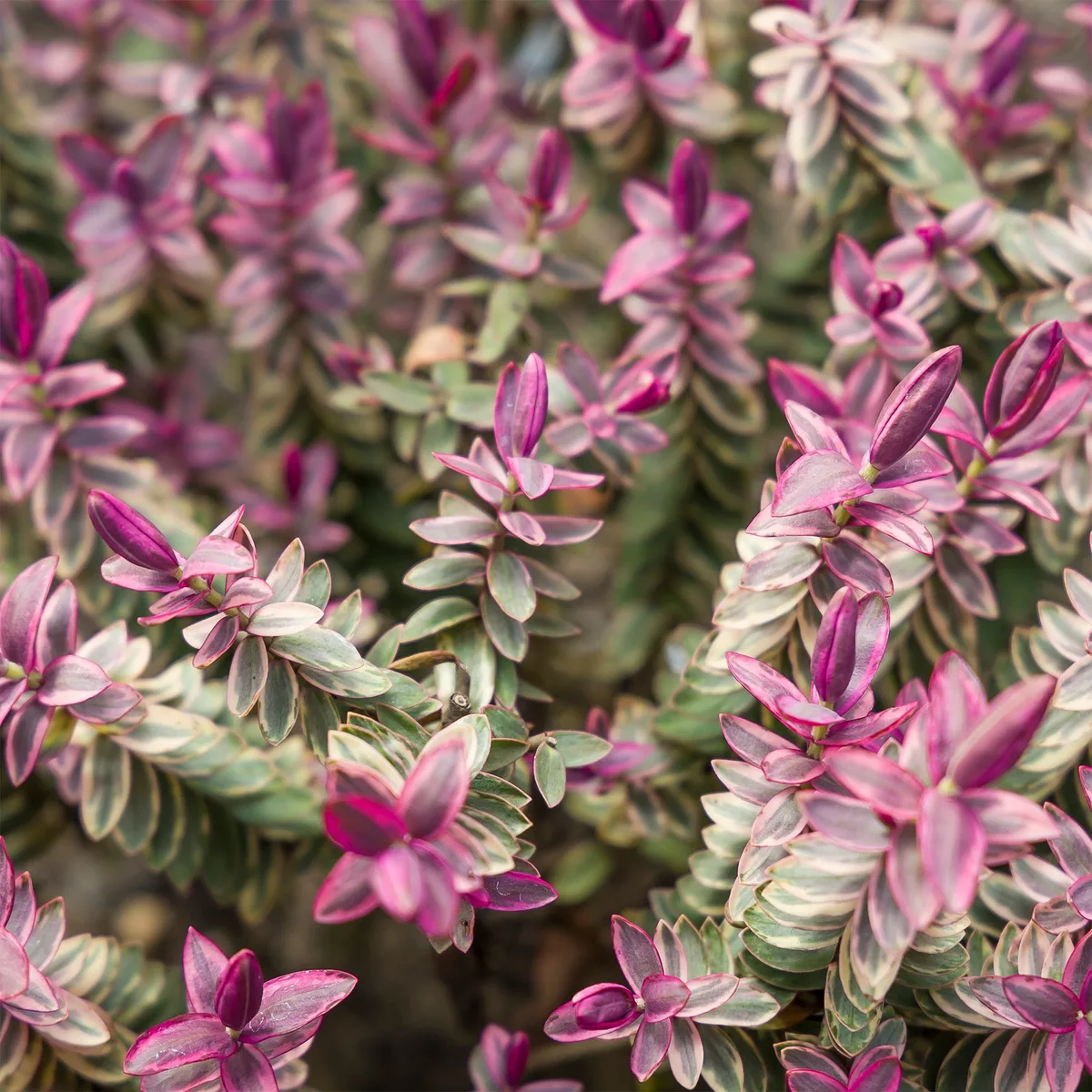
A rounded evergreen shrub, the narrow variegated leaves provide year round interest. The young leaves open up with flushes of pink and purple maturing into sliver and green. Dark pink flower spikes appear in summer
Scientific classification
- Species
- hebe 'Lady Ann' (Veronica 'Lady Ann')
- Genus
- Veronica
- Family
- Plantaginaceae
- Information to be completed
- Toxicity
- Shrubs
- Plant type
- 1.5-2.5 metres
- Height
- 1.5-2.5 metres
- Spread
- Evergreen
- Foliage
- Bushy
- Habit
- Spring · Summer · Autumn · Winter
- Season of interest
- Full sun · Partial shade
- Sunlight
- Information to be completed
- Ideal temperature









hebe 'Lady Ann' pictures
Distribution of hebe 'Lady Ann'
Distribution map
Information to be completed
Information to be completed
Culture
Information to be completed
Toxicity
Information to be completed
Quick identification of hebe 'Lady Ann'
Information to be completed
hebe 'Lady Ann' care guide
- Moderate regular watering, allowing slight drying between waterings
- Watering
- Full sun · Partial shade
- Sunlight
- Information to be completed
- Ideal temperature

Watering
Moderate regular watering, allowing slight drying between waterings
Fertilizing
 Fertilizing
Balanced feed monthly during active growth season
Pruning
 Pruning
Prune lightly as needed to remove unwanted shoots and keep the shrub in shape. Prune in mid- to late spring.
Propagation
 Propagation
Propagate by taking semi-ripe cuttings in summer with added bottom heat
Growing
 Growing
Grows well in moderately fertile, well-drained soil, full sun for best foliage colour. May require winter protection in cold areas
People also ask
Information to be completed
Common pests and diseases
Diseases
May be susceptible to downy mildews, fungal leaf spot, fungal rot, Phytophthora and sometimes honey fungus
Pests
Maybe susceptible to aphids
Explore the plant health library →




