
hebe 'Youngii'
Also known as: Information to be completed
A spreading dwarf shrub to 20cm tall, with dark stems bearing small dark green leaves and abundant short racemes of white-throated violet-blue flowers in early summer
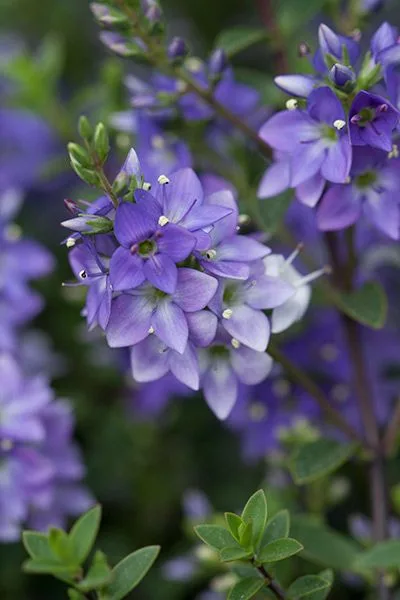
Scientific classification
- Species
- hebe 'Youngii' (Veronica 'Youngii')
- Genus
- Veronica
- Family
- Plantaginaceae
- Information to be completed
- Toxicity
- Shrubs
- Plant type
- 0.1-0.5 metres
- Height
- 0.1-0.5 metres
- Spread
- Evergreen
- Foliage
- Matforming
- Habit
- Spring · Summer · Autumn · Winter
- Season of interest
- Full sun · Partial shade
- Sunlight
- Information to be completed
- Ideal temperature









hebe 'Youngii' pictures
Distribution of hebe 'Youngii'
Distribution map
Information to be completed
Information to be completed
Culture
Information to be completed
Toxicity
Information to be completed
Quick identification of hebe 'Youngii'
Information to be completed
hebe 'Youngii' care guide
- Water evenly to retain slight moisture, guard against full soil drying
- Watering
- Full sun · Partial shade
- Sunlight
- Information to be completed
- Ideal temperature

Watering
Water evenly to retain slight moisture, guard against full soil drying
Fertilizing
 Fertilizing
Mild diluted liquid fertilizer fed monthly from spring through mid-autumn
Pruning
 Pruning
Prune lightly as needed to remove unwanted shoots and keep the shrub in shape. Prune in mid- to late spring.
Propagation
 Propagation
Propagate by seed sown in containers in a cold frame as soon as ripe. Cultivars will not come true. Root semi-hardwood cuttings in late summer or autumn with added bottom heat
Growing
 Growing
Grows well in poor to moderately fertile soil in sun or partials shade with protection from cold, drying winds. Tolerant of some pollution and can also be grown in a cool glasshouse in a loam-based compost with shade from hot sun
People also ask
Information to be completed
Common pests and diseases
Diseases
May be susceptible to downy mildews, fungal leaf spot, fungal rot, Phytophthora and sometimes honey fungus
Pests
May be susceptible to aphids
Explore the plant health library →




