
marbled clematis
Also known as: Information to be completed
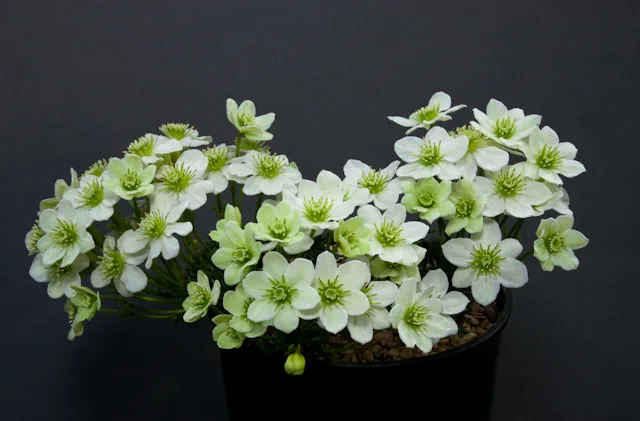
A prostrate evergreen dioecious shrub with glossy, deeply divided leaves of rigid texture. Flowers 2cm in width, with 5-8 oblong creamy-white sepals, sometimes with a green tinge, opening in early spring
Scientific classification
- Species
- marbled clematis (Clematis marmoraria)
- Genus
- Clematis
- Family
- Ranunculaceae
- Skin irritant. Wear gloves and other protective equipment when handling
- Toxicity
- Shrubs · Alpine Rockery
- Plant type
- Up to 10 cm
- Height
- 0.1-0.5 metres
- Spread
- Evergreen
- Foliage
- Matforming
- Habit
- Spring · Summer · Autumn · Winter
- Season of interest
- Full sun
- Sunlight
- Information to be completed
- Ideal temperature









marbled clematis pictures
Distribution of marbled clematis
Distribution map
New Zealand
Information to be completed
Culture
Information to be completed
Toxicity
Skin irritant. Wear gloves and other protective equipment when handling
Quick identification of marbled clematis
Information to be completed
marbled clematis care guide
- Deep regular watering, keeping roots cool and never chronically dry
- Watering
- Full sun
- Sunlight
- Information to be completed
- Ideal temperature

Watering
Deep regular watering, keeping roots cool and never chronically dry
Fertilizing
 Fertilizing
Balanced clematis feed monthly in spring, higher potash before bloom
Pruning
 Pruning
Remove dead or damaged stems after flowering
Propagation
 Propagation
Propagate by seed sown as soon as it is ripe in pots in a cold frame
Growing
 Growing
Requires sharp drainage in a sheltered position. Ideal for growng in a container in a cool greenhouse, conservatory, alpine house or rock garden in full sun
People also ask
Information to be completed
Common pests and diseases
Diseases
May be susceptible to honey fungus (rarely), clematis wilt and clematis slime flux
Pests
May be susceptible to aphids, snails and caterpillars; petals may be eaten by earwigs
Explore the plant health library →




