
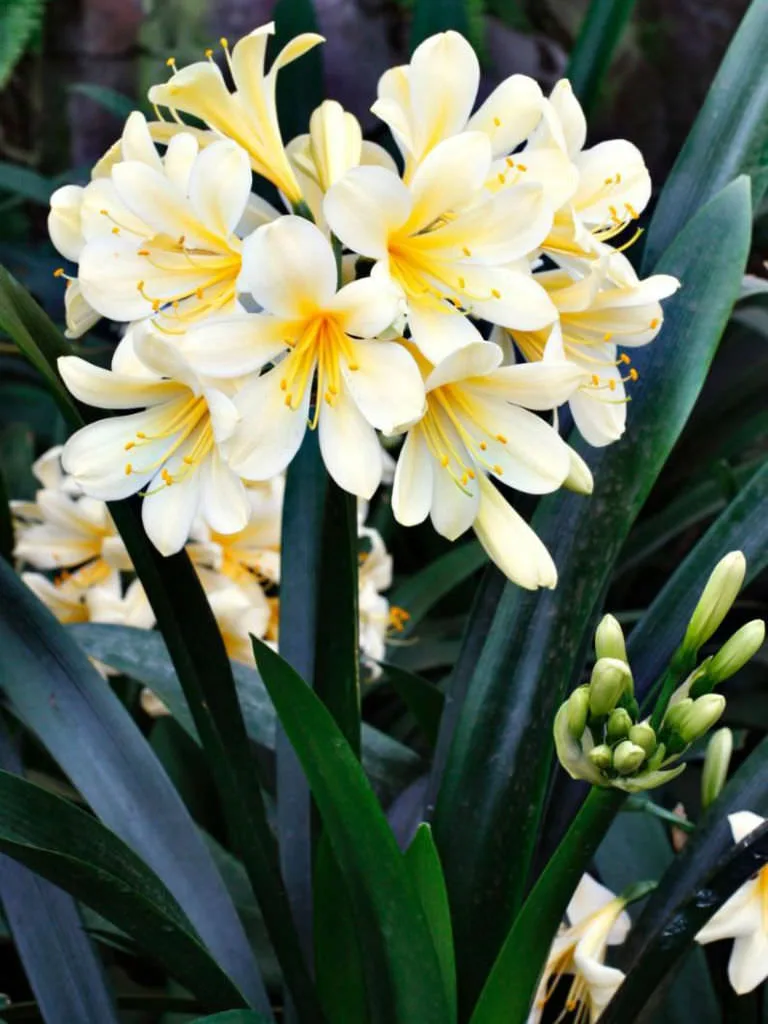
lemon-coloured Natal lily
Also known as: Information to be completed
An evergreen perennial with strap-shaped leaves and umbels of light lemon-yellow, trumpet-shaped flowers to 7cm long in spring and summer
Scientific classification
- Species
- lemon-coloured Natal lily (Clivia miniata var. citrina)
- Genus
- Clivia
- Family
- Amaryllidaceae
- All parts may cause a stomach upset if ingested, sap may irritate skin. Wear gloves and other protective equipment when handling]
- Toxicity
- Conservatory Greenhouse · Houseplants
- Plant type
- 0.1-0.5 metres
- Height
- 0.1-0.5 metres
- Spread
- Evergreen
- Foliage
- Bushy
- Habit
- Spring · Summer · Autumn · Winter
- Season of interest
- Full sun · Partial shade
- Sunlight
- Information to be completed
- Ideal temperature









lemon-coloured Natal lily pictures
Distribution of lemon-coloured Natal lily
Distribution map
- Native
- Introduced
- Cultivated
Source:WCVP v16 · Royal Botanic Gardens, Kew · CC BY 3.0 · Boundaries:WGSRPD / TDWG
Culture
Information to be completed
Toxicity
All parts may cause a stomach upset if ingested, sap may irritate skin. Wear gloves and other protective equipment when handling]
Quick identification of lemon-coloured Natal lily
Information to be completed
lemon-coloured Natal lily care guide
- Moderate regular watering, allowing brief slight drying between soakings
- Watering
- Full sun · Partial shade
- Sunlight
- Information to be completed
- Ideal temperature

Watering
Moderate regular watering, allowing brief slight drying between soakings
Fertilizing
 Fertilizing
Balanced perennial feed every four weeks from spring through summer
Pruning
 Pruning
No pruning required
Propagation
 Propagation
Propagate by seed at 16-21°C as soon as ripe or by division in late winter or early spring
Growing
 Growing
Under glass grow in loam-based potting compost with added leaf mould and grit, in bright filtered light with shade from hot sun. Water freely in summer and keep barely moist in winter. Apply a balanced liquid fertiliser weekly when in growth up to flower bud formation. Do not repot regularly as these plants resent root disturbance and need a restricted root run to encourage flowering
People also ask
Information to be completed
Common pests and diseases
Diseases
Generally disease free
Pests
mealybugs may be a problem
Explore the plant health library →




